Thursday, March 19, 2026

GRANT FOCUSES ON FALLS PREVENTION

0
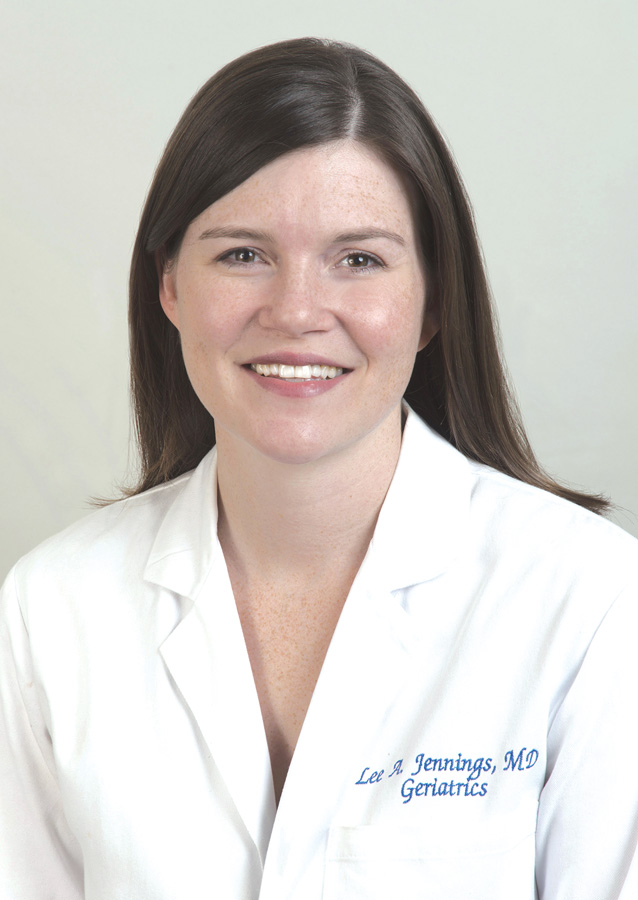
Lee Jennings, M.D., geriatric medicine specialist.

The Administration for Community Living (ACL) recently awarded a three-year grant to the Oklahoma Healthy Aging Initiative, part of the Donald W. Reynolds Department of Geriatric Medicine. ACL is part of the United States Department of Health and Human Services.
The grant will help fund implementation of a statewide program for falls prevention.
Lee Jennings, M.D., geriatric medicine specialist, will coordinate the program, which integrates complimentary components: Tai Chi Quan: Moving for Better Balance (TCQ: MBB), and Stay Active and Independent for Life (SAIL) in an effort to decrease the likelihood of falls and improve mobility among older Oklahomans and those with disabilities.
“In addition, OHAI will train volunteer class leaders to enhance program sustainability. Our objective is to build sustainable partnerships with organizations, such as hospital systems, long-term care facilities and insurance providers,” Jennings said. She is also principle investigator on a study related to the grant-funded program.
National Falls Prevention Awareness Day, Monday, Sept. 23, is about preventing fall-related injuries. Among older adults, falls are the leading cause of fatal and non-fatal injuries, posing a threat to life and quality of life.
In connection with the national emphasis, OHAI will host a Facebook live event from 9 a.m. until 2 p.m.
The event will include healthcare professionals in a discussion of the adverse impact of falls, how to prevent them as well as practical tips for creating a more secure environment. The event will also feature video demonstrations of TCQ and SAIL classes.
Keith Kleszynski, Ph.D., associate director of OHAI, explained that the SAIL program is new to OHAI and relatively new to Oklahoma. “We selected this program for its emphasis on physical activity and its appeal to those inclined toward more rigorous exercise,” he said. “It represents a strategic move to reach more male participants.”
Currently, 79 percent of OHAI tai chi participants are female; however, the risks associated with falls and injuries are not limited by gender.
SAIL was developed to improve strength, balance and fitness – all critical components in one’s ability to remain physically active and reduce the risk of falls. It can be done seated or standing. Tai chi incorporates slow and controlled movements that also increase balance and flexibility.


OCT/NOV AARP Drivers Safety

0

Date/ Day/ Location/ Time/ Registration #/ Instructor

Oct 3/ Thursday/ Okla. City/ 9 am – 3:30 pm/ 951-2277/ Varacchi
Integris 3rd Age Center – 5100 N. Brookline Ave., Suite 100
Oct 8/ Tuesday/ Yukon/ 8:30 am – 3:30 pm/ 350-7680/ Kruck
Dale Robertson Center – 1200 Lakeshore Dr.
Oct 11/ Friday/ Okla. City/ 9 am – 3:30 pm/ 951-2277/ Edwards
S.W. Medical Center – 4200 S. Douglas Ave, Suite B-10
Oct 12/ Saturday/ Chandler/ 9 am – 3:30 pm/ 818-2916/ Brase
First United Methodist Church – 122 W. 10th, Basement
Oct 22/ Tuesday/ Okla. City/ 8:30 am- 3:30 pm/ 773-6910/ Kruck
Healthy Living Center – 11501 N. Rockwell Ave.
Nov 7/ Thursday/ Okla. City/ 9 am – 3:30 pm/ 951-2277/ Varacchi
Integris 3rd Age Center – 5100 N. Brookline Ave., Suite 100
Nov 8/ Friday/ Okla. City/ 9 am – 3:30 pm/ 951-2277/ Edwards
S.W. Medical Center – 4200 S. Douglas Ave., Suite B-10
Nov 9/ Saturday/ Midwest City/ 9 am – 3 pm/ 473-8239/ Williams
First Christian Church – 11950 E. Reno Ave.
Nov 12/ Tues./ Midwest City/ 9 am – 3:30 pm/ 691-4091/ Palinsky
Rose State Conventional Learning Center – 6191 Tinker Diagonal
Nov 13/ Wednesday/ Warr Acres/ 8:30 am – 3 pm/ 789-9892/ Kruck
Warr Acres Community Center – 4301 N. Ann Arbor ‘Ave.

The prices for the classes are: $15 for AARP members and $20 for Non-AARP. Call John Palinsky, zone coordinator for the Oklahoma City area at 405-691-4091 or send mail to: [email protected]

HEALTH – Special to SNL: Exercises to Help Prevent Bedsores

0
Female patient listening to doctor in medical office.

by Susan Price – www.NursingHomeAbuseCenter.org

Individuals who have limited mobility or who are confined to a bed or wheelchair are at a high risk of developing bedsores. What starts as inflammation can quickly turn into a painful wound that is difficult to treat. What’s more, once bedsores are established, the patient is at risk for infection, sepsis, gangrene, and amputation. These complications can be fatal.
Bedsores most commonly develop on bony prominences, or parts of the body that come into the most contact with a bed, chair, or other surface. Common places bedsores develop include the heels, elbows, tailbone, and shoulder blades.
Fortunately, bedsores are preventable. Caregivers who follow the standards of care for repositioning, skin care, diet, and exercise can help prevent bedsores among patients.
Exercise to Prevent Bedsores
Exercise is a great way to help prevent bedsores. Exercise increases blood flow throughout the body, including to the skin. This helps prevent bedsores by keeping skin and underlying tissue healthy and well oxygenated. Exercises don’t have to be strenuous in order to be effective. Here are some examples of the type of exercises that can help prevent bedsores. · Ankle Stretches – Ankle stretches are a great way to improve circulation and range of motion. Caregivers assist with ankle stretches by holding the heel and ankle, and slowing bending and moving the foot around. · Arm Lifts – Arm lifts can be done with assistance, or solo. Raise the arm as high as possible (and comfortable), and hold it for ten seconds. Arm lifts can be easily customized depending on the patient’s needs. · Leg Lifts – Leg lifts are a great way to improve circulation and encourage flexibility and range of motion. These exercises can be done with the patient on their back or side, depending on what is most suitable. The leg is slowly raised even with the hip, and is held there for 10-20 seconds as is comfortable and appropriate. · Palm Stretches – Palm stretches are a simple way to improve circulation in the lower arm and hand. With this exercise, the patient opens his or her hand as wide as possible extending the fingers. Then, the patient touches each finger to their thumb slowly before extending the finger again.
Doing these exercises a few times each day, or even once a day, can reduce the risk of a patient developing bedsores.
Exercise as Part of a Healthcare Plan
Exercise is most effective at preventing bedsores when it is part of a comprehensive healthcare plan.
Caregivers can also help prevent bedsores by making sure patients have adequate food and hydration, access to medical care, and assistance with hygiene.
Bedsores often develop on parts of the body that are covered with clothing or linens. Caregivers should perform routine skin checks to look for signs of a developing bedsore. Once a developing bedsore is stageable, it is dangerous and needs immediate medical attention.
Of course, you should never start an exercise regimen for yourself, or for someone you are caring for, without talking to a doctor first. Exercise should be performed with the guidance of a doctor who knows about the overall health of the patient.
Sources: www.nursinghomeabusecenter.org/bedsores/
www.accessrehabequip.com.au/blog/post/21-how-to-prevent-bedsores%3A-exercises-for-pressure-care-patients/
https://advancedtissue.com/2015/06/4-effective-exercises-for-bedridden-patients/
https://www.nursinghomeabusecenter.org/stages-of-bedsores/

Transplant at 69 allows Artist to thrive

0
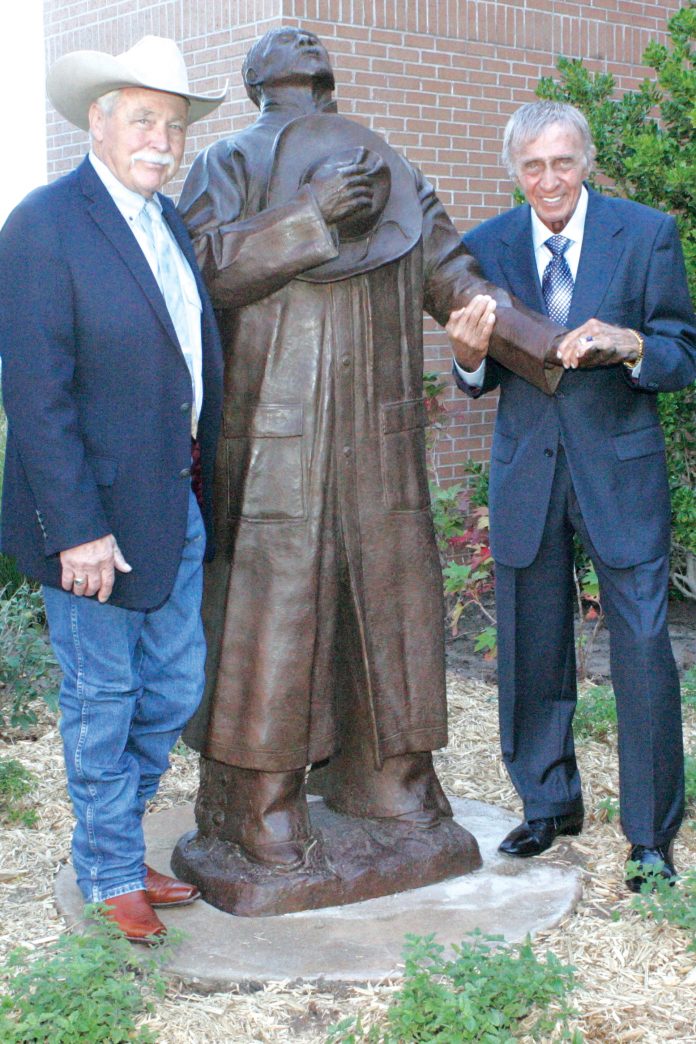
Harold Holden (left) at the 2012 unveiling of his donation of “Thank You, Lord,” a six-foot bronze of a cowboy pausing to pray, to honor the seven-member lung transplant team that saved his life at the Nazih Zuhdi Transplant Institute as Nazih Zuhdi stands to the right. The statue is located outside the emergency room at INTEGRIS Baptist Medical Center in OKC.

A single lung transplant in 2010 allowed Enid native Harold Holden to share a funny quip with a large audience in 2017. The National Cowboy & Western Heritage Museum was inducting Holden into its Hall of Great Westerners.
As the first artist from Oklahoma to be so honored, he said “Seems a little strange to be receiving one of my own sculptures here.”
That quip brought a positive response from the audience. They saw the irony in one of the most revered sculptors of horse and rider in the West to receive as his award his own iconic sculpture. What else would the Hall of Great Westerners give their honorees except a small Holden bronze of a cowboy sitting a horse?
In 2009 the world-renowned sculptor and painter of horses and cowboys was not taking on new work. The U.S. Navy Vietnam veteran’s pulmonary fibrosis lung disease was getting the better of him.
Medical experts at the time said it was not advisable to give a 69-year-old a lung transplant. The staff at the INTEGRIS Nazih Zuhdi Transplant Institute at the INTEGRIS Baptist Medical Center in Oklahoma City, said they were wrong.
Conventional wisdom questioned the aging cowboy’s survivability. Luckily the folks at the Zuhdi Institute saw something different. They saw a viable candidate for a lung transplant. They saw a wonderful support network, headed by a devoted wife Edna Mae, and Holden’s vital philanthropic spirit that was busy supporting many of Oklahoma’s worthy causes.
So, from that live saving surgery in 2010 until now, Holden, known as H to everyone, has proven them right. The Western artist has outlived the idea of survivability to become a model of thrive ability as he went on to create some of his largest works as an artist.
And now, at 80, he opens a new chapter in thriving by sculpting three heroic size bronzes to grace the Oklahoma State University campus. These three larger than life statues will round out his total of 25 monuments around the country and be his largest impact on any one location, his alma mater.
Holden sculpted his first bronze statue for OSU in 2012. Only 18 months after his life-changing transplant, he donated his creation of the “We Will Remember” memorial of a kneeling cowboy with his hat in his hands, staring at a black medallion of OSU’s Spirit Rider surrounded by 10 stars.
He donated his design of the plaza with three walls holding the images of the 10 men who died in an airplane crash on January 27, 2001 in Colorado. The images of the 10 men associated with the OSU basketball team have their families’ tributes etched into the same black Indian granite as a memorial at the crash site.
OSU players Nate Fleming and Daniel Lawson; pilots Denver Mills and Bjorn Fahlstrom; broadcaster Bill Teegins; publicist Will Hancock; radio engineer Kendall Durfey; trainer Brian Luinstra; manager Jared Weiberg; and director of basketball operations Pat Noyes died in the crash. Again, Holden donated the rights to create 50 small replicas of the memorial for the families and donors. Now almost a decade after being given a new lease on life Holden is sculpting OSU royalty.
He is creating a one-and-a-half life size bronze T. Boone Pickens, a one-and-a-quarter life size historically correct Frank Eaton (Pistol Pete’s namesake) and a one-and-a-half life size Barry Sanders. OSU’s athletic director Mike Holder has commissioned the series.
Holden still mentions the seven-person team in conversations about his transplant. “To wake up after surgery with a new lung…and essentially be given a second chance at life is overwhelming” Holden said recently.
His gratitude to God and the medical team is memorialized by a six-foot bronze sculpture he donated in appreciation. His “Thank You, Lord” recasting of a cowboy thanking the heavens just outside the INTEGRIS Baptist emergency room entrance was unveiled in 2012.
He has started the Pickens and Eaton pieces, but his studio size will not allow him to do all three together. He hopes to complete the Pickens statue this year and the Eaton sculpture by Spring of next year. The Holdens live on a small 65-acre ranch outside of Kremlin, Okla. His studio is one of the most prominent buildings on the property. He still owns horses and raises cattle, as ranching and riding was the lifeblood of his art career.
“I became a Western artist because I was raised in the life style, riding horses and being a cowboy.” Holden said recently. “Paint and sculpt what you know and I loved everything about the West and being a cowboy.”

On a whim: Senior finds pageant success

0

story by Bobby Anderson, Staff Writer

2019 Ms Oklahoma Senior America Deborah Wedel.

When Deborah Wedel received a business card from a friend a few years back she tucked it safely inside her purse.
It came after a session at the gym with friend Zenetta Kendricks and an urging for Wedel to sign up for the Ms. Oklahoma Senior America pageant.
Still working at the time, Wedel appreciated the gesture but figured it wasn’t for her.
That was until a few months ago when cleaning out that purse the card once again was in her hands.
“I thought ‘Oh, I’m retired now I might try this and I did,’” Wedel said.
And that was the beginning of a life-affirming journey for Wedel that culminated when she was crowned the 2019 Ms. Senior Oklahoma winner earlier this summer in Ada.
The night of the pageant Wedel’s nerves were flowing.
“They were all firing,” she laughed. “It’s amazing. I just want to say how encouraging we all tried to be for each other. I know it was a pageant but it was more like a sisterhood.”
“I didn’t think it was going to be my name,” she continued. “I thought it would be one of the ladies who had been in it before and I was just fine with that. The people in it before were such incredibly beautiful people inside and out.”
It was Wedel’s first pageant but an experience she wanted to use to get out of her comfort zone.
START TO FINISH
Back in 2013, Wedel went to the same gym as Kendricks, the 2013 Ms. Oklahoma Senior winner.
Kendricks handed her her card.
Wedel didn’t think much of it at the time. She was flattered but thought it wasn’t for her.
She was working full-time then, finishing up a 36-year teaching career that included a stint as a counselor at Mount St. Mary’s.
She loved the experience being around high school students. To this day she felt like she never met a single student she didn’t enjoy.
“Some people are really good with younger kids and I just really love the age,” she said. “It felt like I clicked with them.”
Most days as a counselor she was working on scholarship applications, which produced about an 86 percent success rate.
She retired about the time her husband, who served as a high school principal for a couple decades. During those years the two went to a lot of basketball, football and athletic events as well as drama and band productions.
After retiring the couple spruced up their rent homes and booked a trip to Switzerland coming up in September.
Nobody planned on a pageant win in between.
“Luckily, the national contest isn’t until October,” said Wedel, who will represent Oklahoma in Atlantic City, New Jersey.
“It was just incredible,” Wedel said of the experience. “I don’t think it was like a regular pageant in the fact we were all rooting for each other. Quite honestly, if I had not done anything and still been standing on the stage after they crowned that queen I would be alright with that.”
Her stage fright was in full effect when she performed a dramatic reading of an Elizabeth Barrett Browning poem.
“You would think that would go away after awhile but it doesn’t appear to,” said Wedel.
While most people expected the life-long singer to sing, she wowed the crowd with her tear-filled performance.
“Every time I read it I weep,” she said. “It’s a mother who lost both of her sons in the Italian war for independence. She encouraged them to give everything but when they actually do … she goes back and questions why.”
“I think most of us would question if we lost both of our children in a way but there are some things you can’t change.”
For Wedel it’s all about staying active with her husband, Bruce, of 46 years. She has two children of her own with a pair of grandchildren involved in the arts.
Exercise is still a priority. The other day she went over to mow her 92-year-old old mother’s yard.
She stays active at the house and civic events and sporting events as well as the local arts.
She wants to reach out to the community, helping with fundraisers and appearances. “I just stay active, hopefully helping others,” Wedel said. “I’m hoping for some events.”
Those who would like to get in touch with Wedel can contact her through her cell phone at (405) 274-2627.

Room with a Pew

0
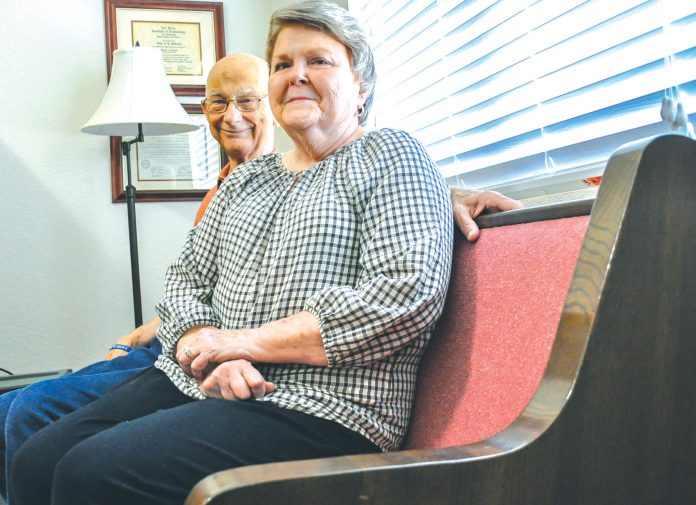
John and Nancy McCurdy are keeping a legacy alive at Tealridge Retirement Community.

story and photos by Bobby Anderson, Staff Writer

Full circle.
Nancy McCurdy smiles when the words come out of her mouth.
She smiles because she’s comfortable in the fact that she’s following in her mother’s footsteps as a resident of Tealridge Retirement Community.
Nestled right on the 200-acre Oklahoma Chrisitan campus is Tealridge Retirement Community, a full-service, private and locally-owned community providing independent, assisted living & memory care services to the
Community of Edmond.
Nancy McCurdy’s mother, Velma LaFaver, was a charter member of the Tealridge Community back in 1990, likely the third or fourth resident to move in.
When she moved in there was a nondescript pew in the common area.
“Our grandkids thought it was great and they would go down and play on it and have a good time,” McCurdy said.
A few years later, Tealridge held a garage sale to benefit the activity fund.
Mccurdy and her husband noticed the pew was for sale. Nancy told John to load it up and the pew wound up in the couple’s home and eventually playhouse.
The kids continued to play on it growing up.
When the time came to downsize and the McCurdys to make their next move it was the couple’s decision to move to Tealridge.
It was John’s idea to take the pew.
206D was McCurdy’s mother’s room. The McCurdy’s now live a floor above.
“We have a similar view to what she had,” she said. “We’ve come full circle.”
Nancy McCurdy’s mother hailed from southwestern Oklahoma – Lone Wolf to be exact. The move to the big city was a planned one.
“We were very pleased and happy and so far we’ve been very pleased with Tealridge,” Nancy McCurdy said.
The McCurdy’s visited several places but they both kept coming back to Tealridge, which was only two miles away from their current residence. They’ve lived in Edmond for 33 years.
One of their daughters lives nearby.
They hired Senior Transitions, a local moving company catering to seniors making a move, to get everything – pew included – moved over.
ROOM WITH A VIEW
There’s something special about looking out the window of the McCurdy’s apartment.
Knowing her mother looked out over the same pond, filled with fish and ducks, has a calming effect on her.
Nancy McCurdy was a registered nurse by trade. She helped found the Hope Center Clinic of Edmond, an organization helping those in crisis in the area.
“They decided they wanted to start a clinic and I had been in health education for a long time,” she explained. “I got the job and we started this clinic. It helped people who didn’t have insurance, mainly pregnant women.”
McCurdy took care of hundreds of her fellow Edmondites.
She failed at retirement the first time, going back for another four years.
“I’ve always been in nursing,” said the 40-plus-year nurse. “When I retired the last time I told them that was it.”
John dated Nancy while she was attending the Mercy School of Nursing in downtown Oklahoma CIty at 12th and Walker. The Granite native met Nancy in southwestern Oklahoma but transferred to the University of Oklahoma to be closer to her.
He graduated with a degree in industrial engineering.
The two wed when he moved back after a semester. Nancy quit school briefly.
He worked for Phillips Petroleum in Bartlesville. He found a better fit at Tinker Air Force Base before earning his Master’s degree from the Air Force Institute of Technology in Dayton, Ohio.
Wright Patterson Air Force Base was his next job site and also where Nancy finished her RN degree.
The two raised four children in the Dayton area.
After 15 years of cold weather the McCurdys moved back to Oklahoma and settled into Edmond.
“One of the reasons we moved back was to be closer to our parents and our relatives,” said Nancy, who sent two of her children through nearby Oklahoma Christian University. “This has been our home ever since.”
John actually worked for Tealridge, putting his commercial driver’s license to drive residents
“I enjoyed that,” he said. “I don’t know if the residents did but I did.”
And so when the time care Tealridge seemed like a natural fit, for Nancy’s mother and for her and her husband.
“She loved every minute of it,” Nancy said. “We were really concerned about her making an adjustment but when she got here they played bridge and did all the things she liked to do and she really enjoyed it. We were really happy with that move.
“We plan to be happy with our move, too.”

Net Gains

0
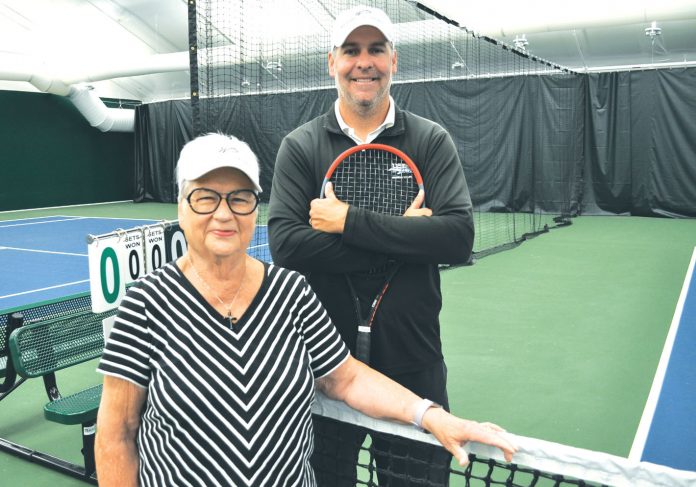
Tennis has helped keep Sherry Sakoski, pictured with Westwood Tennis Center Director Marc Claude, active in life.

story and photos by Bobby Anderson, Staff Writer

Whether it’s a tournament or just a regular weekday morning, odds are you’ll find Sherry Sakoski at Westwood Tennis Center in Norman.
Sakoski has been a regular fixture at Westwood for years, but she didn’t pick up the game of tennis until she was 35.
She remembers taking her three children to the courts while they were growing up.
Two times a week she would have lessons before hitting by herself on the backboard.
“Every day almost. It wasn’t very far from the courts,” she said. “I’d just load up the kids and head out.”
Within a couple years she started traveling to tournaments, improving her skills and having some success.
Originally from Weatherford, she took a job with 3M as a chemist after going to pharmacy school. Much of her time with 3M was spent as a quality engineer, auditing the chemical components company vendors used in the manufacture of their products.
At 60 she went back to school to get her doctorate in pharmacy so she could help out her daughter who works as a pharmacist in Oklahoma CIty.
After moving back to Norman in 2003, she took lessons from then-director David Minihan before transitioning to now current-director Marc Claude.
“I’d rather play with them than play with anybody else. Isn’t that something?” she laughed.
“I didn’t have an opportunity to play any ball when I was young because they didn’t have anything for girls at Weatherford. Then I got out into the world and my kids wanted to play so we just all learned together.”
Her husband, an avid tabletop tennis player, even picked up the sport and advanced quickly.
Players always have to contend with the Oklahoma weather but construction of a new indoor tennis center will help players like Sakoski still get out on the court.
Westwood Tennis Center is considered as one of the top public facilities in the United States. In 2007, The U.S. Tennis Association recognized Westwood as the National Outstanding Facility. Currently, Westwood has 14 outdoor championship courts with four 36-foot youth courts.
The new 15,000 square foot indoor facility is a Norman Forward project, funded through a one-half-cent sales tax approved by Norman voters in October 2015. The construction contract was awarded to Flintco for $1,376,714 in August 2018.
This facility is the city’s first tensile fabric structure and features two new USTA-sanctioned indoor tennis courts, reflected LED lighting, a spectator area, and an energy efficient heating and air conditioning system.
The project also included the construction of two new outdoor USTA-standard courts with lighting, fencing and bleacher areas which were completed in 2018 before the new indoor facility’s construction.
“It’s softer in there,” she said of the new surface.
It’s been two years since Sakoski had her hip replaced so she appreciates that fact.
She’ll take whatever she can to keep her out on the court.
“I just like it. I like to hit the ball. I like it because it makes you stronger and in order to play tennis I have to keep up with my health,” she said. “I have to eat right and I have to drink a lot of water.”
Sakoski is an avid doubles player, enjoying playing up at the net.
“You’ll have to ask Marc but I play pretty good for an old lady,” she said. “Not as good as some of them. Oh, my goodness I know some of them that are in their 80s. It’s no effort for them. It’s still an effort for me to hit the ball hard.”
NET GAINS
According to the International Tennis Federation, playing tennis could increase life expectancy by a decade, according to an ongoing cardiovascular study.
The Copenhagen City Heart Study has examined people over a 25-year period and evaluated improvements in life expectancy through participation in various sports and leisure-time activities.
In total, 8577 participants were examined for all-cause mortality between 10 October 1991 and 16 September 1994 until 22 March 2017, with various sports found to improve and increase life expectancy.
Of the sports included in the observational study, tennis topped the charts for potential life expectancy gains by some considerable distance, with results suggesting as many as 9.7 years could be added to an individual’s existence.
This is 3.5 years more than its nearest competitor badminton, the playing of which has been found to increase life expectancy by 6.2 years, with football (soccer) having the potential to add 4.7 years and cycling 3.7 years.
Swimming was found to boost life expectancy rates by 3.4 years, jogging by 3.2 years, calisthenics by 3.1 years and health club activities by 1.5 years.
A further conclusion of the study suggests that leisure-time sports which involve greater levels of social interaction are associated with the higher levels of longevity.

Can you trust your roofer?

0

Story by Susan Slater

How Seniors Can Trust They’ve Found a Reputable Roofer

A lot of companies say they specialize in working with seniors. But Dennis Helm, of Smooth Finish Roofing & Construction, shows it.
Dennis is an industry partner and a member of OKALA (Oklahoma Assisted Living Association). He also has industry partnerships with several important senior organizations: The Oklahoma Senior Journal, Senior GuidePost, and The VillagesOKC. When Dennis says he enjoys working with seniors and wants to help them, he means it!
Dennis has been a senior advocate for as long as he’s been a business owner of Smooth Finish. He came about this from a place of caring for those who may be vulnerable to scammers because of difficulties he faced as a child (see article page ?? – in main section).

How Smooth Finish can help seniors

1) If you are working with a senior who would like to stay in their home, Smooth Finish can install a good-quality roof on their home that will last.
They can also help with other repairs and modifications on the homes of seniors who want to age in place. Besides roofing, Smooth Finish can do ceiling leak repair, guttering, siding, garage doors, fencing, painting, and more.
2) If you have a client who is moving into a senior living center and needs to sell their home, they may likely need a new roof or other repairs. Smooth Finish will do excellent work at a fair price, so your client’s home can pass all the inspections required for a sale.
3) Smooth Finish is not only certified and licensed* to do roofing for residential homes, but for senior living facilities as well.
Owner Dennis Helm—a true senior advocate

With his sincere desire to help seniors, Dennis always works to encourage people to use only local, licensed, and insured roofing contractors with hundreds of verifiable references. There are just too many terrible stories of things going wrong when people don’t.

Warning: roofers may not be who they seem to be!

“I’ve heard it many, many times,” Dennis says, “most people don’t trust roofers. That’s because in this industry there are a lot of fly-by-night roofers. They come in town, start a ‘company,’ get magnets on their car, and in 24-hours they look like a legitimate business. But they’re not.”
Unreliable scammers always rush into town after a storm has hit to solicit people who need roofing services. These unscrupulous “companies” many times will claim to be local, even though they’re not, and may go to great lengths to look like they’re hometown guys.
Dennis tells about having a man from out of town contact him after a bad storm hit the Oklahoma City area. This man wanted to “buy” the Smooth Finish company name, and use Dennis’s address and phone number for six months. He offered a good price, too! He wanted to appear to be a local, established company when soliciting roof jobs.
Dennis warns people to not be fooled. He says, “I wasn’t about to go for that deal, but other companies will.” He continues, “I want people with roofing needs in Oklahoma City to rest at ease. I want them to know that when they use Smooth Finish Roofing & Construction, they’re getting an honest, reputable company. I’m a lifelong resident and have 32 years expertise in this business.”
Ask for licensing numbers and for references, and then check them out! Dennis explains that reputable roofers live and work in the same city where their business is located. “We don’t go out of town, except for previous and existing customers. There is always more than enough work for us right here in the 620 square miles of Oklahoma City.”

Your clients will thank you for a Smooth Finish recommendation

You can feel confident in recommending Smooth Finish Roofing & Construction to the clients you’re helping. For the homeowner, Dennis can work on the rooftop, the floor, and everything in between. He’s licensed General Contractor for the City of Oklahoma City* and has been in business for 32 years.
Since 1987, Dennis has been helping customers with decisions concerning their homes. Many times, he’s found simple solutions for complex problems. He works to keep the costs fair and reasonable, and lives by the Smooth Finish motto: “Where quality craftsmanship meets fair pricing.”
Give Dennis a call on his personal cell phone at (405-923-5127). He’ll be happy to come visit you for a free consultation, inspection, and estimate. And he’ll be glad to give you references so you can check with people who have used his services! Dennis adds, “We are proud of and enjoy our solid reputation. We enjoy serving seniors, military, and single mothers—and we only move forward with a job when you’re comfortable.”
*Oklahoma CIB #0242 and City of Oklahoma City license #13705

Understanding Chronic Venous Insufficiency

0

Do you have swelling in your legs?
Are your legs discolored?
Do you have varicose veins?
Do you have numbness, pain or tingling in the legs?
Do you have throbbing in the legs or itchy, scaly skin?
Do you have, or have you had, wounds in the lower leg/calf area?
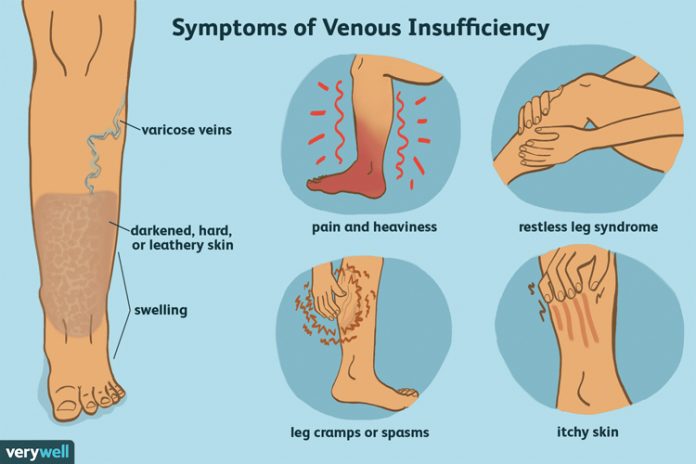
You could have chronic venous insufficiency (CVI). Understanding venous disease means understanding the function and anatomy of the venous system. Veins carry blood with CO2 and metabolic waste products back to the heart and lungs to be replenished with oxygen and nutrients. To reach the heart, blood needs to flow upward in the veins from the legs- against gravity. The contraction of the muscles in the legs help to propel the blood upward. To keep the blood flowing up and prevent backflow, the veins contain one-way valves. CVI occurs when these valves become damaged allowing blood to flow backwards and pool in the leg veins. Over time, this malfunction of the valves causes pressure to build up in the veins. Fluid then leaks out into the tissues causing swelling and inflammation Chronic inflammation results in progressive problems, such as pain, bulging veins, skin changes or the most serious complication, blood clots. Blood clots that form in the deep veins of the legs (DVT) can travel to the lungs and cause serious complications, even death.
The symptoms of venous disease can vary greatly. They are often so insidious that, after treatment, patients are surprised to realize how much chronic discomfort they had accepted as “normal”. Common symptoms include burning, swelling, throbbing, cramping, and leg fatigue. The appearance of the lower extremities is often very helpful in the diagnosis of venous disease. Some people will notice swelling, changes in the color and texture of the skin, dry scaling, itchy skin, visible spider veins or bulging veins in the calf and thigh. Others will experience more serious soft tissue changes that develop as the disease progresses which include chronic inflammation or cellulitis, varicosities that bleed without warning, or wounds that come up like small blisters and take a long time to heal. The most serious complications from chronic venous insufficiency are blood clots (DVT’s), and non-healing wounds that become infected – sometimes spreading to bone or into the bloodstream.
Risk factors include:
*Family history
* Obesity
* Damage to your leg due to injury, surgery, or previous blood clots
* Occupations that require sitting or standing for long periods of time
* Reduced mobility or sedentary lifestyle
* More than one pregnancy
In order to diagnose CVI, a complete medical history and examination of your legs will be required. A vascular ultrasound may also be useful to assess the blood flow in the leg veins. Like any disease, CVI is most easily treated in the early stages. Conservative treatment strategies include avoidance of long periods of standing and sitting, regular exercise, weight loss, elevating your legs at night, practicing good hygiene and treating active skin infections. Properly fitting, medical grade support hose called compression stockings are a common conservative treatment option. Compression stockings come in different lengths and compression strength. To ensure a proper fit, compression stockings should be prescribed by a health care provider. Endovenous laser thermal ablation (EVLT) is a relatively new technique that uses a laser to create heat in the abnormal vein causing it to shut down, and redirecting blood flow to deep veins. This technique is minimally invasive, can be done in under an hour, involves less pain than traditional therapies, and allows for a quick return to normal activities. Sclerotherapy is another minimally invasive option; it involves injection of a solution directly into the vein that causes the vein to collapse and shut down.
If you think you may have this problem, you can discuss it with your primary health care provider, or seek out one of the many specialists who offer treatment options – including cardiologists, vascular surgeons, and interventional radiologists. You are also welcome to call our center to schedule a prompt and free consultation- you can reach us at (405) 608-8884

Miss America, Faith and Surviving Cancer

0
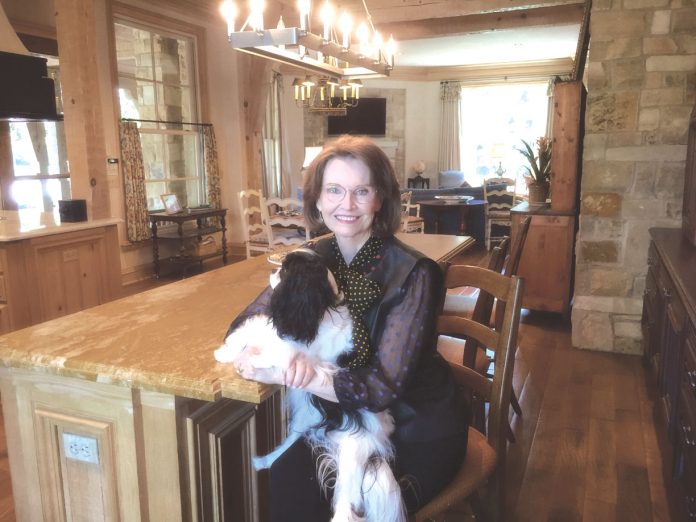
Jane Jayroe holds three titles, Miss. America, Miss. Oklahoma and cancer survivor.

by Mark Beutler

Jane Jayroe was in disbelief when she heard the announcer call her name. The young girl from rural Laverne, Oklahoma, was standing on stage in Atlantic City as Bert Parks began the first few bars of an old familiar song.
“There she is, Miss America,” Parks crooned.
The image flickered on black and white television sets across the country as Jayroe accepted the crown and took her first steps as Miss America 1967.
“A wave of emotions swept over me,” Jayroe recalls. “The audience rose to its feet, while what seemed like flashes from a thousand cameras began going off simultaneously. I could not believe it, even after I heard my name it still seemed unreal. Here I was, this shy, 19-year-old girl from Oklahoma and I had just been given one of the most recognizable titles in the world!”
Jayroe spent the next year traveling in a whirlwind of public appearances, which included entertaining the troops in Vietnam. The schedule was grueling but paved the way for the bright future that lay ahead.
She finished her reign as Miss America, and then continued her education at Oklahoma City University. Her career led her to Dallas where she was news anchor for KXAS-TV before moving home to Oklahoma City, where she worked as prime-time anchor for both KFOR-TV and KOCO-TV. In 1999, she ventured into public service and held the cabinet position Secretary of Tourism and Recreation until 2003.
But for all her titles and accolades, Jayroe holds one more title and that is cancer survivor.
“I have always been very faithful about having the medical checkups that are recommended,” she says. “As a result, I went in for regular breast exams but in 2003 I was very surprised. One of the spots my doctor had been watching for years was different. We checked it out, and the result was a very early breast cancer diagnosis.”
It was fortunate, Jayroe says, that the cancer was caught early.
“To hear the word ‘cancer’ was terrifying,” she said. “I didn’t think of death, but I did think of months of chemotherapy and being sick. I was so scared. As it turned out, I had a lumpectomy.”
A few years went by and life was good, but in 2007 Jayroe was diagnosed again with cancer– this time it was uterine.
“It took a long time to get that diagnosis,” she says, “Which was really frightening to me because I had symptoms for more than six months before I had the diagnosis. I had a full hysterectomy with additional lymph nodes removed. The surgery was on a Tuesday and the test results came back on Friday…actually, Friday the 13th! Lymph nodes were clear, no follow-up treatment was needed.”
During her journey, Jayroe says what helped most was her faith.
“It was everything to me,” she said. “My faith was the rock upon which I stood. It was the Hand that held mine. It was the Light when my night was dark. And having a community of support like the American Cancer Society is so important. Cancer can be such a lonely fight and such a life-altering experience. To have help in those practical ways is really crucial.”
Today Jayroe is a best-selling author, helping others find their way on whatever path their life takes them. Her most recent book, “Practice: Unleashing the Power of Faith,” was released in 2018.
“My words to those who are going through a cancer journey is first, try not to jump into the pool of fear,” she says. “Instead, lean into faith. With the internet, it’s good to have information and learn about things but I don’t think it’s helpful to start thinking the worst scenario when you don’t have all the information. Take someone with you to appointments if possible and start gathering facts, not fear.”
Using the ACS helpline and website is a good place to start. {1-800-227-2345 or www.cancer.org} It also helps, she says to be around people who are hopeful and positive.
“After my diagnosis it seemed everyone wanted to share the story of their friend or family member who died and who had such an awful journey,” Jayroe said. “I realized how terrifying that was for me. So, I reached out to friends who had survived cancer and asked to hear their stories. I was suddenly encouraged! I bought books that told stories of cancer survivors and how they focused and worked hard during their time of treatment.”
Coming from a strong faith-based community and upbringing, Jayroe turned to the scriptures for inspiration, and found a favorite: “The Lord is my strength and shield. My heart trusts in Him and I am helped.” Psalm 28:7
“When I was recovering at home after the uterine cancer, I started walking in the backyard and I would say this scripture out loud repeatedly,” Jayroe said. “I claimed it. I was indeed helped!”
At age 72, the former Miss America lives a peaceful life surrounded by friends and family, her husband Gerry and faithful pup Maggie, and all around her are mementos of a life well-lived.
“Age has brought me to this statement,” Jayroe says. “‘All of us will die, but not everyone will live fully until then.’ That is my goal; I want to live with gratitude, joy and purpose for as long as I can. Hard times come to everyone and something will take us down. But there really is a lot of beauty in the world if we have eyes to see and ears to hear it”
This summer, Jayroe got to hold the newest member of the family, baby Henry who was 12 weeks old. “When I held him close while he was sleeping, our hearts kind of beat together” she said with a smile. “It was awesome. And nature gives me peace, too. I don’t have a green thumb but last spring, just outside my backdoor, roses grew up the wall. Their perfection left me in awe. And this summer I sat outside in the mountains with friends and heard music that was so powerful and then so tender, I was moved to tears. While I try to find purpose and serve God and my neighbor, I’ll accept the gifts given that give life joy and meaning, and I will be grateful. Those are my words to others who are on their own cancer journey, and I wish for them many blessings.”

Social

0FansLike
0FollowersFollow
0SubscribersSubscribe