Thursday, January 1, 2026

May/June AARP Drivers Safety

0

Date/ Day/ Location/ Time/ Registration #/ Instructor

May 2/ Thursday/ Okla. City/ 9 am – 3:30 pm/ 951-2277/ Varacchi
Integris 3rd Age Life Center – 5100 N. Brookline

May 9/ Thursday/ Norman/ 9 am – 3:30 pm/ 307-3177/ Palinsky
Norman Regional Hospital – 901 N. Porter Ave.

May 10/ Friday/ Okla. City/ 9 am – 3:30 pm/ 951-2277/ Edwards
S.W, Medical Center – 4299 S. Douglas, Suite B-10

May 14/ Tuesday/ Midwest City/ 9 am – 3:30 pm/ 691-4091/ Palinsky
Rose State Conventional Learning Center – 6191 Tinker Diagonal, room 203

May15/ Wednesday/ Warr Acres/ 8:30 am – 3 pm/ 789-9892/ Kruck
Warr Acres Community Center – 4301 N. Ann Arbor Ave.

May 20/ Monday/ Shawnee/ 9:30 am – 4 pm/ 818-2916/ Brase
Shawnee Senior Center – 401 N. Bell St.

May 31/ Friday/ Midwest City/ 9 am – 4 pm/ 739-1200/ Edwards Midwest City Senior Center – 8251 E. Reno Ave

June 1/ Saturday/ Midwest City/ 9 am – 3:30 pm/473-8239/ Williams
First Christian Church – 11950 E. Reno Ave.

Jun 6/ Thursday/ Okla. City/ 9 am – 3:30 pm/ 951-2277/ Varacchi
Integris 3rd Age Life Center – 5100 N. Brookline, Suite B-10

The prices for the classes are: $15 for AARP members and $20 for Non-AARP. Call John Palinsky, zone coordinator for the Oklahoma City area at 405-691-4091 or send mail to: johnpalinsky@sbcglobal.net

HIGHLIGHT ON VOLUNTEERING: Fred Selensky

0

South Oklahoma City Man Volunteers to Give Back for Blessings Received

National Volunteer Week was celebrated April 7-13

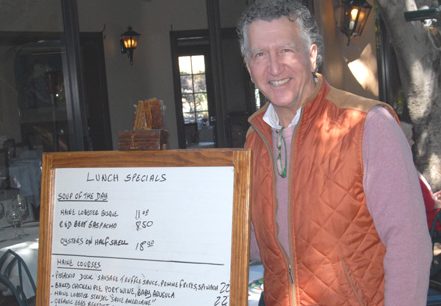
In his retirement, Fred Selensky enjoys his membership in the Oklahoma City Fiat Car Club and has built many friendships with other car enthusiasts over the years. But his weekly volunteer role has also brought new friendships into his life.
“When I retired, I was looking for a way to give back for the blessings I’ve received,” Selensky said.
So, he signed up to be a volunteer driver for the Retired and Senior Volunteer Program of Central Oklahoma (RSVP) Provide-A-Ride program, which provides low-income seniors transportation to doctor’s appointments. Last year, 66 RSVP Provide-A-Ride volunteers drove more than 400 clients to 6,065 medical appointments.
“It’s fulfilling a need in the clients I take because they don’t drive and don’t have to pay for a taxi to medical appointments,” he said. “It’s really fulfilling for me, too, and I enjoy doing something people appreciate. It’s not a chore”
April is National Volunteer Month, a month dedicated to honoring volunteers and encouraging volunteerism. Selensky is one of more than 900,000 Oklahomans who gave of their time last year, according to the Corporation for National and Community Service. Research shows that adults who volunteer are more likely to experience health benefits—longer life span and better mental health.
If you are interested in volunteering with RSVP as a Provide-A-Ride driver or with one of the many RSVP nonprofit partners, call 405.605-3110 or visit www.rsvpokc.org.

OMRF receives $5.9 million grant to study bleeding

0
OMRF scientist Courtney Griffin, Ph.D., was recently named the scientific director of OCASCR.

The National Heart, Lung and Blood Institute has awarded an Oklahoma Medical Research Foundation scientist $5.9 million to study new ways to control bleeding like that which occurs in aneurysms.
OMRF researcher Courtney Griffin, Ph.D., received a seven-year grant to pursue novel research into blood vessel function and factors that lead to uncontrolled bleeding.
“Seven years is like paradise to a scientist. It allows us to address questions and take our research in new directions we couldn’t have before,” said Griffin, who joined OMRF from the University of North Carolina at Chapel Hill in 2008. “This will give us the opportunity to dig in on basic science questions that could lead to new drugs and therapies for devastating conditions.”
The grant was awarded under a new federal granting program known as the R35, which was established to promote scientific productivity and innovation by providing sustained support and increased flexibility in research. NHLBI program officer Yunling Gao, Ph.D., said the R35 award is designed to provide long-term support to outstanding investigators like Griffin who are conducting research that breaks new ground or extends ongoing studies that are making significant contributions to the field.
“Dr. Griffin has been supported by the NHLBI’s programs over the past decade, and she has emerged as an expert in the field on protease-mediated regulation of vascular stability,” said Gao. “We look forward to her new breakthroughs and achievements for years to come.”
Griffin’s work is focused on proteases—proteins that chew up other proteins. At OMRF, she studies the role proteases play in a healthy setting and also the damage they can cause in blood vessel development when they go awry. When blood vessel integrity is compromised, they become weaker and can rupture, which can be fatal.
By knowing what vessels are susceptible and under what conditions, they can identify disease links that may be predictable and lead to the development of therapeutic interventions.
“The competition for these grants is fierce, and you must have an incredible track record to be considered for one of them,” said OMRF President Stephen Prescott, M.D. “The NHLBI is betting on Dr. Griffin, and she is an outstanding choice for this award. I have no doubt she will reward them with her incredible work.”
The grant, No. R35 HL144605, is from the NHLBI, a part of the National Institutes of Health.

Searching for new arthritis treatments

0
Oklahoma Medical Research Foundation scientist Tim Griffin, Ph.D.
OMRF physician-researcher Judith James, M.D., Ph.D.

Arthritis is the leading cause of disability in adults in the U.S., affecting more than 54 million people with more than 100 distinct types of the disease.
To make matters worse, there are no approved treatments for the most common form of arthritis—osteoarthritis. It stems from the loss of cartilage between bones and joints and will affect more than half of all Americans over the age of 65.
Understandably, this has led to much concern about the future of arthritis treatment.
“We all want to live long enough that we eventually have some wear-and-tear form of arthritis,” said Oklahoma Medical Research Foundation Vice President of Clinical Affairs Judith James, M.D., Ph.D. “But we don’t want any disability or limitations from it that tend to occur as we age. What we need is a disease-modifying drug.”
James, a rheumatologist and internationally recognized expert on arthritis, said that advancements in treating other forms of arthritis offer hope for similar developments in osteoarthritis.
“In the past decade, we have seen big changes in treatment for several types of arthritis, including the introduction of drugs and interventions for less-common forms like rheumatoid arthritis,” said James.
Rheumatoid arthritis is a chronic illness mainly characterized by inflammation in the lining of the joints, and it affects more than 1.3 million adults in the U.S. James currently serves as principal investigator on a clinical trial called StopRA, a prevention study for the disease.
“We are testing people who are at high risk of developing RA. Our goal is to get them on treatments that may help prevent the disease from ever occurring,” she said. If you are interested in participating or finding out more about the study, please call 405-271-7745 or email jackie-keyser@omrf.org.
The National Institutes of Health invests more than $500 million annually toward understanding and treating various forms of arthritis. Some of that work is happening at OMRF, including research by scientist Tim Griffin, Ph.D., who studies the effects of obesity on the development of osteoarthritis.
“Much of what we initially learned about osteoarthritis came from studying end-stage diseased tissues when people had their joints replaced,” said Griffin.
However, technological advances in imaging and biomarkers have allowed scientists to study earlier stages of disease. Griffin says that this has given new hope for a cure.
“We now think of early-stage OA as resulting from a family of different conditions, such as obesity, trauma, or aging,” he said. “Treatments that target the specific cause of osteoarthritis at the early stages may delay or even prevent disease.”
Multiple studies have shown that a diet avoiding inflammatory foods like saturated fats and refined carbohydrates can help protect you. Griffin’s lab recently found that diets high in saturated fats increased the risk of joint inflammation in mice—even before cartilage loss began.
“We are working on this disease in earnest and continue to understand more and more about it,” said James. “I am increasingly hopeful that we will see a treatment for osteoarthritis in our lifetime.”
But while we await the first osteoarthritis drug, what can we do in the meantime?
“‘Move as much as you can,” said James. “The more you sit, the stiffer and more painful your joints become. Other keys are to maintain a reasonable body weight and participate in joint-safe exercises like swimming or using an elliptical machine.”

OU Medicine Neurosurgeon First To Use Lifesaving Stent on Aneurysms

0

Aneurysms in the brain are dangerous because, if they rupture, patients face a significant chance of dying within six months. To decrease that possibility, OU Medicine neurosurgeons are using a new medical device to prevent aneurysm rupture and recurrence — without major surgery opening a patient’s skull. Neurosurgeon Bradley Bohnstedt, M.D., has been using the Surpass Streamline Stent to divert the flow of blood away from an aneurysm, which greatly decreases its potential for rupture. The procedure is minimally invasive – via a catheter, the stent is inserted into a blood vessel near the groin, then Bohnstedt directs it all the way up to the aneurysm in the brain.
OU Medicine was the first in Oklahoma to place the Surpass Stent in a patient. The advantage of the device is that it is designed to treat larger aneurysms in more areas of the brain. The technology is called “flow diversion” for its ability to route blood away from the aneurysm.
“By diverting the flow of blood away from the aneurysm, it reduces the stress on the wall of the aneurysm and allows it to heal and shrink,” Bohnstedt said. “In six months to a year, the aneurysm takes on the normal shape of the blood vessel.”
Bohnstedt describes aneurysms as blisters on the side of a blood vessel. If an aneurysm ruptures, 10 percent of patients will die before they make it to a hospital. Up to 50 percent of people whose aneurysms rupture will die by six months because of ensuing complications, Bohnstedt said.
Because of readily available imaging techniques, physicians are finding more aneurysms today than ever before. Some aneurysms are small and never need to be treated, Bohnstedt said, but others are risky to the patient.
“It’s important when we identify aneurysms that we stratify their risk for rupture to determine which ones need to be treated,” he said. “Then we want to treat them sooner rather than later.”
The treatment of aneurysms has evolved as technology has improved. Traditionally, Bohnstedt would open up the patient’s skull and place a clip on the aneurysm to prevent its rupture. He still performs that surgery when necessary but, while effective, it is invasive and leads to a long recovery for the patient. With the advent of endovascular techniques, neurosurgeons gained a minimally invasive method of accessing an aneurysm by traveling through the blood vessels. The first and second generations of endovascular treatment involved placing coils made of platinum inside the aneurysm to keep the blood flow at bay. With this technique, patients faced far less recovery time, but the aneurysms recurred about 40 percent of the time.
The Surpass Stent, made of metal, is greatly improved in all areas – it works well for larger, more distant aneurysms and, once treated, they don’t seem to return.
“We’re treating far more aneurysms with the Surpass Stent than we previously treated,” Bohnstedt said. “We also hope to be involved with the study for the next generation of the Surpass device, which will have the ability to treat even more sizes of aneurysms in additional parts of the brain. OU has been an early adopter of new technologies after FDA approval, which allows our patients to be a part of research studies for devices that aren’t readily available to the public.”

Senior-Focused Educational Event Scheduled at Crossing Community Church May 10

0

RSVP of Central Oklahoma is proud to partner with Eunice Khoury, Well Preserved Advisory, and Crossings Community Church to host Senior Day on Friday, May 10, 8:30 a.m. to 4:30 p.m. at Crossings Community Church, 14600 Portland Avenue, Oklahoma City.
“For a number of years, I have been looking to have a senior-focused educational event that brings together the seniors in our community with trusted professionals who provide services and have the resources our seniors need,” said Senior Day founder Eunice Khoury.
Senior Day is for people 55+ and is a day-long event that will include approximately 20 classes on such topics as Caregiving, Carla Scull, Oklahoma Alzheimer’s Association; Medicare, Ray Walker, Director of Medicare Assistance Program, Elder Fraud, Elaine Dodd, Oklahoma Banking Association, and the Care Trak Bracelet for Alzheimer Families, Patrick O’Kane, Sunbeam Family Services.
Berry Tramel, sports editor for The Oklahoman will be the keynote speaker. A lifelong Oklahoman, sports fan and newspaper reader, Tramel joined The Oklahoman in 1991 and has served as beat writer, assistant sports editor, sports editor and columnist.
Registration for Senior Day at Crossings Community Church is $12 and includes lunch. You may register online at www.crossings.church/senior-day or call 405.848.5790.

Care and comfort: Willowood caters to seniors

0
Nancy Klepac, LPN, Certified Dementia Practitioner, Executive Director at Willowood at Mustang is making the senior residence outstanding in the Mustang Community.

by Bobby Anderson, Staff Writer

Walking into Willowood you’re bound to see someone sitting at the piano playing a tune or relaxing on one of the couches in the grand entryway reading a book.
There’s a feeling of home inside Willowood that Executive Director Nancy Klepac, LPN, Certified Dementia Practitioner, and her staff work hard to foster.
Care and comfort combine at Willowood, which will undergo a facelift this year thanks to a new owner.
Klepac is excited about the plans guided by Heart Living Centers for the community that has enjoyed a long history in the wonderful and quaint city of Mustang.
“In the next few months I know Heart Living Centers will be diligently working to get our permits and reconstruction underway and I’m looking forward to the residents seeing the new construction and feeling the new construction,” Klepac said. “It will give everyone a breath of fresh air and give Willowood the distinction it deserves.”
Situated along State Highway 152 Willowood’s stately columns hint at what waits inside.
Details have been carefully thought out to meet resident needs.
Klepac has spent a quarter century caring for seniors and their details.
“We offer a variety of services and we have a very high bar of care that is exemplary for our residents that are living here,” said Klepac, whose innate calling has always been caring for elderly people.
Heart Living Centers represents new beginnings for Willowood with renovations and many updates to come.
Meeting with new ownership was a satisfying feeling for Klepac.
“It was very exciting,” Klepac said of partnering with Heart Living Centers. “This home has a long history and has been in need of a few things. It’s ready for its updates so it’s exciting to see what Heart Living Centers with their resources and progressive experience in the industry can do.”
Klepac’s experience with senior living runs the gamut from nursing to leadership.
From a very young age, Klepac began caring for family. She became a nurse aide at 14. “This is a calling for me,” Klepac said. “I knew that when I was six years old and so did my family that my innate calling was for the caring of elderly people. When I became a nurse I didn’t work in any other field other than long term care.”
She was eventually drawn to Willowood, starting as the director of wellness.
“I believe our care is something we do very well,” Klepac said. “We are also very respectful of residents and allowing our residents to do what they would like to do as long as it is same for them.”
“I’m very strong on residents making their own decisions about their care.”
That’s near and dear to Klepac’s nurse heart.
You’ll see her in scrubs on some days helping out where she is needed.
“Scrubs wash easily,” Klepac laughs, recounting the times she’s pitched in to help wherever a resident might need her.
“My nursing foundation is probably the most important thing to me in serving as the executive director,” she said. “And I do believe it’s a service. It allows me to look at things clinically as well as from the business aspect in the community.”
It’s also why she’s looking to help Willowood expand its reach to potential residents with chronic illnesses that are often underserved by traditional senior living communities.
In the coming months Klepac said you’ll see Willowood offer services for chronic disease management not typically seen.
And she won’t do it alone.
Her staff is her extension throughout the building.
“I have a very strong team here at Willowood. They care for our residents. They put our residents first, which in this day and time is a hard thing to find in our industry,” Klepac said. “They are on-call 24 hours a day, seven days a week without exceptions to all of our residents and their families.”
“All of of our residents have our personal telephone numbers, myself and all my department heads.”
That means availability for Willowood residents. Whether it’s something that doesn’t work in the middle of the night or the middle of the day, residents have the ability to reach out.
And even if they don’t need anything, Klepac and her staff are their to love on them.
“The care I see them provide to the residents and their families is just exemplary,” Klepac continued. “In this industry it can be draining to give all day long and then go home to their families, yet my team never seems to be short on the ability to give.”

Settling in: UCO’s new president ready

0
Patti Neuhold will step into the role of president of the University of Central Oklahoma later this summer.

by Bobby Anderson, Staff Writer

Like many people, Patti Neuhold never saw the next big thing in her life coming.
But as the dust began to settle and spring had finally sprung, Neuhold was getting her head wrapped around the fact later this summer she would become the next president of the 16,000-student University of Central Oklahoma.
“I’m excited about it. Every day I realize more is going to come my way and opportunities I’ll get to be a part of and it’s exciting,” said Neuhold.
Earlier this year, the Regional University System of Oklahoma announced Neuhold will become UCO’s 21st president following the June retirement of current President Don Betz.
Neuhold is the Vice President for Finance and Chief Financial Officer for the University of Central Oklahoma. She has a deep knowledge of UCO, having served in leadership in finance and budget, administrative and professional development departments, joining the university in 2007.
With two degrees earned and a third almost completed Neuhold is a proud product of education.
“I would not be where I’m at today without education and that’s a fact,” Neuhold said. “It is, in my opinion, a life changer. Education equals freedom for so many people. It can change the trajectory of an entire family for generations to come.”
“For me, to be able to open that door is so rewarding. I want to make sure other people have the opportunity to grow and shape their destiny the way I have.”
Neuhold balanced UCO’s $187 million budget through years of the most significant declines in state support and declining enrollment. She facilitated business process reviews that resulted in savings, higher retention of faculty and new leadership development opportunities.
“Patti Neuhold has the leadership experience, and vision for the university that will help prepare our students to contribute ideas, innovation and solutions to the marketplace,” said Mark Stansberry, RUSO regent chair. “Her blend of financial acumen, organizational development and understanding of what industry needs will help UCO continue to lead in education and workforce development.”
Neuhold was approved by the board of regents after a national search.
“This is not something I had been working towards,” Neuhold said. “This really wasn’t on my radar for some time.”
But when President Betz announced his retirement last year the wheels started turning. And Betz had already been preparing her.
“He was always very encouraging and helpful in helping me see the possibilities that were ahead of me,” she said.
These are challenging times for higher education in Oklahoma.
“It’s no secret the State of Oklahoma has withdrawn its financial support from higher education across our state,” Neuhold said. “I – like all the other presidents in the state – will be dealing with our allocation from the state and building a relationship with legislators where they understand where we are coming from and what we’re trying to do.”
“Society in general is pushing back against higher education and really forcing all of us to justify our existence, which seems counterintuitive for many of us. I think we’ll be dealing with changing our stories and making sure people understand what is going on behind the curtain and doing everything we can with what we have.”
From its main campus in Edmond and facilities throughout the metro area, UCO is recognized nationally as a military-friendly school and for its high student engagement through service-learning and volunteerism and its workplace environment.
“I hope that No. 1 we can pair our innovative thinking with innovative action. I really want to see UCO move ahead,” she said. “We have so many great problem solvers on our campus – so many innovative thinkers – and I would love to see all of that paired with action.”
“I want UCO to be marked by progress, and potential and possibility.”
She stood out in the selection process but Betz already knew she would.
“Patti has been a key member of the university cabinet for several years, and has exercised significant leadership on a number of highly relevant issues to the university,” Betz said. “I believe that Patti will serve the UCO community, the metro and the state with energy, insight and distinction. I will work closely with her throughout the transition. I am delighted, and I sincerely look forward to the successful future of the university under her leadership.”

Sister Act: Archer sisters leave lasting legacy

0
Sisters (left to right) Cindy Milam, MS, RN, Kay Wetmore, RN and Robin McMurry, PhD, RN, are leaving a lasting legacy training tomorrow’s nurses at Oklahoma City Community College.

by Bobby Anderson, Staff Writer

Go into any health care facility in the metro and you’re bound to find at least one or two nurses trained by a unique trio of sisters that have quietly been inspiring the next generation for more than a decade now.
The Archer sisters – married and known as Kay Wetmore, Robin McMurry and Cindy Milam – have always been close. They began working in the family office supply business early in their middle school years.
And as each grew up and found their own paths into the nursing profession none are surprised they’re working together again as faculty for the Oklahoma City Community College nursing program.
Wetmore and McMurry came to OCCC 12 years ago.
At the time, McMurry was the CNO at Moore Medical Center when it was sold to Norman Regional.
She had a five-year-old and decided teaching was a better schedule.
“You can only individually touch so many patients but as a teacher I think that number is exponential,” McMurry said. “We daily see people when we go into the hospital that we taught. I think that’s really rewarding when they graduate and go on to be caregivers.”
“I think one of the most rewarding things I’ve ever done is teaching. It’s meaningful work.”
“Office supplies are good but when you go around in second grade and someone says ‘what do you want to be when you grow up’ no one wants to sell office supplies.”
Both Wetmore and McMurry have backgrounds in OB.
Milam joined her sisters eight years ago and oversees the clinical skills lab.
“We’ve always worked together,” Milam said. “I like the fact we are affecting future nurses and caregivers and trying to set the standard as high as possible for good, quality nurses.”
Not only did they choose to become nursing professors but they chose to teach students in arguably the toughest program in the metro.
Baccalaureate to Associate Degree Nurse Accelerated Pathway – or BADNAP – takes students with existing bachelor’s degrees and compresses all of the nursing processes into 10 consecutive months.
“They’re coming back at a time in their life where they’ve probably stopped working so the stakes are very high for these students and so is the anxiety,” McMurry said. “Sometimes it’s more important for us to nurture than it is to teach.”
“We say everyone gets one good cry in BADNAP. But students need to feel like they’re in an environment where we care about them.”
“It’s the hardest way to get a nursing degree and there’s so much at stake when they come to us.”
BADNAP grad Nick Hargis remembers that initial meeting with the feisty McMurry.
“Robin walked up to me and said ‘I can turn you into a nurse in 10 months,’” remembers Hargis, now an ICU nurse at SSM Health St. Anthony. “I thought it was a nice offer, but it was actually a command.”
Graduate Emerson Oden said he was constantly amazed at how much the sisters would pour into students.
“Those sisters could be making way more money in nursing by doing other things, but they’ve decided to dedicate an incredible amount of their time, energy, and sanity towards making us into nurses,” he said. “(BADNAP) was equal parts caffeine, smarts, encouragement and butt whoopins.”
It’s how the Archer girls were raised.
After their father, Jim, passed last November, the sisters were instrumental in helping make sure future nursing students would always have help from their family at OCCC.
A scholarship was established by their mother, Judy Archer, and the four daughters. Sister Chris Eskew is a librarian at a Yukon elementary school.
OCCC Nursing students now benefit from the endowed Jim & Judy Archer and Ed & Eva Pope Nursing Scholarship, currently valued at more than $111,000.
There are eight nurses in the Archer family, and four of them started their training at OCCC. Those eight nurses have earned two master’s degrees, a PhD and one doctor of nursing practice degree.
Their specialties include labor and delivery, education, pediatrics, surgery, intensive care, emergency medicine, oncology, community health and adult and pediatric sexual assault forensic nursing.
Eskew, the librarian, also earned her master’s degree.
“It leaves a legacy,” Wetmore said. “It not only leaves a legacy in the healthcare profession by creating more nurses it also leaves a legacy within those individual families because we’re affecting their ability to support their families in a way that’s flexible and workable.”
“When you only have to do three 12’s a week you can be involved in your children’s lives.”

Significant Women in Oklahoma Agriculture: Mattie Jeffries

0
Mattie Jeffries pictured on her farm feeding cattle. Jeffries is being recognized as a Significant Woman in Oklahoma Agriculture.

by Betty Thompson

JAY—There’s no place like home.
Mattie Jeffries grew up on beans, cornbread, and hard work.
The second to youngest of eight children and raised by a single father, Jeffries was familiar with gender equality in their home. She chopped firewood, helped with outside chores, cooked, and cleaned alongside her four brothers and three sisters.
Though her mother was not around when she was growing up, Jeffries said she looked to her older sisters as an example of how to be a lady. Over the years, she changed from the little girl who just threw a cap and boots on.
“Just because I work like a man doesn’t mean I have to look like one,” Jeffries said. “My hands might be rough and calloused but at least my fingernails are pretty in pink. The old saying is true, ‘Even an old barn looks better with a new coat of paint.’”
Her father, Leslie Currey, was a welder by trade and taught Jeffries and her siblings to weld as well. Her four brothers are all welders today, and all eight children own their own businesses.
“Dad raised us to be independent,” Jeffries said. “I’ve heard the more you know the more you’ll have to do, but my philosophy is, the more you know the more you can do yourself.”
As a little girl, Jeffries dreamed of owning her own horse ranch.
“When I was little we didn’t have much, so we went to ride our neighbor’s horse,” Jeffries recalled. “I fell in love with horses and the freedom you feel when riding them.”
Eventually, she did get her own horse, and Dolly played a bigger role in Jeffries’ life than just being part of her horse farm dream.
She did not know Navada Jeffries well at the time, but she remembered the former athlete and fellow graduate of Jay High School who sold hay. And she needed hay for Dolly.
“I didn’t even pay attention to him in high school,” Jeffries laughed. “I was the country girl, and he was the preppy sports guy. He might have played football, but I never saw.”
The two hit it off after that hay delivery, and less than a year later, they were married.
While she did not wind up with the horse ranch she once dreamed of, Jeffries said she has something even better—a cattle ranch, with a few horses sprinkled in.
She and Navada built N & M Farms (named for Navada and Mattie) from the 100 cows Navada had when they began dating. When they first started the farm, they leased all of the land to run the cattle on.
“Together, with God, we grew what we have,” Jeffries said. “Neither my husband or I were given anything, we’ve had to work for everything.”
In the early years of their marriage, Jeffries was working at the bank in town and helping Navada with the farm in her spare time.
“I tagged along with him after hours and on the weekend,” Jeffries said. “He had a hired hand at the time to help him bale hay and work cattle and I told him, ‘Well I can do that!’ He told me I couldn’t, but I proved him wrong.”
Jeffries began working side-by-side with her husband on the tractor, mowing, raking, baling and hauling hay. She even helped him clean out chicken houses for fertilizer.
“I love being outside,” Jeffries said. “We work hard, and I don’t mind working hard.”
She worked at Navada’s side right up to the night before she had their first child, a daughter they named Dakota. She was back on the tractor just a little over a week later, loading up Dakota’s car seat and taking her anywhere from feeding stockers and baling hay, to working cattle and building fence.
Not much changed when their second daughter River came 13 months later, she just took both of them along in the cab of the tractor.
“I’ve raised two daughters in the tractor,” Jeffries said. “It was like having twins, the girls are 13 months apart.”
At the end of those long summer days in the hay field, Jeffries still made time to cook dinner for the family, and keep up with the other household chores, even if it was at 10 p.m.
“I’m a full-time farmer, full-time wife, and full-time mother,” Jeffries said.
While she admits those three jobs are very exhausting, she would not trade it for anything.
In 2003, eight years after beginning their farm, they were able to buy their first piece of property. Since then, they have continued to purchase more land and cattle.
“We think the same, and we have the same goal,” Jeffries said of working with her husband. “I believe it has strengthened our marriage being able to work together like this.”
Their third child came in 2009, a son named Navada Baler, who Jeffries describes as a “100% total farm boy.”
“He’s being raised in the tractor too,” Jeffries said. “He can already drive it.”
Over the years, hard manual labor took a toll on Jeffries back. In October 2015, an MRI revealed she had four ruptured discs and was on bed rest for an entire month. Friends and family told her she needed to quit working on the farm because they feared she would end up paralyzed.
“I didn’t want to have surgery but if that was what it was going to take for me to continue working on the farm then I was determined to do it.”
A friend told her about a spine specialist about an hour away in Owasso, and desperate for relief, Jeffries scheduled the first available appointment.
“I hadn’t been able to walk because of the pain,” Jeffries said. “He adjusted me and asked me to walk around the room. It was like flipping a switch on the pain. I’m not a crier, but I just started crying right then.”
It has been three years since that first doctor’s visit and Jeffries is back on her feet doing what she loves—working side-by-side with her husband and children. She said she cannot imagine doing anything else with her life.
“Owning a piece of our great nation is truly the American dream,” Jeffries said. “There is no place I’d rather be than in the tractor seat on a smooth piece of ground, on horseback gathering cattle, or being with my family on the farm making great memories. There isn’t any place like home.”

Social

0FansLike
0FollowersFollow
0SubscribersSubscribe