Friday, March 20, 2026

SAVVY SENIOR: Recognizing and Treating Depression in Retirement

0

Dear Savvy Senior, Since retiring a few years ago, my husband has become increasingly irritable and apathetic. I’m concerned that he’s depressed, even though he may not admit it. Where can we turn to get help with this, and what, if anything, does Medicare pay for?  Concerned Spouse

Dear Concerned,
Depression is unfortunately a widespread problem among older Americans, affecting approximately 15 percent of the 65-and-older population. Here’s what you should know, along with some tips and resources for screening and treatments, and how Medicare covers it.
Identifying Depression
Everyone feels sad or gets the blues now and then, but when these feelings linger more than a few weeks, it may be depression. Depression is a real illness that affects mood, feelings, behavior and physical health, and contrary to what many people believe, it’s not a normal part of aging or a personal weakness, but it is very treatable.
It’s also important to know that depression is not just sadness. In many seniors it can manifest as apathy, irritability, or problems with memory or concentration without the depressed mood.
To help you get a handle on the seriousness of your husband’s problem, a good first step is for him to take an online depression-screening test.
He can do this for free at Mental Health America, a national nonprofit organization that offers a variety of online mental health screening tools at MentalHealthAmerica.net – click on “Take a Screen” in the menu bar. Or at HelpYourselfHelpOthers.org, which is offered by Screening for Mental Health, Inc.
Both of these tests are anonymous and confidential, they take less that 10 minutes to complete, and they can help you determine the severity of your husband’s problem.
Get Help
If you find that he is suffering from depressive symptoms, he needs to see his doctor for a medical evaluation to rule out possible medical causes. Some medications, for example, can produce side effects that mimic depressive symptoms – pain and sleeping meds are common culprits. It’s also important to distinguish between depression and dementia, which can share some of the same symptoms.
If he’s diagnosed with depression, there are a variety of treatment options including talk therapy, antidepressant medications or a combination of both.
Cognitive behavioral therapy (CBT) is a particularly effective type of talk therapy, which helps patients recognize and change destructive thinking patterns that leads to negative feelings.
For help finding a therapist who’s trained in CBT, ask your doctor for a referral, check your local yellow pages under “counseling” or “psychologists,” or check with the Association for Behavioral and Cognitive Therapies (FindCBT.org), or the Academy of Cognitive Therapy (AcademyofCT.org).
And to search for therapists that accept Medicare, use Medicare’s Physician Compare tool. Go to Medicare.gov/physiciancompare and type in your zip code, or city and state, then type in the type of profession you want locate, like “psychiatry” or “clinical psychologist” in the “What are you searching for?” box.
Medicare Coverage
You’ll be happy to know that original Medicare currently covers 100 percent for annual depression screenings that are done in a doctor’s office or other primary care clinic. They also pay 80 percent of its approved amount for outpatient mental health services like counseling and therapy services, and will cover almost all medications used to treat depression under the Part D prescription drug benefit.
If you and your husband get your Medicare benefits through a private Medicare Advantage plan, they too must cover the same services as original Medicare but they will likely require him to see an in-network provider. You’ll need to contact your plan directly for the details.
Send your senior questions to: Savvy Senior, P.O. Box 5443, Norman, OK 73070, or visit SavvySenior.org. Jim Miller is a contributor to the NBC Today show and author of “The Savvy Senior” book.


Apr/May AARP Drivers Safety Classes

0

Apr 4/ Thursday/ Okla. City/ 9 am – 3:30 pm/ 951-2277/ Varacchi
Integris 3rd Age Life Center – 5100 N. Brookline, Suite 100

Apr 9/ Tuesday/ Yukon/ 9:00 am – 3:30 pm/ 350-7680/ Kruck
Dale Robertson Center – 1200 Lakeshore Dr.

Apr 12/ Friday/ Okla. City/ 9 am – 3:30 pm/ 951-2277/ Edwards
S,W. Medical Center – 4200 S. Douglas, Suite B-10

Apr 12/ Friday/ Okla. City/ 9 am – 3:30 pm/297-1449/ Palinsky
Southern Oaks Recreation Center – 400 S.W. 66th St

Apr 13/ Saturday/ Chandler/ 9 am – 3:30 pm/ 834-2348/ Brase
First United Methodist Church – 122 West 10th

Apr 23/ Tuesday/Okla, City/ 8:30 am – 3:30 pm/ 773-6910/ Kruck
Healthy Living Center – 11501 N. Rockwell Ave.

May 2/ Thursday/ Okla. City/ 9 am – 3:30 pm/ 951-2277/ Varacchi
Integris 3rd Age Life Center – 5100 N. Brookline

May 9/ Thursday/ Norman/ 9 am – 3:30 pm/ 307-3177/ Palinsky
Norman Regional Hospital – 901 N. Porter Ave.

May 10/ Friday/ Okla. City/ 9 am – 3:30 pm/ 951-2277/ Edwards
S.W, Medical Center – 4299 S. Douglas, Suite B-10

The prices for the classes are: $15 for AARP members and $20 for Non-AARP. Call John Palinsky, zone coordinator for the Oklahoma City area at 405-691-4091 or send mail to: [email protected]

Understanding social security survivors benefits

0

By Jose M Olivero, Social Security Public Affairs in Oklahoma City

Unfortunately, tragedy can strike without any warning. The loss of the family wage earner can be devastating both emotionally and financially. Social Security helps by providing income for the families of workers who die.
Some of the Social Security taxes you pay go toward survivors benefits for workers and their families. The value of the survivors benefits you have under Social Security may even be more than the value of your individual life insurance. When you die, certain members of your family may be eligible for survivors benefits. These include widows and widowers (and divorced widows and widowers), children, and dependent parents.
Here are the people who can get survivors benefits based on your work:
* Your widow or widower may be able to get full benefits at full retirement age. The full retirement age for survivors is age 66 for people born in 1945-1956, with the full retirement age gradually increasing to age 67 for people born in 1962 or later. Your widow or widower can get reduced benefits as early as age 60. If your surviving spouse is disabled, benefits can begin as early as age 50.
* Your widow or widower can get benefits at any age if they take care of your child younger than age 16 or disabled, who is receiving Social Security benefits.
* Your unmarried children, younger than age 18 (or up to age 19 if they’re attending elementary or secondary school full time), can also get benefits. Your children can get benefits at any age if they were disabled before age 22. Under certain circumstances, we can also pay benefits to your stepchildren, grandchildren, stepgrandchildren, or adopted children.
* Your dependent parents can get benefits if they’re age 62 or older. (For your parents to qualify as dependents, you must have provided at least half of their support.)
You can read more about Survivors Benefits at:
www.socialsecurity.gov/pubs/EN-05-10084.pdf.
How much your family can get from Social Security depends on your average lifetime earnings. The more you earned, the more their benefits will be. For more information on widows, widowers, and other survivors, visit www.socialsecurity.gov/planners/survivors.
Social Security is with you through life’s journey. Be sure to tell friends and family about our Survivors Benefits and how we can help in times of need.

Application deadline is nearing Hearing Loss Association

0

Application deadline is nearing. Central Oklahoma Chapter of Hearing Loss Association of America (COC HLAA) is offering two scholarships of $1,000 each. These scholarships are available to students attending higher education in the fall of 2019. The main requirements are that the applicant must have a hearing loss, be an Oklahoman, attending an Oklahoma institution of higher education. Applications may be mailed to COC HLAA, PO Box 42801, OKC 73123, or delivered to the Hearing Helpers Room, 5100 N Brookline, Suite 100, OKC 73112. Application deadline is April 8, 2019, 5PM.
If you know of a student who might be interested, OCO HLAA encourages you to inform them of this scholarship and suggest they make application immediately
COC HLAA has been providing assistance to Oklahomans with hearing loss for 27 years. 2019 holds hope for returning servicemen & women with hearing loss as COC HLAA reaches out with assistance to veterans. 2019 offers a place with COC HLAA to find answers and hope for families of children with hearing loss. 2019 expects to see many more public places joining the Loop OKC initiative to become more hearing friendly and ADA compliant. Central Oklahoma Chapter of Hearing Loss Association of America stands ready to welcome all. Two meetings monthly that are free and open to the public; 2nd Monday monthly at 6:30 PM and 3rd Thursday monthly at 1:30 PM held at the Lakeside Methodist Church 2925 NW 66. Visit the website for more information. WWW.OKCHearingLoss.org.

NORMAN-BASED ORGANIZATION ANNOUNCES OPENING OF NEW ADULT DAY CARE FACILITY

0

Norman, Oklahoma. Full Circle Adult Day Care Center dedicated its new facility on March 26th with a ribbon cutting ceremony and an open house. The new location is 4223 28th Avenue NW, Norman, Oklahoma, in the Franklin Business Park. Established in 1995 out of an urgent and growing need for adult day services in the Norman community and surrounding areas, Full Circle provides person-centered care. Our Program Coordinator plans and implements a variety of stimulating activities based on our members’ interests and abilities. The comprehensive program addresses all areas of wellness including intellectual, physical, emotional, vocational, spiritual, and social health, through both group and individual activities such as pet visits, community outings, an intergenerational program, art classes, cooking groups, entertainment, holiday celebrations, special events, and more. Nutritious meals are provided and special diet needs are met by the kitchen staff. Costs are kept as low as possible and we accept DHS, Advantage, VA benefits, and private pay. Scholarships are also available to those who qualify. Our new facility is state of the art, with families as our top priority.
Our Licensed Professional Nurse (LPN) monitors dietary and health needs of our members. Certified Nurses Assistants (CNAs) provide assistance with activities of daily living and personal care needs. Medication is administered by our LPN or a Medication Administration Tech (MAT) as directed per physician’s orders. Any concerns regarding the wellness and care of our members are communicated to the family and physician.
Full Circle has been referred to as the “missing piece” for caregivers struggling to keep loved ones at home as long as possible and a respite for those caregivers needing a welcome break to look after their own health and wellbeing. Full Circle would like to extend a warm invitation to everyone in the community to come see what we have accomplished and what we have to offer. For more information, please call us at 405-447-2955 or visit us at www.fullcircleok.org.

Brightmusic’s Fifth Concert of the 2018-19 Season

0

Mozart: From Salzburg to Vienna

The Brightmusic Chamber Ensemble will present its fifth and final regular-season concert, Mozart: From Salzburg to Vienna, Tuesday, April 16, at 7:30 p.m. This all-Mozart evening will feature his most popular work, Eine kleine Nachtmusik.
Mozart’s String Duo No. 1 in G (K. 423) for violin and viola was written when the child-genius was only 17 to help out a colleague—Joseph Haydn’s brother, Michael—who was unable to complete a commissioned work due to illness. By this time, Mozart had been composing for over a decade so, though it is a youthful work, it does not lack maturity. Like Eine kleine Nachtmusik, the Quintet for Clarinet and Strings in B-flat (K. Anh. 91), for two violins, viola, cello and clarinet, was published after the composer’s death at the early age of 35. The quintet, like a number of Mozart’s later works, was finished by another, in this case, the renowned Mozart scholar R.D. Levin. The program will include Mozart’s enchanting violin sonata No. 24 in B-flat (K. 378/317d), transcribed for clarinet quartet (violin, viola, cello and clarinet).
Capping the evening is a work that has long been considered Mozart’s best loved, his serenade Eine kleine Nachtmusik—literally “A Little Night Music” (K. 525) for two violins, viola, cello and double bass. This work was among a bundle of manuscripts that Mozart’s young widow took to a publisher hoping to generate some badly-needed cash. Though it is thought to be missing a movement, there is plenty of charm in the surviving four movements.
Musicians appearing in this concert are: Gregory Lee and Katrin Stamatis (violin), Samuel Formicola (viola), Meredith Blecha-Wells (cello), George Speed (double bass) and Chad Burrow (clarinet).
Brightmusic Chamber Ensemble, Oklahoma City’s own chamber ensemble, presents fine classical chamber music in the beautiful and acoustically-rich St. Paul’s Cathedral at 7th and N. Robinson near downtown Oklahoma City. Tickets are $20 at the door. Children, students and active-duty military personnel admitted free with ID. Free parking south of the cathedral. For more information, visit us at www.brightmusic.org

Quick Dispatch: Flu Crew comes to you

0
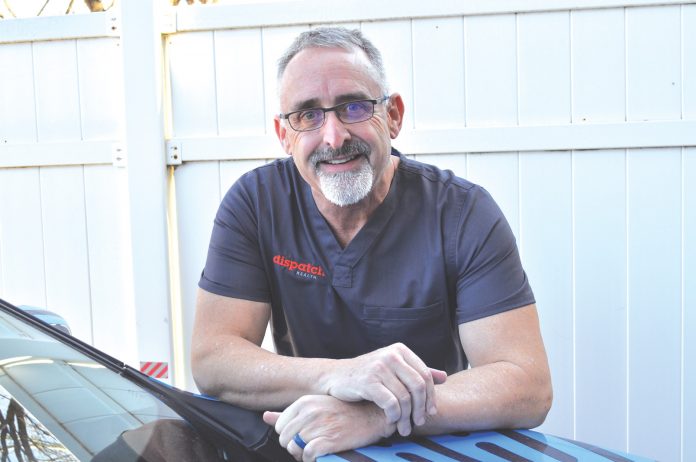
Richard Beevers, APRN, is one of the providers who will treat your illness in the comfort of your own home through DispatchHealth.

by Bobby Anderson, Staff Writer

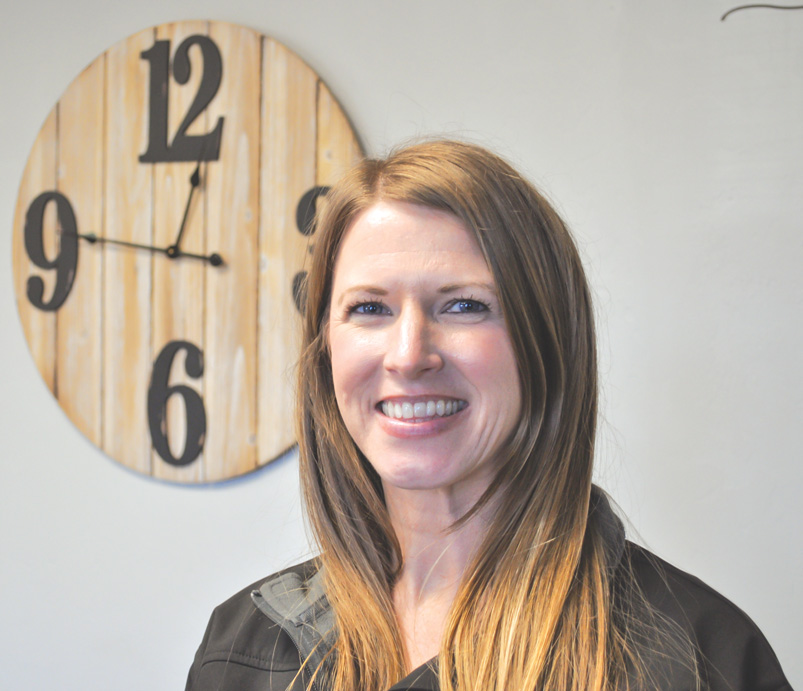
Nurse Practitioner Randee Green, APRN, likes helping patients receive the care they need at home.

The flu season is just now ramping into overdrive and Oklahomans are feeling it.
According to the most recent data provided by the Oklahoma State Department of Health, more than 250 Oklahomans were hospitalized for the flu the week of Feb. 13-19 alone – bringing the total number of hospitalizations to more than 1,200.
Some 31 Oklahomans have died from the flu since Sept. 1, 2018.
Nationally, the Centers for Disease Control estimates 20.4 million have already contracted the flu.
And in late February the CDC announced an emerging variant of the virus was responsible for nearly half of all cases and could push the season all the way into May.
Odds are you’ll come into contact with the flu this season.
But what if there were a way for you to minimize not only your exposure but the exposure of others when you start feeling sick?
Enter DispatchHealth, an innovative health care delivery model rapidly growing in the metro.
DispatchHealth is bringing back the house call with a modern technology twist. DispatchHealth gives patients ways to access convenient, high-quality acute care in the comfort of their home, office or in the location of need.
DispatchHealth is redefining the healthcare landscape as an extension of a patient’s healthcare team and offering solutions for simple to complex medical problems all from the comfort of your home.
While most seek treatment at an emergency room (ER) or urgent care clinic, when leaving one’s home the virus can be immediately exposed to others and cause further spread of the flu.
And if you don’t have the flu then you’re walking right into a waiting room full of it.
Randee Green, APRN, is one of the Dispatch nurse practitioners treating patients in their home.
“I know from working in the ER if they go to the ER and they’re 80 years old and say they’re weak they’re going to get worked up from head to toe,” Green said. “I like being able to go in with a couple tests I can run and say ‘this is something we can handle at home.’ Then if it’s not then we can send them on.”
“I do like the satisfaction of knowing I’ve saved this person from getting run through the mill in the emergency room.”
No lengthy waits. No need to leave your home.
And maybe one of the best things about the service is that for patients with Medicare, Medicare Advantage as well as Blue Cross and Blue Shield insurance plans the cost is the same or less than that of an urgent care co-pay.
A respiratory therapist for 15 years, Amy Evans is the Dispatch market director.
“I’ve learned what a valuable resource it is for seniors to keep them at home,” Evans said.
The flu is transmitted by contact and airborne measures and is especially dangerous for young children, seniors and those with chronic illnesses. A person who has caught the virus can infect others up to six feet away. Adults can infect others one day before their flu symptoms even develop and can pass on the virus up to a full week after becoming sick.
“If they don’t have the flu they risk getting it when they go to the ER,” Evans said. “If they do have the flu then they can stay at home and be comfortable and have someone come to them.”
“And the cost is cheaper than the ER.”
Evans said – on average – Medicare patients without a secondary insurance are paying less than $20 locally.
“I feel like I’m finally in a positive track in healthcare because we’re doing something to help,” Evans said. “We’re helping the population, the community and we’re helping the healthcare system reduce costs. It’s win-win all over the place.”
“We’re helping providers after hours so they not just telling them to go to the ER. We’re partnering with physicians, hospitals, post-acute care, skilled and assisted living.”
Services include testing such as: blood tests on-site, strep test, flu swab, urinalysis, urine cultures, stool culture, test for blood in stool, pregnancy test, lactate, 12-lead EKG, PT/INR, rapid infectious disease testing and more.
Medication – as well as IV fluid and breathing treatments – can also be administered on site.
DispatchHealth can be reached by calling 405-213-0190 and currently sees patients from 8 a.m. to 8 p.m.

Know when to go: When wounds just won’t heal

0
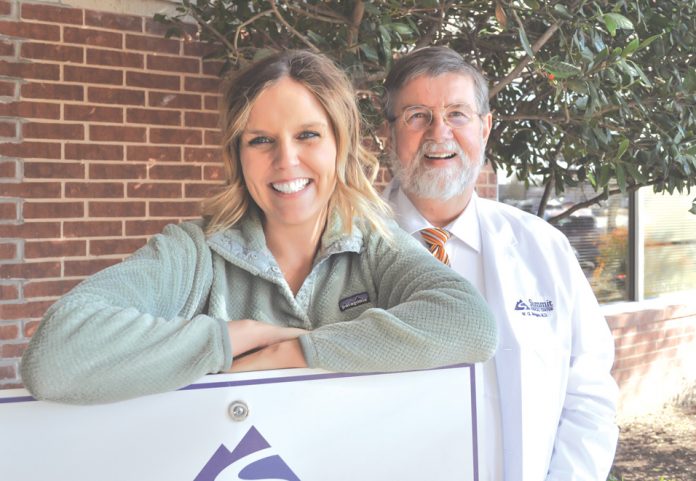
Summit Medical Center Wound Care and Hyperbaric Center’s Traci Davis, RN and Dr. William G. Morgan III help those with non-healing wounds.

by Bobby Anderson, Staff Writer

An open wound that just won’t heal can be a matter of life and limb.
Traci Davis, RN, is the director of wound care and hyperbarics at Summit Wound Care in Edmond and says seniors need to know when to seek care for a problem that can quickly get out of hand.
Davis says an open wound that hasn’t gotten at least 50 percent better in four weeks is indicated for advanced wound care.
“But, if you can get in sooner rather than later that’s always the best approach,” Davis said. “That way we can do any cultures or x-rays. Especially, diabetics if they are doing their weekly checks and notice they have a small opening that would be an indication to come in … to prevent it getting into a deeper, diabetic foot ulcer.”
What to know
According to the American Podiatric Medical Association, a diabetic foot ulcer is an open sore or wound that occurs in approximately 15 percent of patients with diabetes and is commonly located on the bottom of the foot. Of those who develop a foot ulcer, six percent will be hospitalized due to infection or other ulcer-related complication.
Diabetes is the leading cause of non-traumatic lower extremity amputations in the United States, and approximately 14-24 percent of patients with diabetes who develop a foot ulcer will require an amputation. Foot ulceration precedes 85 percent of diabetes-related amputations. Research has shown, however, that development of a foot ulcer is preventable.
Anyone who has diabetes can develop a foot ulcer. Native Americans, African Americans, Hispanics, and older men are more likely to develop ulcers. People who use insulin are at higher risk of developing a foot ulcer, as are patients with diabetes-related kidney, eye, and heart disease. Being overweight and using alcohol and tobacco also play a role in the development of foot ulcers.
Ulcers form due to a combination of factors, such as lack of feeling in the foot, poor circulation, foot deformities, irritation (such as friction or pressure), and trauma, as well as duration of diabetes. Patients who have diabetes for many years can develop neuropathy, a reduced or complete lack of ability to feel pain in the feet due to nerve damage caused by elevated blood glucose levels over time.
Vascular disease can complicate a foot ulcer, reducing the body’s ability to heal and increasing the risk for an infection. Elevations in blood glucose can reduce the body’s ability to fight off a potential infection and also slow healing.
Often times, wound patients have issues with arterial or venous disease.
“We see them every week so we tend to recognize changes,” Davis said. “As a whole, Dr. (William G.) Morgan III and ourselves we look at every system in the body and make sure everything is working together because if everything isn’t working together it makes for difficult wound healing.”
The holistic approach is one Dr. Morgan adopted long ago. Where some see wounds, Dr. Morgan sees much more.
“It’s all connected,” Dr. Morgan explained. “It’s not that we’re treating a wound, we’re treating a person that has a wound. All these things we deal with are connected.
“One of the rules about about wound care is that every wound is a window to an underlying problem.”
“That’s a rule with no exceptions.”
And if left unchecked, those wounds can lead to life-altering amputations.
“It’s extremely dangerous because diabetic foot ulcers very quickly get infected and can get staph infections very easily,” Davis said.
Lower-limb amputations may be rising after decades of decline, according to new data published in Diabetes Care, the journal of the American Diabetes Association.
After years of decline, the rate of amputations jumped by 50 percent between 2009 and 2015.
Oklahoma ranks No. 8 in the country in the number of individuals living with diabetes.
Davis has worked with Summit’s patients for the last eight years. She says it’s like family.
“The patients, Dr. Morgan and the relationships we have here,” Davis said of why she stays. “We are a little bit different in that we are more family-oriented, take care of each other and try to take care of our patients holistically and try to be advocates for them in other areas of their health care and get them to the right places they need to go.”
Patients are able to self refer to the clinic.

Stocking Up: Salvation Army needs pantry help

0
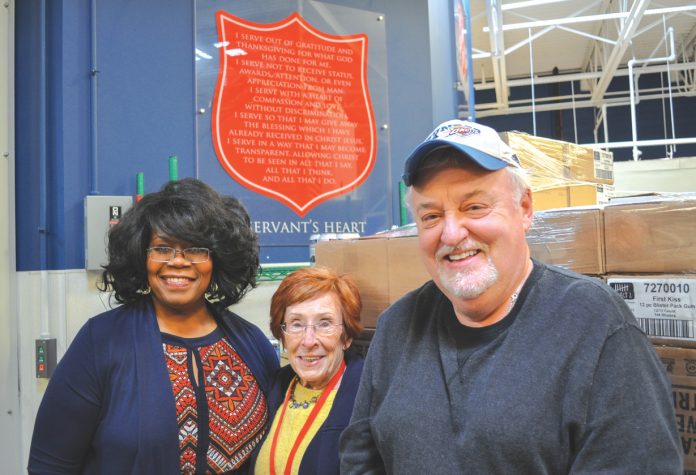
Volunteers are the backbone of the Salvation Army’s Food Pantry.

by Bobby Anderson, Staff Writer

The first year of Rick Dimit’s retirement went by in the blink of an eye.
By the time the second year rolled around he realized he needed to do something to get the most of out of his retirement.
“I wanted to do community work that was equivalent to about a day for a non-profit,” Dimit said, unfolding the story of how he got plugged into the Salvation Army Food Pantry.
Dimit’s professional life included serving as the human resources director at Francis Tuttle Technology Center. He also served as the equity officer at the University of Central Oklahoma as well as putting his law degree to work as inhouse counsel for the university.
But with all that behind him and more free time than he ever imagined he decided to commit to something once again that was bigger than himself.
“Once you’re down here and see the work they do and meet the people you basically just want to be a small part of their team,” said Dimit, who helps stock the pantry before visitors arrive. “They’re helping people that have desperate needs in a lot of areas of their life. It keeps me connected and makes me still feel like I’m part of a group and I really just appreciate what the organization stands for.”
Dee Watts serves as the social services ministry director. She says volunteers like Dimit are part of her “Salvation Army sunshine.”
“The fact we can get quality volunteers like Rick, they help us do our mission in the fact they’re not only giving people some food but they’re being kind and compassionate. It’s so important to me and the Salvation Army that we leave people intact. When they come they are honored and respected.”
“You might be coming here for something but it’s no different than if I were in that same position I would want to be treated that way.”
Currently The Salvation Army is in need of volunteers to serve in its Client Choice Food Pantry at its Oklahoma City location.
“We have seen an increase in donations for which we are extremely thankful,” said Liz Banks, volunteer coordinator. “With the increase of donations comes an increase in need of volunteers to help stock the shelves in the pantry and to serve clients.”
Dimit admits he may never truly understand the depth of how much the Salvation Army helps those in need.
“I couldn’t believe the pantry, the kitchen and after watching what they do at the holidays and so on I still don’t totally understand what they do but it’s just amazing how much is here to serve the community,” Dimit said. “A lot of people don’t understand that people walk through those doors and they have horrific needs and there is somebody here that if someone can’t address they’re getting another agency to help.”
“It’s just incredible.”
Volunteer duties may include assisting clients as they shop the pantry, preparing items before being placed on pantry shelves, and keeping the pantry shelves stocked. Volunteers are needed Monday through Friday at 1001 N Pennsylvania Avenue for the following shifts:
* Monday: 9 a.m. to 12 p.m. (Stock pantry) / 1 to 4 p.m. (Assist clients with groceries)
* Tuesday: 9 a.m. to 12 p.m. (Stock pantry) / 1 to 3 p.m. (Stock pantry)
* Wednesday: 8:30 a.m. to 12 p.m. (Assist clients with groceries) / 1 to 4 p.m. (Assist clients with groceries) / 10 a.m. to 2 p.m. (Stock pantry)
* Thursday: 10 a.m. to 2 p.m. (Stock pantry)
* Friday: 8:30 a.m. to 12 p.m. (Assist clients with groceries) / 10 a.m. to 2 p.m. (Stock pantry)
Watts urges people needing assistance to come to the pantry first before they start spending their limited monthly benefits like Social Security or food stamps.
“Let me see how much I can give you first so it will stretch,” Watts said. “That’s less out of your pockets.”
To learn more about this opportunity, please contact Liz Banks at 405-246-1107 or via email, [email protected].
Dimit admits if he can do it anyone can. Watts agrees.
“We can teach them whatever needs to be taught but just for them to be kind and generous and flexible with us,” Watts said of volunteer qualities. “We need someone with a servant’s heart – that nothing is too beyond them or too difficult.”

Significant Women in Oklahoma Agriculture: Highlight: Patti Townsend

0
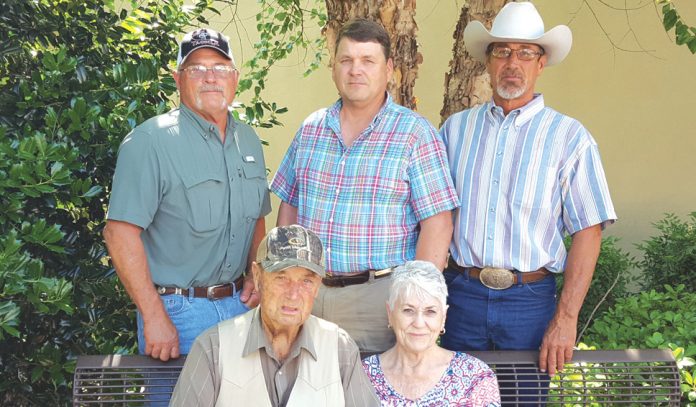
Patti Townsend of Milburn is being recognized as a Significant Woman in Oklahoma Agriculture. She is shown here with her husband Gayland and three sons Philip, Charles and Steven.

by Kaylee Snow

Move and adapt.
For Patti Townsend, her entire life could be described by these two words.
After enduring the drought of the Dust Bowl, Townsend’s father, an Oklahoma farmer and coal miner, decided to move his family west to California during World War II. There was a need for work in the shipyards because of the war, so he was certain a better life would await them there.
“My father just threw up his hands and said, ‘This farming is not worth it right now,’” she said.
Townsend grew up in San Francisco, a much different sight from the New Mexico cattle ranches she would soon call home.
After marrying Gayland Townsend, the two began ranching together in Albuquerque and then Roswell. They raised commercial cattle before incorporating Brangus into their herd, eventually owning nearly 800 head. The Townsends moved several times while in New Mexico, each time to a bigger ranch, before relocating to Oklahoma in 2004.
“I was chief cook and bottle washer,” Patti Townsend laughed, pointing out that she worked more than everyone else because she had two jobs: ranching and cooking.
She added, “They counted on me being out there helping them with cattle a nd then having dinner on the table too.”
“I wasn’t a hired hand,” she laughed. “I was a free hand. Let’s put it that way. I was out there working cattle and then having pot roast in the oven.”
She would have beans on the stove and cornbread in the oven while she worked cattle.
“They’d send me up there about 10 minutes before, and then I put everything on the table,” Townsend said. “They ate. I cleaned up. I was back out there in the corral.”
While the Townsends ranched in Roswell on the “home place,” Patti Townsend became heavily involved with the New Mexico Cowbelles. She served on the board, as secretary and as president.
“I did everything they asked me to,” she said.
Townsend worked beef cook-offs, helped the New Mexico Beef Council – where she also chaired the board – at the state fair, and helped put on the beef ambassador contest. She traveled to each region of the state giving workshops, ran booths at the state capitol, and visited schools to teach children about beef cattle. She also led farm tours to show the public more about the industry.
She recalls one lady being so excited – and scared – to give a cow a shot for the first time.
“She did it. She ended up giving that cow a shot, and then she raised her hands up and just thought that was the greatest thing in the world that she gave that cow a shot,” Townsend laughed.
It was the education and promotion of agriculture, specifically beef cattle, that drove Townsend.
She was involved on the local, state and national level. She was named the 1999 New Mexico Cowbelle of the Year and served as president. She also served as region director of the American National CattleWomen for six years and was president of ANCW in 2003.
Townsend, who “to this day still can’t believe it,” was named the 2011 ANCW Outstanding CattleWoman of the Year.
“It was the best honor I could have in my life,” she said.
The “home place” or “family ranch” as Patti Townsend calls it, is where the Townsends lived for about 21 years and raised three sons: Philip, Charles and Steven. It is also where Townsend started her sheep herd, which grew to nearly 600 head over a 20 year period.
“The boys had them [the sheep] for ag,” she said. “It was an ag project, and course they showed sheep too. The oldest one took off to college, and he had to sell his part of the sheep to the other two. And when the second one went off to college, he had to sell his part to the youngest one. And then when the youngest one when off to college, there was nobody to buy them but Momma. So I bought his share, and so those were Momma’s sheep now.”
“There was a herd of them by the time we finished with them because they can have triplets,” she laughed.
Her sons were all heavily involved in FFA, showing cattle, pigs and sheep. All three received their American FFA Degrees, and Charles was a state FFA officer.
All three also grew up to pursue agriculture. Charles is a veterinarian, Philip is a rancher and fishermen’s guide, and Steven runs the ranch, which is now located in Milburn, Oklahoma.
“We started getting bigger on account of the youngest son [Steven] wanting to be a rancher, and so that’s the reason we sold the family ranch,” she said. “He’s always wanted to be a rancher since he was 3 years old.”
The Townsends moved to a bigger ranch outside of Roswell first before moving the cattle to Oklahoma.
Why would a successful ranching family decide to move 500 miles to begin the challenge of raising cattle in a completely new state?
The answer can be found in one word: drought.
After year five of what would be an eight-year intense drought, the Townsends were at a crossroads. Their time in New Mexico had set them up for success in Oklahoma.
“A man walked up to us and wanted to buy the ranch,” she said, “and my husband said, ‘Sold.’ So we bought a place here in Oklahoma, and that’s where we are now. We still have Brangus cattle. We raise about 600 head here.”
As the ranches got bigger and more help came in the form of her sons, Patti Townsend wasn’t needed as much. However, she never got too far away from the ranch.
“I stayed involved with the cattle, and when we culled cows and stuff like that my husband wanted me out there working to make sure I was satisfied with what they sent to the sale and what they kept for heifers. They didn’t sell my pets. Let me put it that way,” Townsend laughed.
She became very involved with the Oklahoma CattleWomen and was slated to become an officer here too, before deciding she was needed more at home to take care of her husband after his heart attack.
“I’m getting back involved with them again, but I am not moving up to be president so leave that off your list,” she laughed.
She has truly loved the ranching life – where she spent her entire career – and is hopeful that her grandchildren and great-grandchildren will pursue it.
“It is a beautiful life for a family, and I would suggest it for any young couple that wants to start living on the ranch to try it,” she said. “Get them out of the city. Put them on the ranch or the farm, and it’s a hard life. I’m not going to say it’s an easy life. We had some rough times. We had some big rough times, but we made it. We just stuck together and made it. I wouldn’t trade it for a billion dollars, or a trillion.”
It has been almost 50 years since the Townsends first started ranching together.
“It was fun days. I enjoyed it. I really did. It’s just something I did, and I was young enough to do it. Don’t ask me to now,” she laughed.
Patti Townsend, now nearly 78, reflects back on her days on the home place and says every memory was great – whether it was good or bad. She would certainly love to be working underneath the Oklahoma sky.
“I wish I was 10 years younger,” she said. “I’d be out there hand in hand. I’d still be the chief cook and bottle washer.”

Social

0FansLike
0FollowersFollow
0SubscribersSubscribe