Thursday, March 12, 2026

Nurse Turned Patient Inspires Others through Battle with Cancer

0
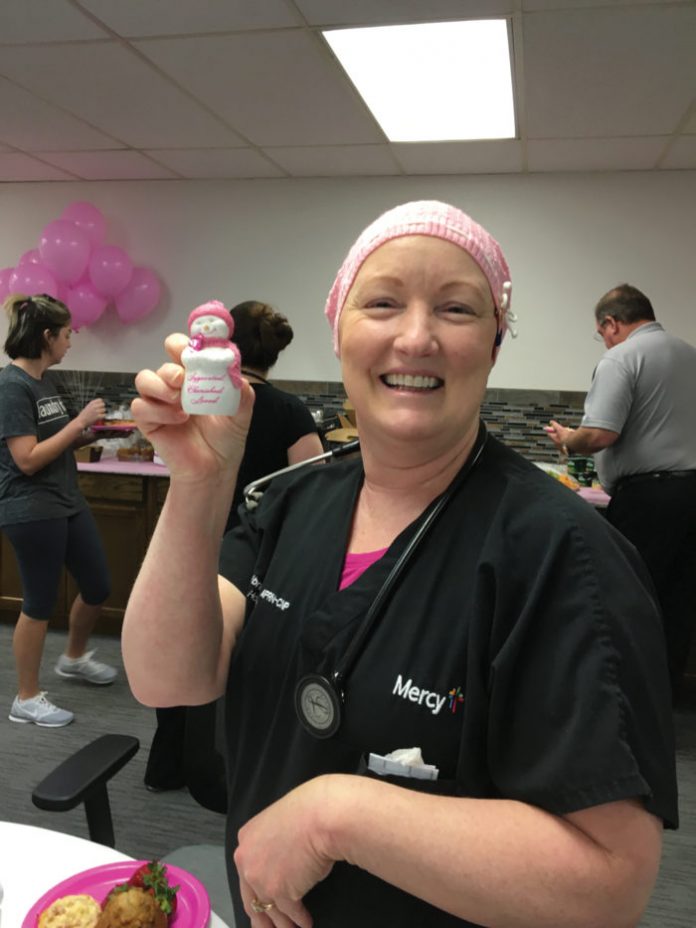
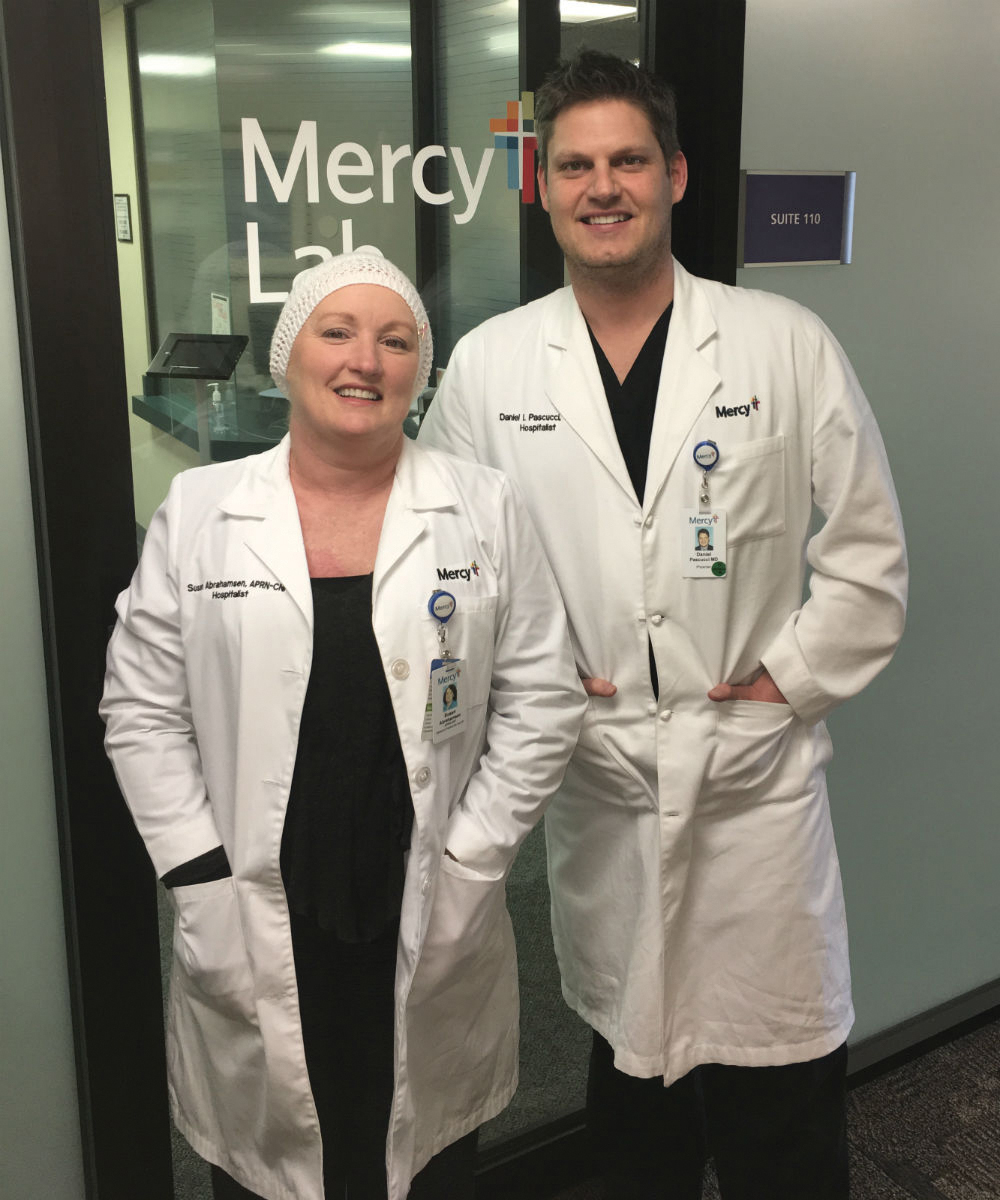
Susan Abrahamsen was diagnosed with stage two breast cancer in February.
Susan Abrahamsen and Dr Pascucci.


story and photos provided

This holiday season, Susan Abrahamsen says she is especially grateful. In addition to having a loving family and a successful 30-year career in health care, Abrahamsen is a breast cancer survivor.
“It was surreal,” said Abrahamsen of her diagnosis. “All of a sudden, everything changes.”
Abrahamsen learned she had stage two breast cancer. in February. By March, she began weekly rounds of chemotherapy.
“In the beginning, it was easy to keep my illness hidden from my patients,” said Abrahamsen. “I just poured myself into my work, but as I started losing more hair, my patients could tell something was going on.”
For nearly the last two years, Abrahamsen has worked as an advanced practice registered nurse and certified nurse practitioner in the telemedicine program at Mercy Hospital El Reno. She takes care of patients in the hospital, while helping to relay important information about her patients to physicians in Oklahoma City using a television screen with two-way audio and video technology. She often works with Dr. Daniel Pascucci.
“I just remember her being very shaken when she told me she had been diagnosed with cancer,” said Dr. Pascucci. Despite the diagnosis, he said it was hard to keep her away from work. “Her first priority has always been our patients, and even as she was going through a health scare of her own, she did whatever she could to continue taking care of them.”
Dr. Pascucci said Abrahamsen’s outlook on her illness and recovery is now inspiring his own practice in medicine.
“It is humbling to be able to see somebody live out the Mercy mission of bringing to life the healing ministry of Jesus in such a selfless way,” he said. “To see her faith in the Lord guide her through that and give her peace while she continued to care for patients has been very eye-opening.”
Following surgery and now daily radiation treatments, Abrahamsen hasn’t been able to work since September, but she still believes that she has been “very blessed” throughout this journey.
“It is a different feeling being on the other side of care, but it’s helped me connect on a much deeper level with my patients, and I understand better what they are feeling,” she said. “When my patient’s started realizing my diagnosis, they would often offer support and encouragement, even when I was the one taking care of them. There are good people in El Reno.”
Abrahamsen will finish her final round of radiation two days after Christmas. She plans to return to work at Mercy Hospital El Reno by New Year’s Day.

IT’S TWO, TWO, TWO SURGERIES IN ONE!

0
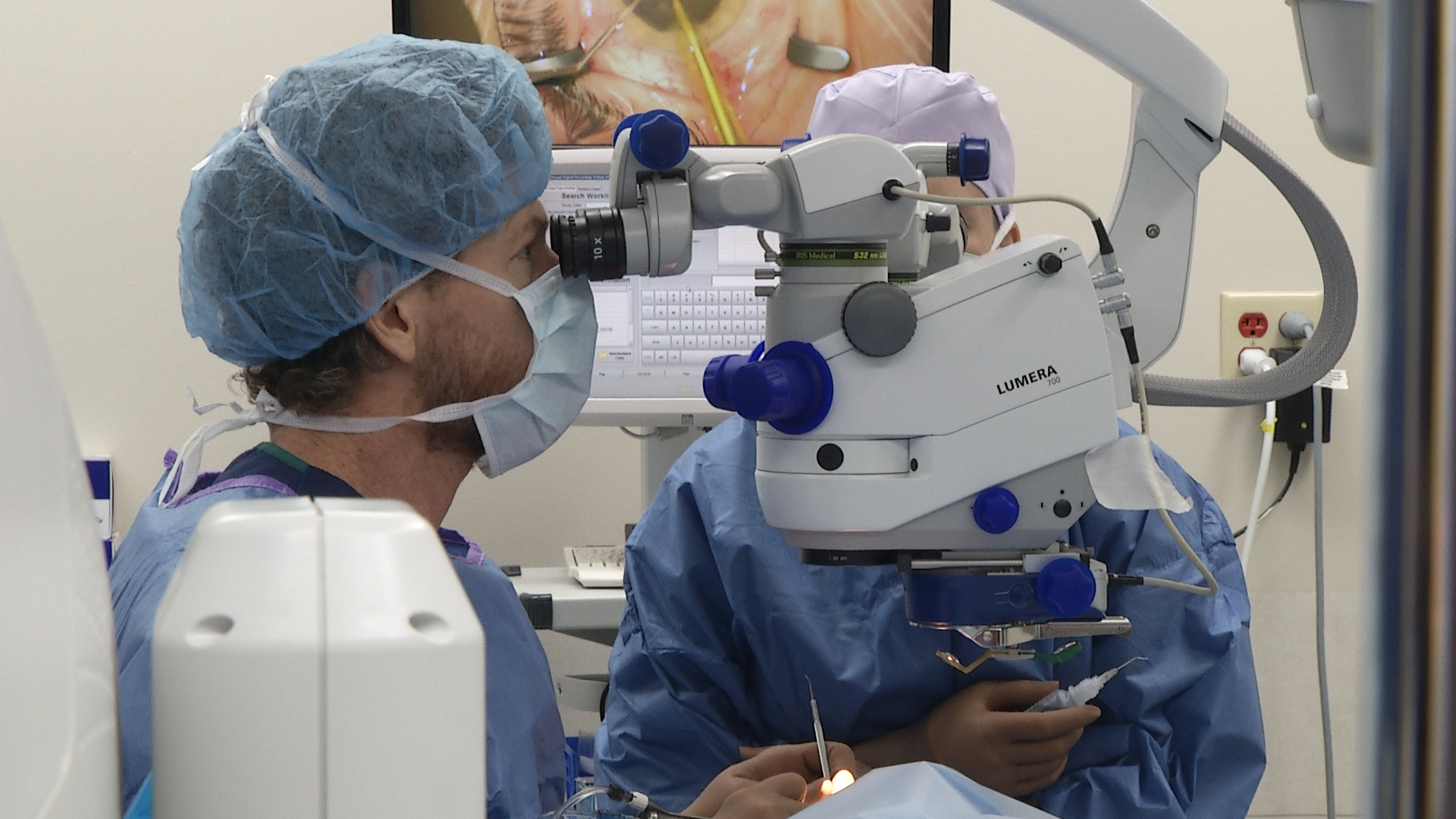
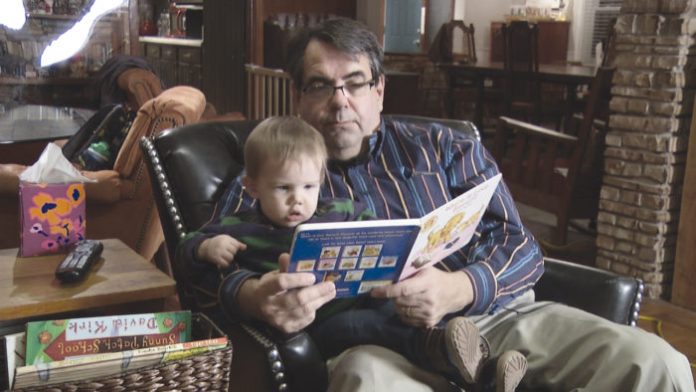
Ed Brandt, III, credits the two-in-one surgical approach by surgeons at the Dean McGee Eye Institute with restoring his vision and getting him back more quickly to the things he loves most – like reading to his grandchildren.
Dean McGee Eye Institute surgeon Dr. Ralph Hester performs cataract surgery, the first half of a two-in-one surgery that would address both cataracts and a detached retina.


You’ve heard of a two-for-one sale, but what about a two-for-one eye surgery?
It takes critical coordination and two skilled surgeons, but doctors at Dean McGee Eye Institute are combining cataract and retina surgeries into one combined procedure. It’s an approach that is easier on the patient, more cost effective and can improve outcomes, too. In the end, it is helping restore patients’ vision so that they can more quickly get back to the things in life they love most. For Ed Brandt III, that was reading to his grandkids.
“My four-year-old granddaughter was over, and we were sitting in the back. She brought a book over, sat in my lap and said, ‘Grampy, can you read this for me?’ I opened the book and I just couldn’t read it,” Brandt said.
A trip to the Dean McGee Eye Institute revealed why. Brandt had a detached retina.
“If you think of the eye like a camera, your lens is the lens of the camera and the retina is kind of like the film,” said Dr. Vinay Shah, a retina specialist with Dean McGee. “When you have a retinal detachment that means the film of the camera has come loose and we have to put it back in place surgically.”
For Brandt, who had undergone procedures on his eyes before, that might have meant another three surgeries; the first to re-attach the retina and place a tiny oil bubble to hold the retina in place while it heals; a second surgery to remove the oil bubble; and then, since it is common for a cataract to form after retina surgery, he would need a third surgery to address that issue. Brandt was pleased to learn that two of those surgeries could be combined into one. Not only was it more convenient for him, but he also learned that the procedure could enhance his overall outcome.
“A large percentage of patients who have retina surgery will develop a cataract. So six months later, they are looking at surgery again. So if we can go ahead and take out the natural lens, replacing it with an implant lens and do the retina surgery at the same time, it is much easier on the patient and his or her family,” said Dr. Ralph Hester, a cataract surgeon with Dean McGee. “More importantly, though, the retina surgeon wants the clearest possible view to visualize the finer details of the retina.”
“The retina is a less-than-one-millimeter-thin membrane in the back of your eye. So to work on that, you want optimal visibility,” Shah explained.
Accomplishing the combined cataract-retina surgery requires a lot of coordination. Two surgeons and their teams as well as two sets of surgical equipment must all be in place.
“The patient does not move. We move,” Shah said. “So it has to be carefully orchestrated. At the Dean McGee Eye Institute, we have set aside particular times of the week just for these types of combination procedures.”
With one trip to the operating room, patient safety is improved and there also are cost savings with the added bonus of less time away from work.
“It’s not about the money, though. It’s about the patient,” Hester explained. “For the patient, this is a big deal. If you can package this into one operation, they are not scheduling time off work multiple times and getting their loved ones to transport them to and from the surgery center multiple times. It makes a big difference.”
Ultimately, Hester and Shah added, it is about changing somebody’s life, restoring their vision and helping them get back to the things they love doing most, like reading to grandchildren.
“There are Braille books and audio books, but there is no way that I could ever replace having a grandchild sitting in my lap and being able to read to him or her. I can do that now. I can see, and I can read. It makes a world of difference to me,” Brandt said.
To learn more about the combination cataract-retina surgery, visit www.DMEI.org

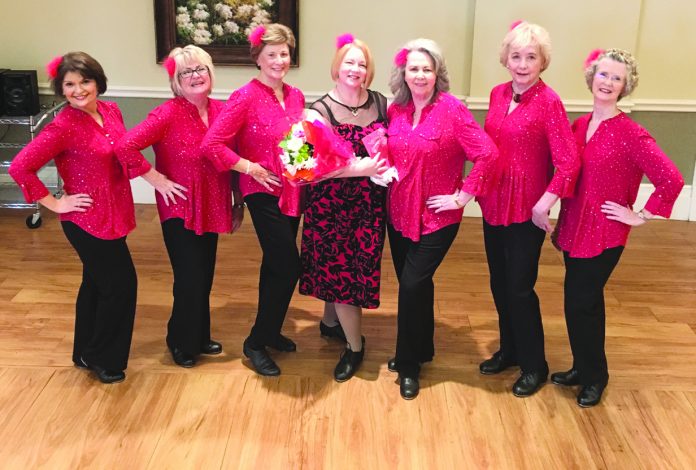
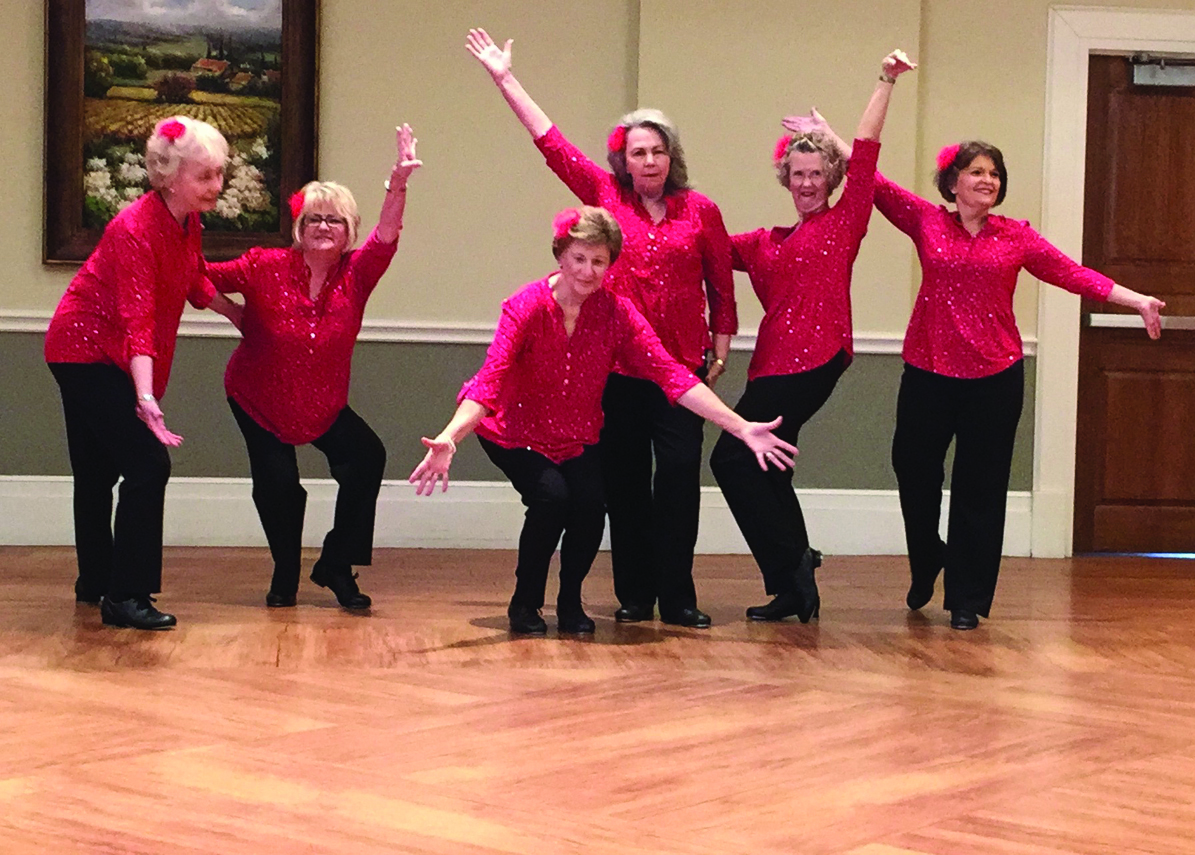
10th Annual Holiday Tap Dance Performance kicked off in December

0
Members of the Edmond Senior Center’s “Tap For Fun” classes who performed are (from left) Katherine Schlageter, Debi Churchwell, Jan Fraase, Janet Luce (the group’s teacher and choreographer), Sherry Patterson, Geneva Hancock and Nancy Powell.

the-seniorweb


Several members of the Edmond Senior Center’s “Tap For Fun” class kicked off this year’s holiday season with their 10th Annual Holiday Tap Dance Performance, held at the senior center on December 14, 2016.
The fun-loving senior tappers performed six very lively tap dances and – by popular demand from their delighted audience – an encore tap dance to “Let It Snow”.
Men and women, ages 55+, are welcome to participate in the “Tap For Fun” class. For more information about the class, call the Edmond Senior Center, 216-7600.

What are you wishing for in 2017?

0

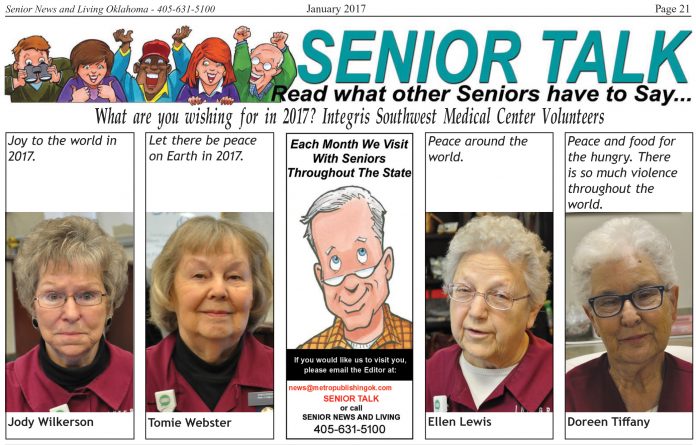
What are you wishing for in 2017? Integris Southwest Medical Center Volunteers

Joy to the world in 2017. Jody Wilkerson

Let there be peace on Earth in 2017. Tomie Webster

Peace around the world. Ellen Lewis

Peace and food for the hungry. There is so much violence throughout the world. Doreen Tiffany

Oklahoma Agriculture Department brings holiday joy to students at F. D. Moon Academy

0
Santa delights students at F. D. Moon Academy on the last day of school before Christmas break.
Secretary of Agriculture Jim Reese poses with Santa and students from F. D. Moon Academy in Oklahoma City during a visit with Prancer the reindeer.

Students at F. D. Moon Academy in Oklahoma City were already excited about Christmas break when a special surprise came to their elementary school on Tuesday thanks to the Oklahoma Department of Agriculture, Food and Forestry (ODAFF).
A cold December morning was filled with joyful squeals of delight as the giant Clydesdale horse from Express Ranches, Blazer, stomped out of his trailer and lifted his huge head to the sky. Doug Sauter talked softly around Blazer and two miniature horses as Sauter told the children about how to approach a horse safely and pet its nose.
Before the outside activities, students and teachers warmed up and enjoyed a breakfast snack donated by ODAFF directors, the State Board of Agriculture and the Oklahoma Wheat Commission. Sticky fingers eagerly grabbed donuts and washed them down with hot chocolate to get fueled for the last day of school.
Oklahoma State Board of Agriculture members assisted ODAFF’s Ag in the Classroom coordinators as they taught agriculture lessons from the award-winning preK-12 curriculum. Students tried their hands at milking Betsie the Cow, a large wooden cow-shaped cutout with a balloon udder. Coordinators also talked about milk and all the good things made from milk.
Best of all was the sound of reindeer hooves on the school playground. Two of Santa’s reindeer found their way to Oklahoma and amazed the children with giant antlers and thick, soft fur. Prancer posed for photos with Santa and students from each class. Although the reindeer didn’t fly around the school they delighted the students as part of the special happy holiday wishes from the Oklahoma Department of Agriculture.

How to make healthy resolutions that stick

0
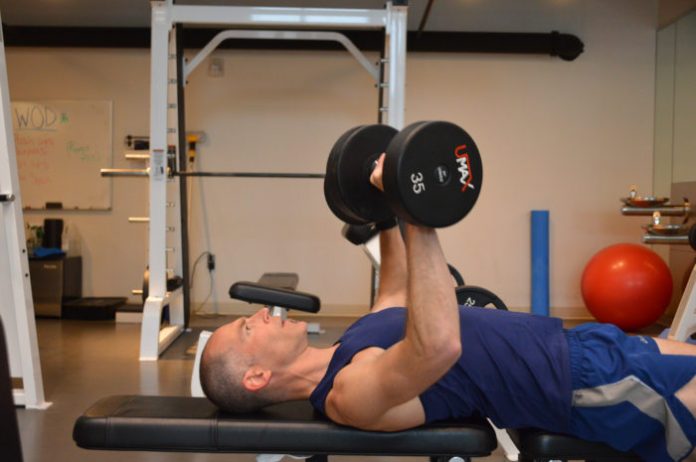
Oklahoma Medical Research Foundation employee Stephen Apel makes use of the on-site fitness facility. If your goal is to get to the gym, focus on just that goal and add other resolutions later on.

January typically begins with the best of intentions. Shed a few pounds. Hit the gym religiously. Sound familiar?
But while many make resolutions, most fail to follow through, with fewer than one in 10 achieving their goals. The key to being one of those who succeeds, says Oklahoma Medical Research Foundation President Stephen Prescott, M.D., is to make goals that are both reasonable and quantifiable.
“People often say, ‘I want to lose 25 pounds,’ or ‘I want to eat better.’ Those are both laudable aims,” said Prescott. “The problem is, one is awfully ambitious, and the other is almost terminally vague.”
If you overreach with your goals—like trying to drop 25 pounds—an early misstep or bump in the road can derail you quickly. “Then the task will feel impossible, and the natural reaction is to give up,” said Prescott.
For a better shot at a healthy 2017, he suggests mapping out smaller, achievable goals to get the ball rolling.
So instead of pledging to lose 25 pounds, said Prescott, set a goal to lose two pounds in January. “When you succeed, you’ll feel great and have the motivation to keep going with two more pounds in February, then March and so on,” he said. “After 12 months, you could end up dropping those 25 pounds by tackling the goal in increments. Short-term markers can translate to long-term success.”
When it comes to improving your diet, Prescott suggests a similar approach.
Start with a specific, manageable goal, like giving up sugary drinks for a month. If you achieve this, then build on it in February by also pledging to add a green vegetable to your plate every day. Over time, these small adjustments can lead to big changes.
For the best chance of success, Prescott recommends taking on a single resolution at a time. It’s a lesson he learned from personal experience.
“When I resolved to lose weight and improve my fitness level a few years ago, I found it was really difficult to exercise while I was also dieting,” said Prescott. “It worked much better when I shifted my focus to losing weight alone. Then, after I dropped 15 pounds, I got serious about fitness.”
“You only have so much willpower and self-discipline, so don’t stretch yourself too thin,” he said. “Choose the resolution that is most important to you and focus on that one.”

Magic of the season: Nurse spreads Christmas cheer

0
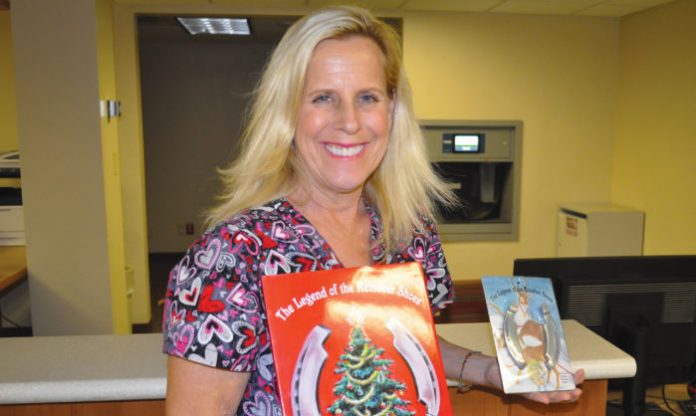
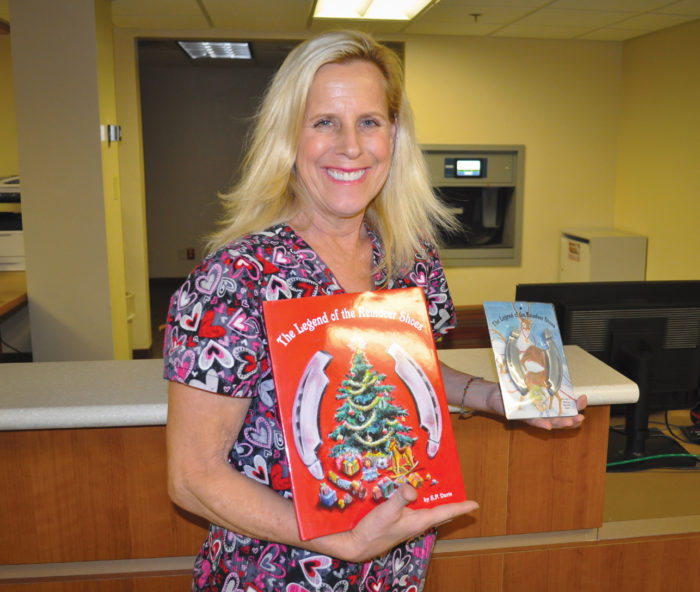
Norman Regional Health System’s Sharon Smith-Davis, RN, is a 35-year nurse, professional barrel racer and now an accomplished children’s author.

new-davis

by Bobby Anderson, Staff Writer

Growing up with four siblings, Christmas was always a very special time for Sharon Smith-Davis, RN. Lots of fun, lots of games and lots of family always made the season one she would look forward to all year long.
Christmas in the Smith-Davis household meant attending Midnight Mass before coming home to eat and open presents.
It was a night filled with wonderment – and to Smith-Davis – one bursting with magic.
That’s why decades later the Norman Regional Health System nurse decided she needed to capture that magic and pass it on by writing her first book, The Legend of the Reindeer Shoes.
“I tapped into something I had been thinking about,” she said. “I just wanted to leave behind for future generations some good, old-fashioned Christmas magic.”
The Legend of the Reindeer Shoes is a tribute to the tradition of that Christmas magic. This delightful story chronicles the preparation and journey of Santa and his reindeer on Christmas Eve and introduces Jingle, the North Pole’s blacksmith.
According to the legend, the reindeer need shoes on their hooves before they can leave on their famous flight. During the trip their shoes are in frequent need of repair and replacing if lost.
Jingle is there to attend to their needs and assure that the reindeer have a full set of shoes on their hooves for the job ahead.
The story reveals that the reindeer shoe itself is a magical source and if you are lucky enough to find one and hang it from your Christmas tree, you too will experience a little bit of good old fashioned Christmas magic.
Smith-Davis wants everyone to make Christmas Eve a memorable family tradition but it took a devastating accident to settle her down long enough to put what was in her head and her heart down onto paper.
Smith-Davis had long written poetry just for herself but a professional barrel riding accident in 1997 on her sport’s largest stage that unsaddled her from her best friend.
The five-time National Finals Rodeo competitor was separated briefly from riding due to a personal injury and found herself alone with her thoughts.
Looking to occupy her time, she turned her attention to writing a book. Her leg fracture was long healed by the time she completed her labor of love.
It took an entire year from start to finish to complete the book.
They say write what you know and Smith-Davis did.
The reindeer’s eyes are drawn from one of her best quarterhorses.
The reindeer shoes were originally forged by a six-time world champion blacksmith and then sent onto a toy factory to create the molds.
When she’s not working you can find Smith-Davis reading her book at local schools.
“I always ask my kids ‘did my book make you smile,’” said Smith-Davis, who still competes locally. “When I see that smile it’s all good.”
“My big hope for it is to maybe one day be made into a traditional Christmas movie.”
Labors of love can be expensive. She poured $20,000 into the venture through illustration and publishing costs alone.
But it’s all worth it to her.
It was years later Smith-Davis realized how much her mother, a registered nurse herself, put into the whole night before getting up early to work her shift on Christmas Day.
It was just one of the memories that came to her when her mother passed away last week.
That selfless love is part of the season to Smith-Davis, who already has her thoughts swirling around her next book, an Easter theme to go with her love of rabbits.
When she’s not writing she’s working at one of Norman Regional’s campus as a flex nurse, drawing a new assignment, new unit and new campus each shift.
“I love nursing,” Smith-Davis said. “I love the science part of it. I like maintaining healthcare standards and assuring that people get quality care.”
From home health to supervisor of a medical surgical floor Smith-Davis has worked in every setting outside of women’s and children’s services during her nursing career.
After 35 years she can recover a heart or take pretty much any post-op patient that comes her way.
And she still loves it.
“I love my boss,” Smith-Davis said. “I just like – as the work implies – the flexibility. You don’t go to the same place every day. I learn something new every day and I’m amongst the most experienced people that are awesome to work with. And we’re blessed to have the quality of doctors we have.”
“I love it all.”
You can buy the Legend of the Reindeer Shoes book and a magical pair of reindeer shoes online at www.reindeershoes.com. You can also contact her directly through the website.
And her greatest hope is that your family will make its own holiday tradition and the magic returns each and every year.

NRH fighting back against lung cancer

0
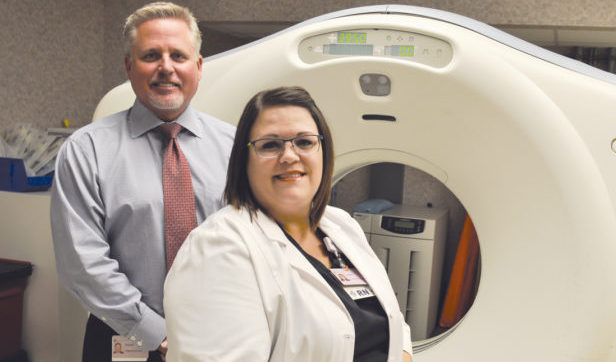
Norman Regional Nurse Lung Navigator Sherri Jo Johnson, RN and Phillip Mobbs, manager of diagnostic imaging services are helping people breathe a little easier with the health system offering a new, affordable, low-dose screening exam.

by Bobby Anderson, Staff Writer

Norman Regional Health System Lung Navigator Sherri Jo Johnson, RN, is a cancer survivor.
That trauma is permanently ingrained in her mind as well as her DNA.
So she wants to do everything possible to make sure that everyone she reaches has a fighting chance against cancer.
It’s a major reason why she’s involved in the health system’s new low-dose CT lung scan program.
Phillip Dobbs is the manager of diagnostic imaging services and a key player in the new screening.
Dobbs explained that the screening tool reduces the amount of radiation to the patient versus a normal chest CT by 90 percent.
“But the protocol we use we are able to detect even the smallest nodules down to just a few millimeters,” Dobbs said. “The radiologist can look at that and only about five percent of nodules end up being cancerous.”
The peace of mind that monitoring carries with it is worth its weight in goal.
“Six months after any scan I’m fantastic,” Johnson says of her mindset while she’s in remission.
The program has been under development for two years.
The screenings involve pathologists, radiologists, oncologists, a nurse navigator, and thoracic surgery.
“A lot of people have to be at the table,” Mobbs said.
But the whole process can begin simply with a phone call to make an appointment to come in. No referrals are required. No insurance is billed with a cost of $79.
After the test is done, the results go to Johnson. Based on a radiological assessment scale Johnson can determine if the patient needs to return at three months, six months, 12 months or needs to progress faster.
“I put it into my system and I’m virtually you’re reminder,” Johnson said. “If you are intentionally coming in to get it done you’re a lot easier to track because you’re actually wanting us to watch this for you.”
Monitoring is power, especially when dealing with lung cancer.
“Most cancers are found in Stages III and IV when we don’t have very many opportunities to do anything about it.”
Johnson said often cancers that are found in the later stages are accompanied by previous CT scans when the patient or provider failed to follow up on nodules that were noted.
“Whenever it’s brought to them in a nonchalant way it doesn’t have the same importance,” Johnson said.
Johnson says anyone who is a previous smoker, spouse of a smoker or anyone who has been around second-hand smoke for an extended period of time needs to have a scan done. Lung cancer is by far the leading cause of cancer death among both men and women; about 1 out of 4 cancer deaths are from lung cancer. According to the American Cancer Society, each year, more people die of lung cancer than of colon, breast, and prostate cancers combined.
Lung cancer mainly occurs in older people. About 2 out of 3 people diagnosed with lung cancer are 65 or older, while less than 2% are younger than 45. The average age at the time of diagnosis is about 70.
Overall, the chance that a man will develop lung cancer in his lifetime is about 1 in 14; for a woman, the risk is about 1 in 17. These numbers include both smokers and non-smokers. For smokers the risk is much higher,
Black men are about 20% more likely to develop lung cancer than white men. The rate is about 10% lower in black women than in white women. Both black and white women have lower rates than men, but the gap is closing.
The lung cancer rate has been dropping among men over the past few decades, but only for about the last decade in women.
Statistics on survival in people with lung cancer vary depending on the stage (extent) of the cancer when it is diagnosed.
Despite the very serious prognosis of lung cancer, some people with earlier stage cancers are cured. More than 430,000 people alive today have been diagnosed with lung cancer at some point. The American Lung Association is trying to draw more attention to early screening because one reason why lung cancer is so serious is because by the time you have symptoms, it may already have spread and become more difficult to treat.
The Association cites a study that between a chest x-ray, sputum cytology and low-dose CT scans, only the low-dose CT (LDCT) scan reduced the risk of dying from lung cancer in high-risk populations.

Watermark University Now Enrolling Area Seniors in Free Classes

0

The Fountains at Canterbury’s Watermark University spring semester will commence in January, providing free continued learning classes for area seniors. Nearly 30 courses are available to the public with topics including “Geology in Oklahoma,” “Creative Writing,” “Stitches in Time” and “Great Decisions Discussion!”
“Research shows that continued learning supports cognitive function and well-being,” said Scott Steinmetz, executive director of The Fountains at Canterbury. “Watermark University facilitates educational opportunities for our residents and local seniors, fueling their current interests and sparking new ones across a variety of subject areas and topics.”
“Geology in Oklahoma” will explore Oklahoma’s physical structure and the dynamics of geological formations. “Creative Writing” is for writers of all levels and will focus on sharing and discussion to foster improved techniques. “Stiches in Time” is a hands-on needlework class exploring simple crochet and knitting stiches. “Great Decisions Discussion” will review the newest Foreign Policy Association DVDs, followed by in-depth discussions.
Other course topics include health and tai chi, crafting, history, religious studies, culinary arts and wine, games, reading and music. The spring semester continues through April. All classes are taught by The Fountains at Canterbury associates, volunteers and residents.
Most classes are free of charge and open to the general public. All interested seniors who would like a full course catalog or are interested in signing up, call (405) 381-8165. Class space is limited, so course reservations are encouraged.
The Fountains at Canterbury is dedicated to being the first choice in senior living, providing a continuum of care including independent living, assisted living, memory care, innovative rehabilitation therapies and skilled care. The Fountains at Canterbury is managed by Watermark Retirement Communities and is committed to creating an extraordinary community where people thrive. To learn more, please call (405) 381-8165 or go online to www.watermarkcommunities.com.

Watonga Hospital Earns National Honor

0

wat

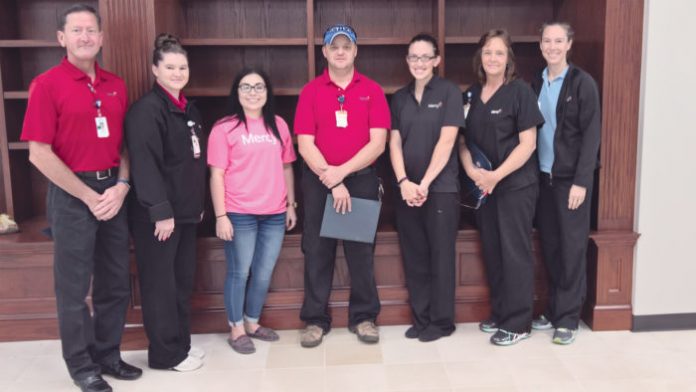
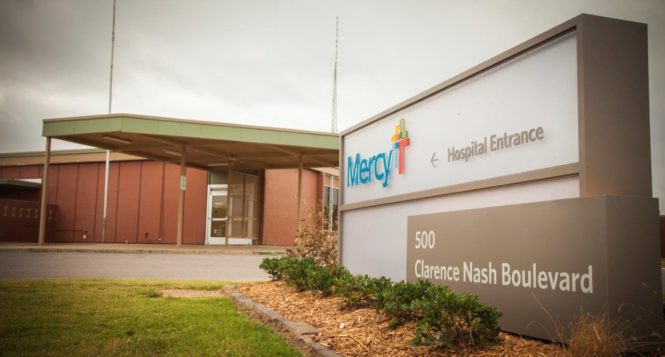
A national rural health organization has chosen Mercy Hospital Watonga as a “Community Star” for its commitment to area residents.
The National Organization of State Offices of Rural Health (NOSORH) selected 50 rural hospitals across the nation, and Mercy Hospital Watonga was the only hospital in Oklahoma to make the list.
“It is an honor,” said Bobby Stitt, who has served as administrator at Mercy Hospital Watonga since 2012. “In the face of what has been a difficult economy for rural health care, this shows our long-standing commitment to the community and our willingness to serve the people of Watonga.”
Each year, the hospital organizes a holiday season basket drive and collects food, clothes and toys for area families in need. In the summer, Mercy Hospital Watonga hosts a neighborhood block party, complete with a bouncy house, food and games. But it is the hospital’s work with local middle school students that received the attention of the NOSORH. Through a program called “Life Wise,” volunteers help students develop life skills such as better decision-making, communications and relationship-building.
“We’ve really tried to create a space in the community where kids feel safe contacting somebody from the hospital and using our resources,” said Robert Pearson, a native of Watonga who serves as Mercy’s emergency preparedness and safety officer. “We want to help them identify healthy choices in their lives to steer them away from the typical things that get kids in trouble.”
The program meets weekly at the hospital for six weeks in the fall and spring. Since starting two years ago, Stitt estimates hundreds of middle school students have been helped.
“The kids love it and they continually ask to come back,” Stitt said. “It’s a great way to make an impact in our community and with our children.”
The honor caps off a year of awards for Mercy Hospital Watonga.
In August, the hospital earned “Excellence Recognition” for reaching the highest standards in health and prevention for their employees, and the “Gold Apple” award for nutritional food options for co-workers and patients. Both awards were given by WorkHealthy Hospitals, an Oklahoma Hospital Association (OHA) initiative. The hospital was also recognized by the OHA for providing more than 96-percent of co-workers with the influenza vaccine during last year’s flu season.

Social

0FansLike
0FollowersFollow
0SubscribersSubscribe