Tuesday, January 13, 2026

Oklahoma Foresters Offer a Walk in the Forest at Turkey Mountain

0
Hikers enjoy the first segment of one of many trails at the Turkey Mountain Urban Wilderness Area in Tulsa.

Ready to get outside and enjoy fall? Hikers and walkers of all levels are invited to join foresters from across the state for the annual “Walk in the Forest” event held at Turkey Mountain Urban Wilderness Area in southwest Tulsa from 10 a.m. – 3 p.m. on October 22. Foresters and natural resource professionals from across the state will be stationed along the trail to provide information about the forest, which is located in Tulsa’s backyard. There will additionally be special activities for kids at each station.
“This really is a great opportunity to plan a fun day outdoors with friends and family,” said George Geissler, director, Oklahoma Forestry Services. “Foresters enjoy being on hand to answer your questions and tell you about all of the benefits that our Oklahoma forests provide, some of which may surprise you.”
Hikers should dress appropriately for the weather and wear sturdy, comfortable shoes. The Walk in the Forest will take about an hour if participants stop at each educational station. Kids will receive a special booklet with activities to do along the way and prizes for completing them. Participants will receive a loblolly pine seedling and other giveaways while supplies last.
The Walk in the Forest program is part of a national campaign coordinated by the Society of American Foresters (SAF) and the American Forest Foundation. The Oklahoma walk is being hosted by the Oklahoma Division of SAF, in partnership with Oklahoma Forestry Services; Oklahoma State University (OSU) Department of Natural Resource Ecology and Management; the OSU Student SAF Chapter; and the City of Tulsa’s River Parks Authority. Event sponsors include Weyerhaeuser Company, International Paper, Winlectric and the Oklahoma Forestry Association.
For more information about the Walk in the Forest, contact Oklahoma Forestry Services at 405-522-6158 or visit www.forestry.ok.gov. For information and directions to Turkey Mountain Urban Wilderness Area, visit www.turkeymtn.com.

Oklahoma Forester Honored

0
Kurt Atkinson, Society of American Foresters Fellow award recipient.

Oklahoma forester, Kurt Atkinson, is a recipient of the Society of American Foresters 2016 Fellow Award, a prestigious honor that recognizes long-standing service to the forestry profession.
“Kurt is most deserving of this honor,” said George Geissler, director, Oklahoma Forestry Services. “Now retired, Kurt had a stellar career of service with Oklahoma Forestry Services for over four decades. He was a leader, not only within our agency, but also in several statewide and regional professional organizations, including our state’s chapter of the Society of American Foresters.”
Atkinson received his forestry degree from Oklahoma State University in 1974 and began his career with Oklahoma Forestry Services, serving 33 years as Assistant Director and Management Chief. Under Atkinson’s leadership “Best Management Practices” were initiated. He also had a significant impact on forest management activities statewide, including stewardship, forest health, nursery operations, forest inventory analysis and the Forest Heritage Center Museum.
“Kurt has always been an insightful, respected, and visionary leader, and has served as a mentor and role model for many foresters in Oklahoma,” said Dr. Thomas Kuzmic, Oklahoma State University and District IX SAF Fellow Committee Representative. “I was honored to present Kurt’s nomination during the SAF committee proceedings earlier this year and was delighted with his selection to this year’s class.”
According to the Society of American Foresters, the rank of Fellow is one of the highest honors for members and signifies exceptional recognition by his or her peers for outstanding contributions and service to the organization and profession. Only 23 Fellows were chosen from across the nation for the 2016 class, with Atkinson being the only Oklahoman.

Easter Seals Oklahoma needs special toys added to your shopping list

0

Tis the season for toy shopping, but Easter Seals Oklahoma has a request for special toys for their boys and girls. Therapeutic and sensory toys help students with disabilities work on hand-eye coordination, fine and gross motor skills and social interaction. It can also be used to help increase attention and focus during instructional time.
“Teaching a lesson while a child’s hand is actively engaged in a fidget has been shown to result in more information being retained by the child than if the same lesson were taught without the sensory element”, says Mia Dianda, Director of Medical Rehabilitation.
Easter Seals Oklahoma is accepting donations of therapeutic toys such as koosh balls, light up toys, and fidgets. Social and turn taking improvement items are also needed like: Twister, Chutes and Ladders, Mouse Trap, Head-band, toy cars, super heroes, baby dolls, and related items. Donations may be brought to 701 N.E. 13th Street, Oklahoma City, Ok 73104 between the hours of 8:00 a.m. -5:00 p.m. Monday through Friday or donate by calling 405-239-2525.
The Medical Rehabilitation Program at Easter Seals Oklahoma helps individuals with disabilities gain greater independence some thought to be unachievable. It is our goal to empower children with atypical development by helping to build their self-esteem and self-efficacy through therapy services.
For more than 90 years, Easter Seals Oklahoma has provided services to children and adults with disabilities and other special needs and support to their families. Services include an early learning and inclusion academy, adult day health center, medical rehabilitation, and financial assistance. For more information, please visit www.eastersealsok.org.

Drivers Must Move Over to Save Lives

0

The Oklahoma Insurance Department is joining forces to spread a life-saving message to drivers: “Move over. It’s the law.” The message is part of an initiative by the Oklahoma Traffic Incident Management Steering (TIMS) Coalition. The Coalition also includes representatives from the Oklahoma Highway Patrol, Oklahoma Department of Transportation, Oklahoma Sheriffs Association, Oklahoma Emergency Management and many more.
“As the holidays approach and more people will be on the road, we’re asking Oklahoma drivers to be more mindful behind the wheel,” said Oklahoma Insurance Commissioner John D. Doak. “Not only is moving over the law, it will help save the lives of first responders and lower the number of costly traffic delays.”
According to the National Highway Traffic Safety Administration, 52 law enforcement officers were killed in traffic-related incidents last year. Oklahoma Highway Patrol Trooper Nicholas Dees was hit and killed last year along I-40. His mother is featured in a new public service announcement which began airing this month. It can also be viewed here.
“Half of me died because of one man that did not move over for emergency vehicles,” said Shelley Russell, Dees’ mother.
Oklahoma’s Move Over law requires drivers approaching a parked emergency vehicle with flashing lights, including wreckers, to move over to the next lane. If the driver cannot move over, he or she is required to slow down. Troopers suggest drivers reduce speed to 15-20 mph or slower. The penalty for failing to slow down or change lanes is a ticket with a fine of more than $200.
Another benefit of drivers abiding by the Move Over law is a reduction in the number of costly traffic delays. According to the Texas Transportation Institute, for each hour a vehicle is stuck in traffic $21 is wasted per vehicle in time and fuel.
One way to ease the burden of traffic is for drivers to move over if they are involved in a non-injury car accident. This allows drivers to safely exchange insurance information and not block the flow of traffic.
“Many drivers seem to think that moving over is just an optional courtesy when they see flashing lights or have a minor wreck,” Doak said. “It’s not optional. Move over. It’s the law.”

Past Due Taxes and Seniors

0

Eric Olsen Executive Director HELPS nonprofit law firm. www.helpsishere.org

Sometimes seniors with lower incomes find themselves owing past due income taxes. Taxes they can’t afford to pay. As the Executive Director of HELPS, a 501 c nonprofit law firm that assist seniors with debt problems, I regularly talk with seniors distressed about past due taxes owed. Seniors want to pay their taxes, but sometimes there simply is insufficient income. Seniors need to know that laws and regulations have been enacted to assist persons with lower incomes to protect them from tax collection.
Most seniors don’t understand that social security, pensions, VA benefits and other forms of retirement income are protected by federal law. This income cannot be garnished for old debts such as credit cards or past due loans. An exception is the IRS occasionally will garnish 15% of a senior’s social security for past due taxes. However this will not happen without the senior being first notified. Steps can be taken to prevent a garnishment by the IRS.
For seniors that can afford to pay their taxes if the sum is less than $50,000 they can arrange for monthly payments over five years almost automatically. Lower income seniors can often be placed on uncollectable status with the IRS and pay nothing. An existing garnishment by the IRS can even be stopped. Seniors can apply for uncollectable status with the IRS over the phone or online. The IRS website provides budget guidelines to qualify for uncollectable status. These budget guidelines are not normally volunteered when applying for uncollectable status with the IRS. If you say you can pay something each month, the IRS will gladly take your money. Many lower income seniors underestimate their needs and pay a monthly payment they can’t afford to the IRS because they think they have to pay something. When according to IRS budget guidelines they could pay nothing.
Almost all seniors don’t realize that their local state tax collector cannot garnish social security and retirement income for past due state income taxes. Even when this money is deposited into a bank account, as long as it is traceable to social security and pension income it is exempt. If an account is garnished a claim of exemption can be filed for the money to be returned. State taxing agencies unfortunately will never tell seniors their income is protected. Instead they often will badger and intimidate in order to collect from seniors who don’t know their rights. If a state tax collector calls, a lower income senior can simply advise his income is federally protected social security, pension, VA benefits, or disability and they can’t afford to pay the tax.
Sometimes seniors are worried when they receive a “tax lien.” Language in the written lien notice makes them worry they are going to lose their home, car and other possessions. Tax collectors are not in the business of selling peoples homes. It just doesn’t happen in real life. Many seniors have little or no equity in a home for a lien to attach anyway. The taxing agency files the lien and hopes the tax gets paid if and when the home is sold. Tax collectors do not go after personal possessions, especially persons with lower incomes.
Bankruptcy is generally unnecessary for lower income seniors because their income is already protected. However taxes often can be eliminated through bankruptcy. The general rule is that the tax must be over three years old and have been assessed for at least two years in order to be eliminated through bankruptcy.
Certainly we should strive to pay our taxes. However laws and procedures are in place protecting lower income and poor seniors from tax collection. America wants seniors to have the food and medicines they need. If there is a choice between basics and paying taxes, seniors can take steps to stop tax collection action. Seniors income is in almost all instances protected and available for their needs.

Social Sec. and V.A. Partnership Means Faster Disability Decisions for Veterans

0

Today, the Social Security Administration announces the launch of a new Health IT initiative with the Department of Veterans Affairs (VA) that enables all Social Security disability case processing sites to receive medical records electronically from all VA facilities. Veterans will receive a faster decision on their Social Security disability claim, speeding them and their dependents through this new process. Both agencies will save time and money with an automatic request through the eHealth Exchange.
“President Obama has said, ‘we must maintain the sacred covenant we share with our veterans by ensuring they have the care and benefits they deserve,’ and I could not agree more,” said Carolyn W. Colvin, Acting Commissioner of Social Security. “We are committed to providing our veterans with the world class service they so richly deserve and improving the speed and efficiency of our disability program.”
The new Health IT program was tested successfully at Social Security locations around the country. On Veteran’s Day, November 11, the eHealth Exchange will go live, nationally, to all Social Security disability case processing sites.
Social Security requests nearly 15 million medical records annually from healthcare providers and organizations to make medical decisions on about three million disability claims. Medical documentation is essential to make a disability determination. Historically, the agency obtained medical records through a manual process (mail, fax, secure mail). This new national initiative puts in place an automated process to obtain medical records electronically without human intervention.
“VA is currently improving quality of life by enabling Veterans to share their health information with federal partners and integrating their data into a safe and secure health-related consumer application,” said Dr. David Shulkin, Under Secretary for Health of the Department of Veterans Affairs. “Currently, when eligible Veterans apply for Social Security Disability Insurance benefits the average wait time for Social Security to receive paper records from VA can take months; this partnership allows Social Security and VA to share the Veteran’s health information electronically in minutes. The Social Security and VA partnership allows VA to continue to be a leader in interoperability efforts among federal partners while improving overall quality of life for our Veteran patients.”
This partnership adds the VA to Social Security’s more than 50 other Health IT partners, including the Department of Defense, in approximately 7,000 facilities across the United States providing electronic health records. Social Security’s goal is to continue expanding the number of healthcare organizations and federal agencies providing electronic health records within a safe and secure environment.
To learn more about Health IT, please visit www.socialsecurity.gov/disabilityssi/hit.
Social Security offers two other programs to expedite disability claims filed by veterans. Wounded Warriors and veterans with a VA disability compensation rating of 100% Permanent & Total have their Social Security disability claims treated as high priority and receive expedited decisions. For more information about these programs, please visit www.socialsecurity.gov/people/veterans.

What are you looking forward to this holiday season?

0

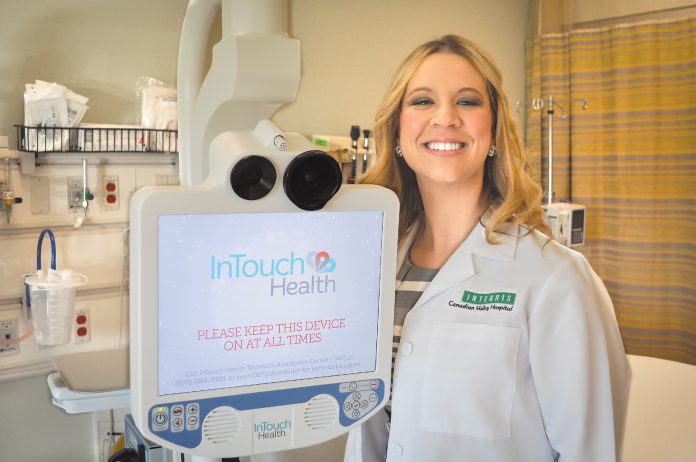
What are you looking forward to this holiday season? Integris Canadian Valley Hospital volunteers

Having my family come from Washington State and St. Louis to visit. That will be the highlight.  Carolyn Furgeson

A visit from Santa Claus would be wonderful. Becky Horn

My son lives in OKC and I’ll be here with him and his family. Eleanor Fuller

My family is having a reunion in Colorado so there will be 14 of us traveling to Pueblo. Morna Martinez

Rat Pack lives on in Moore

0
Michael Cooper has been playing Dean Martin for more than a decade at Oklahoma’s only full-time dinner theater, the Yellow Rose Theater, in Moore.

by Bobby Anderson, Staff Writer

It’s been more than a decade since legendary entertainer Dean Martin passed away.
But for a few hours every Friday and Saturday night his infectious spirit and joy are alive and well inside the Yellow Rose Theater in Moore.
Impersonator Michael Cooper and a troupe of performers breathe new life into characters like Martin, Jerry Lewis and members of the Rat Pack at Oklahoma’s only full-time dinner theatre.
Cooper has been portraying Martin for 14 years now in what began humbly as a ministry outreach of the Revival for Christ Club.
Christian-based original plays and dramas came in the early days and are still scattered among the offerings.
A big fire destroyed the area that is now the Yellow Rose Theatre nearly 15 years ago.
During the rebuild the church’s contractor ran off with much of the repair money.
So guys like Cooper would work their regular jobs during the day and then come to the church at night to make repairs.
The church’s then-pastor asked what it would take to do a Rat Pack show.
Cooper wasn’t sure.
“We didn’t look like them, didn’t sound like them and didn’t act like them,” Cooper said. “We could just sing because we were praise and worship leaders. We decided ‘let’s see if we can’t ride this thing.’”
So Rat Pack boot camp began. The group read every book, watched every movie and read every snippet online about the famous entertainers.
They finally nailed it.
The group now travels around the country, stopping at Carnegie Hall and Hard Rock Casino.
Fifties, sixties, seventies shows began to pop up as did Motown and Country performances.
BECOMING DEAN
“I’ve read lots of books and watched lots of footage and just luck I guess,” Cooper said of becoming the persona of Dean Martin. “The first couple years I wasn’t very good.”
The group is now one of the four most recognized Rat Pack groups in the country.
“Now it’s just the experience of having done it thousands of times,” Cooper said. “I can fire up and do it any time. Some nights are better than others. I’ve been doing it for so long now it’s just natural.”
Cooper channels his inner Dean Martin on the weekends and during the the group’s most recent show run of The Colgate Comedy Hour, which featured standup, skits and original Colgate Comedy Hour commercials in between.
And it’s all done while guests are dining with friends or soon-to-be friends.
Executive Chef Kim Johnson handles the cuisine. A catering company also operates out of the theater, which can be rented during the holidays.
“The food is phenomenal. We’ve had people ask for recipes,” Cooper said. “When we started the dinner theater we traveled all over the country. One thing we knew was we would have good food. People aren’t going to get a sliver of shoe-sole meat, a slap of mashed potatoes and some corn on a plate. We give big portions.”
GIVING BACK
The shows are indeed a ministry for Cooper and his ensemble.
After every show Cooper and the performers greet the guests as they leave the building.
One night a woman came up with tears in her eyes.
“My husband has Alzheimers,” she said, her voice cracking. “Once the music started I had my husband back.” I danced with him. He recognized who I was.
We were all in here crying. Literally, once they got back in the car he was far away. But for two hours she had her husband back.
“Even though you might not have a Bible in your hand or be in the sanctuary we’re able to minister to people and that’s why we do it.”
All of the recent skits and standups are versions of the skits that the original group did on the Colgate Comedy Hour.
“Some of the humorous parts of it were because it was Dean and Jerry,” Cooper said. “As much as we try to portray them we’re not them. It’s almost harder for us than it was for them.”
“We knew from the beginning that we had them. We knew this was going to be a viable show.”
I laughed so hard my throat hurts. I haven’t laughed this much in years.
Both are just a sampling of the comments the group gets after every show.
Cooper will be busy again during the holidays.
For Christmas the group will put on Dean’s Very, Very, Very Merry Christmas. Jerry Lewis will be a part and possibly Frank Sinatra and Jimmy Durante thanks to Cooper’s friends.
But three Tuesdays and one Saturday in December will be dedicated to the Sharon L. Vanover memorial dinner.
Qualified families from Moore, South Oklahoma City and Lawton are treated to a show and each child receives a Christmas present.
It’s all about showing love for people.

New Direction brings dialysis treatment home

0
Leslie Whiles, Oklahoma City’s New Direction Home Dialysis Administrator giving chronic dialysis patients home option.

by Traci Chapman
Staff Writer

Chronic dialysis is difficult for any patient; when that condition is compounded by a wound or tracheostomy, it’s even worse – and for many families those conditions could mean separation and loss, because local treatment options have been so limited.
Not so anymore, as Oklahoma City’s New Direction Home Dialysis brings treatment to the heart of the patient’s life, in the process making it possible for them to stay with their families and continue their lives, in a way never before possible.
That means people who before had to go to Texas, to Ohio or to some other far-flung medical facility for long-term, frequent dialysis treatments now can receive those services at home, where they can continue their day-to-day routine and remain with the family and friends they love.
“The bottom line is outcomes, it’s quality of life, it’s being able to keep families together,” New Direction Administrator Leslie Whiles said. “For a patient to have to go far away, to another state in many cases, is such a hardship – physically, financially, emotionally.”
“For example, we had a patient who was forced to go to Cleveland for treatment, and she was at the end of her rope – she didn’t even feel like it was worth it because it was just too much for her to bear,” she said. “No one should ever have to go through that, and we want to make sure no one has to.”
Whiles knows a lot about dialysis, with almost 30 years in the field. As administrator for Sooner Acute Dialysis, Whiles sees every day how the right program can make a difference in the lives of patients needing inpatient services; with New Direction, Whiles strived to bring the same level of care – and caring – to those who can take part in a long-term treatment option at home.
That’s why finding the right nurses is paramount, Whiles said. As the company grows – New Direction’s staff of three recently grew to six nurses – it’s important to look not just at medical skills, but also at what lies underneath.
“Because we are independent, we are able to focus solely on taking care of our patients, knowing them, knowing about their lives and their families,” Whiles said. “Of course, it’s about care and nursing, but there’s also the deeper ability to bond with people who are going through a very difficult experience.”
Home dialysis means freedom to New Direction’s patients, whether they’re 20 or 80 – and the company has patients of all ages, backgrounds and temperaments. They might be retired, a student or someone working to support their family while undergoing regular treatments. However they might be different, what Whiles and her staff have seen with all was the benefit of home dialysis.
“There is such a transformation because our patients can take control of their lives again, they aren’t isolated in treatment,” Whiles said. “It removes much of the stress and makes their treatment more effective.”
New Direction offers both Peritoneal and Home hemodialysis treatments. Both have more advantages than allowing patients to take treatments at home, Whiles said.
“There are fewer dietary restrictions and we’ve seen less negative side effects like nausea, cramping, weight gain and vomiting,” she said.
A benefit of Peritoneal dialysis, or PD, is that patients can have treatments, even at work and on vacation, Whiles said. Home hemodialysis – HHD – is broken into traditional and short daily treatments.
Traditional patients usually undergo three four-hour, or more, weekly sessions, while short daily HHD features shorter treatment times more often.
“With that, we would probably see two to three hours per session four to seven times a week,” Whiles said. “It really is a matter of choice for the patient.”
While New Direction nurses are an integral part of each patient’s care, so too are each individual’s “care partners,” family members or friends who, along with the patient, are trained on dialysis equipment use and care, as well as other ancillary information.
“Care partners can be involved in setting up the machine and supplies, inserting dialysis needles, helping to record medical information and post-dialysis care and machine maintenance,” Whiles said.
“It’s very important that the individual have a support system in place and they need to have a caregiver, or partner, who can go through the competency evaluation and who is willing to do the work involved in successful treatments,” Whiles said. “Without that, home dialysis really isn’t a viable option.”
But, for those who can take part, home dialysis can mean a whole new life just waiting around the corner.
“It’s important for us to do all we can – we’re an Oklahoma company and we’re going to take care of our people,” Whiles said. “That’s what we’re meant to do, what we’re dedicated to doing.”

Bringing healthcare home

0
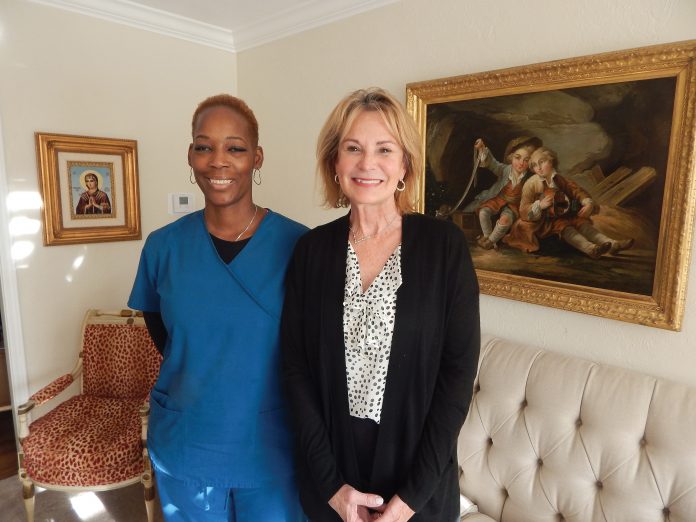
Rhonda Baze and Tina Singleton with Right Choice Personal Assistance.

by Traci Chapman
Staff Writer

Nursing has always been a way of life for Tina Singleton, her chance to bring healing and comfort to others.
With a heart for helping seniors, Singleton has always drawn on a personal experience more than two decades old, a painful memory that has spurred her to do everything she could for those in the twilight of their lives.
“What faces so many seniors is so awful – they want to stay in their home, but they might not be able to, assisted living can be so expensive and so impersonal, then there are nursing homes, something I will never forget,” Singleton said. “My grandmother went into the nursing home and in less than a year, she was gone – she just gave up.”
Singleton’s wish to give others the hope her grandmother lost was what spurred the Oklahoma LPN from the start; now, a new concept called Home Choice, aimed at bringing that comfort home could change Oklahoma’s home health care landscape.
“This is a completely different way of looking at things, a way to give more people an opportunity to have a real home, while they still get the best quality care,” Singleton said.
To get to Home Choice, Singleton had her own path to follow. After working for private care agencies, she in 2009 founded Right Choice Personal Assistance, a company offering traditional home health services to seniors and other home-bound patients. With more than 50 employees serving about 90 home health patients, caretakers assist individuals on a daily, weekly and as needed basis.
“The service is completely tailored to each individual need,” Singleton said.
Helping those who needed Right Choice’s home health services has been gratifying, a way of providing not only medical services, but also a helping hand to others – but something was always missing, Singleton said.
“It just seemed like there was so much more, something beyond the services we have been providing all along,” she said.
As Singleton thought and prayed about it, she was joined in April 2015 by Rhonda Baze, who would join the Right Choice team as community liaison. It was then a plan slowly came into focus – a house that could be turned into the home so needed by many seniors.
“It can be so difficult for seniors to remain independent – if they don’t have someone to help, there is so much to keeping up a house or even an apartment,” Baze said. “The maintenance, the cooking and then the healthcare they might need.”
“This is a solution, something that is not just a service but a home,” Singleton said.
Home Choice is just that, a home located in northwest Oklahoma City, large and specially fitted and ready for seniors to move in. While the house features some amenities found in assisted living facilities – things like 24-hour common area video monitoring, fire sprinklers, emergency lighting, an above-ground storm shelter and even a small salon – it is a private house with large living areas, private, fully accessible bathrooms and a sunny patio and backyard.
“It really is a home, like any home, where everyone has their own room – couples together or in adjoining rooms, if they like, roommates, singles on their own,” Singleton said. “They can garden if they like, play games, have companionship or just be on their own when they like – but they will always have the medical care and support they need, every hour of the day.”
Because the home houses only nine people, that means caregivers can give everyone everything they need, Singleton said. From nursing services to help with everyday issues like hygiene, exercise, transportation, meal preparation, housekeeping and more. Costs will include rent, utilities, home and yard maintenance, food and all care.
“It really is completely their choice,” Baze said. “They can be part of meal planning and cooking if they like, or they can be pampered and served.”
“Everyone needs to feel useful, to feel needed and some people will want to do things like gardening, like helping with other aspects of the house, they might want to volunteer somewhere, they want to be independent as long as they can, and that’s all possible here,” Baze said. “From the most independent of seniors, those who can drive and are very active to those bed-bound – everyone is welcome.”
Caregivers will be on duty 24 hours a day and will be chosen from long-standing Right Choice employees with a proven track record.
“In fact, anyone wanting to be part of this had to submit a separate application and go through a separate interview process,” Baze said. “We want people who are on the same page as us and who truly understand what is expected of them.”
“It’s always been most important to me that caregivers treat those we serve the way they would expect to be treated,” Singleton said. “We provide companionship, care and what they need to have a full and happy life – and that’s what’s important.”

Social

0FansLike
0FollowersFollow
0SubscribersSubscribe