On Saturday, September 9, from 1-4 p.m., the Oklahoma History Center with host an introduction to cross-stitch workshop. Participants will learn the process of cross-stitching and create a cross-stitch bookmark to take home.
The cost of the class is $20 for Oklahoma Historical Society members and $25 for nonmembers. The deadline to register is Saturday, September 2. All materials and instruction will be provided, along with light refreshments.
The Oklahoma History Center is located at 800 Nazih Zuhdi Dr. in Oklahoma City. It is open to the public Monday through Saturday from 10 a.m.-5 p.m. Please call 405-522-0765 or visit https://www.okhistory.org/historycenter for admission costs and group rates.
The Oklahoma Insurance Department (OID) announced today that Oklahoma has adopted regulations enacting a “best interest” standard on annuity sales and recommendations based on the National Association of Insurance Commissioners’ (NAIC) Model Regulation (#275).
The amended regulations, which are located in Oklahoma Administrative Code (OAC) 365:25-17, are set to go into effect on September 1, 2023. The rules require a producer to act in the best interest of consumers under the circumstances known at the time the recommendation is made.
“The new rules will provide stronger protections for retirees and safeguard access for lower and middle-income families in the state,” Insurance Commissioner Glen Mulready said.
Oklahoma is the 40th state to implement the NAIC model regulation, a template for states to create their own regulation governing annuity sales that would align with the Securities and Exchange Commission’s Regulation Best Interest providing robust consumer protection at the state and federal levels.
Earlier this month, the OID issued a bulletin about the training requirements for producers involved in the sale, solicitation, or negotiation of annuities. The training requirements are now located in OAC 365:25-17-7.1. To learn more about annuities, visit https://www.oid.ok.gov/consumers/annuity/ or contact the OID at 800-522-0071.
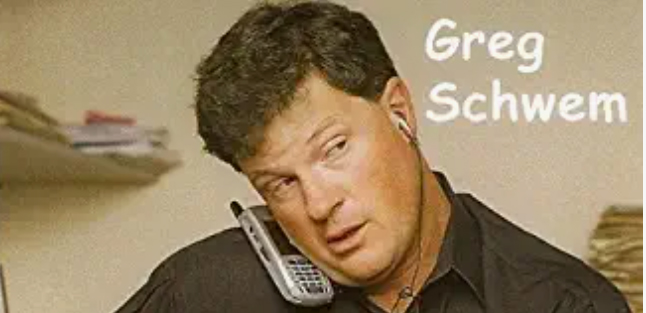
Greg Schwem has a few questions for today’s parents of young kids.
One of the greatest joys of having adult children is knowing I now have the freedom to criticize other parents and their disciplinary methods.
OK, maybe “criticize” is too harsh; “actively observe and silently disagree” might be a better phrase.
My children are 26 and 21, independent (more or less) and free to make their own decisions without my guidance. Which leaves me with plenty of free time to notice, in grocery stores, airports and other public facilities, millennial and Gen Z couples who have chosen to have children instead of dogs and now realize you can’t cage a child if it acts up. Like my parents, I find myself cringing at what this new breed of procreators consider to be acceptable punishment.
I don’t envy today’s parents and the challenges they face. Suffice it to say none of the other parents in my daughters’ kindergarten carpools would have marched into their schools and demanded their severely underpaid teachers stop reading “The Little Engine That Could” because it’s too “woke.” Well, come to think of it, a mother of seven who lived on my block and attended church several times a day may have if she’d been familiar with the word and its meaning.
Social media was a novelty in my daughters’ middle and high school years and certainly not the harmful behemoth that, today, is the gateway to bullying, ostracization and, in some cases, suicide. Yes, they both had cellphones at young ages and there were moments I had to lecture them about proper phone etiquette. Was I too lenient in certain situations? My father certainly thought so and wasn’t shy about voicing his opinions, usually at holiday gatherings. I would fruitlessly explain that he may have a different view if cellphones had existed when I was under his tutelage.
So maybe I’m overstepping my bounds when I question today’s parents about their punishment tactics. But I am generally curious. At the very least, can somebody with children please answer the following three questions?
1. Have you ever actually gotten to ”three”?
Time and again, I see children misbehaving, only to silently snicker as their mom or dad says, “Logan, I am going to count to three.” What follows is the slowest, most drawn out recitation of “one” and “two” that I have ever heard. If I were a professional boxer, got knocked down in the ring and had 10 seconds to get to my feet, I would want one of Logan’s parents to be the referee. The Logans of the world aren’t stupid; they know they still have at least 20 seconds to do whatever has drawn their parents’ ire before backing off.
2. What exactly are “privileges”?
Because I am always looking for future comedic material and column ideas, I recently started driving for Uber. While taking a couple and their two children to the airport, I heard the dad telling his son if his behavior didn’t improve, he would lose all “privileges.” It’s not the first time I’ve heard that, and now this inquiring mind wants a definition. Maybe it’s because I don’t remember having any “privileges” when I was growing up. In my father’s eyes, being born was a privilege.
3. What, and where, is the “Circle of Trust”?
I first heard that phrase when Robert DeNiro famously uttered it to Ben Stiller in “Meet the Parents.” But that was a fictitious movie. When the Uber dad reminded his son that he was approaching a Circle of Trust violation, I wanted to stop my vehicle and ask if I could view the circle some time. Is it actually drawn somewhere in the house? What are the dimensions? These circles must exist somewhere, because I have heard multiple parents refer to them.
Parents of young children, if I receive the answers to these questions, perhaps I will no longer roll my eyes or mumble under my breath when your little darlings are throwing tantrums at the bank or the hardware store. Even though my father never understood my concept of parenting, I want to understand yours. So I eagerly await your replies.
Don’t make me count to three.
(Greg Schwem is a corporate stand-up comedian and author of two books: “Text Me If You’re Breathing: Observations, Frustrations and Life Lessons From a Low-Tech Dad” and the recently released “The Road To Success Goes Through the Salad Bar: A Pile of BS From a Corporate Comedian,” available at https://www.amazon.com/. Visit Greg on the web at https://www.gregschwem.com/.
You’ve enjoyed reading, and laughing at, Greg Schwem’s monthly humor columns in Senior Living News. But did you know Greg is also a nationally touring stand-up comedian? And he loves to make audiences laugh about the joys, and frustrations, of growing older. Watch the clip and, if you’d like Greg to perform at your senior center or senior event, contact him through his website at https://www.gregschwem.com/)
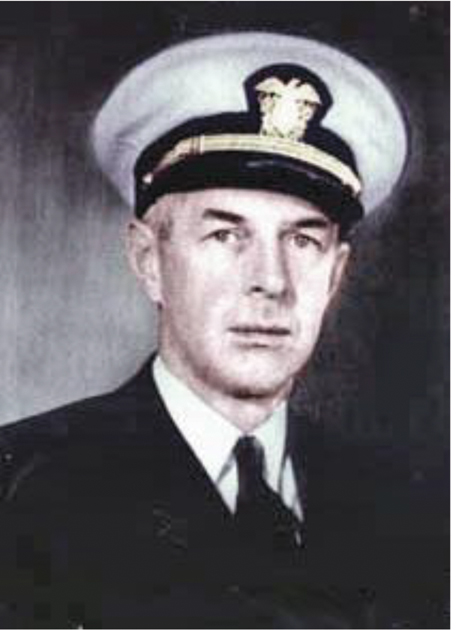
Ensign William Michael Finnegan, was appointed Ensign on Nov. 18, 1941, after rising to Chief Radio Electrician.
Ensign is the junior commissioned officer rank in the United States Navy. As division officers, Ensigns were in charge of overseeing the work of a crew of seamen and petty officers in a specific division. As a Chief Radio Electrician, Finnegan was required to qualify for the ratings of Radioman, Aviation Radioman, Radio Technician, Radarman, and Soundman.
In addition to the USS Oklahoma, Finnigan’s Duty Stations included USS Nevada (BB 36), USS Tennessee (BB 43), Naval Air Station San Diego, CA, USS Ranger (CV 4), Headquarters, 15th Naval District, USS Farquhar (DD 304), New York Navy Yard, NY, Radio School, Cambridge, MA and Recruit Training, Great Lakes, IL
Awards and Decorations include: Purple Heart Medal, Combat Action Ribbon, Good Conduct Medal (2), American Defense Service Medal (Fleet Clasp), Asiatic-Pacific Campaign Medal (Bronze Star), World War II Victory Medal and the American Campaign Medal.
Ensign William Finnegan was born in Bessemer, Michigan and died during the Dec. 7 attack on Pearl Harbor. Finnegan will be buried in the National Memorial Cemetery of the Pacific, Honolulu, Hawaii, on September. 7th.
Across
1 __-relief
4 Sacks
8 Loose strands of hair
13 Tonsillectomy doc
14 Class struggle?
15 Point of contention
16 Binary pronoun
17 *Genetically engineered retriever?
20 Many a Riyadh resident
22 Family chart
23 NYC airport near Citi Field
24 *Colleague of an Idaho farmer?
28 Care follower
29 Relatively small upright
30 Tammy of country
32 NFL stats
33 Socket set
35 Let up
36 *Advice to someone who doesn’t want more kittens?
39 Star in astronomy
42 Of all time
43 Hr. to go
46 __ knot
49 Successful candidate
51 God with good aim
52 *Teaches tricks to circus animals?
54 “Better Call Saul” network
55 Interminable time
56 Nevada city
57 *Food and water supplied during a marathon?
62 Future louse
63 Clip
64 Draft category
65 New prefix
66 Nonsensical
67 Holiday song, and, phonetically, an apt description of the answers to the starred clues
68 Start to sneeze?
Down
1 “You should smile more”
2 Barometer type
3 Soprano Teresa known for her recording of Berg’s “Lulu”
4 Sack
5 Body spray brand
6 Beetle juice?
7 Clobber, biblically
8 Port producer
9 “Amazing Grace” ending
10 Abbreviation on old maps
11 Young hens
12 Data storage company
18 Got bigger
19 Exposed
21 Shut out
25 Promotional links
26 Chalcedony with black and white bands
27 One who’s well-versed
28 Exhausted
31 Not as far
34 Binary pronoun
36 In things
37 Square
38 Hibernian, e.g.
39 __ jar
40 Meteorological concern
41 Ristorante dumplings
43 __ Aigner: fashion house known for accessories
44 Sneaks on the court?
45 Classic autos advertised with the Cole Porter song “It’s De-Lovely”
47 Cow owner in a Rockwell painting
48 Real hoot
50 Caboose, e.g.
53 Salad topper
55 Shrinking Asian sea
58 Caterpillar roll fish
59 Peace activist Yoko
60 Word that indicates a name change
61 ESPN reporter Paolantonio
Across
1 __-relief
4 Sacks
8 Loose strands of hair
13 Tonsillectomy doc
14 Class struggle?
15 Point of contention
16 Binary pronoun
17 *Genetically engineered retriever?
20 Many a Riyadh resident
22 Family chart
23 NYC airport near Citi Field
24 *Colleague of an Idaho farmer?
28 Care follower
29 Relatively small upright
30 Tammy of country
32 NFL stats
33 Socket set
35 Let up
36 *Advice to someone who doesn’t want more kittens?
39 Star in astronomy
42 Of all time
43 Hr. to go
46 __ knot
49 Successful candidate
51 God with good aim
52 *Teaches tricks to circus animals?
54 “Better Call Saul” network
55 Interminable time
56 Nevada city
57 *Food and water supplied during a marathon?
62 Future louse
63 Clip
64 Draft category
65 New prefix
66 Nonsensical
67 Holiday song, and, phonetically, an apt description of the answers to the starred clues
68 Start to sneeze?
Down
1 “You should smile more”
2 Barometer type
3 Soprano Teresa known for her recording of Berg’s “Lulu”
4 Sack
5 Body spray brand
6 Beetle juice?
7 Clobber, biblically
8 Port producer
9 “Amazing Grace” ending
10 Abbreviation on old maps
11 Young hens
12 Data storage company
18 Got bigger
19 Exposed
21 Shut out
25 Promotional links
26 Chalcedony with black and white bands
27 One who’s well-versed
28 Exhausted
31 Not as far
34 Binary pronoun
36 In things
37 Square
38 Hibernian, e.g.
39 __ jar
40 Meteorological concern
41 Ristorante dumplings
43 __ Aigner: fashion house known for accessories
44 Sneaks on the court?
45 Classic autos advertised with the Cole Porter song “It’s De-Lovely”
47 Cow owner in a Rockwell painting
48 Real hoot
50 Caboose, e.g.
53 Salad topper
55 Shrinking Asian sea
58 Caterpillar roll fish
59 Peace activist Yoko
60 Word that indicates a name change
61 ESPN reporter Paolantonio
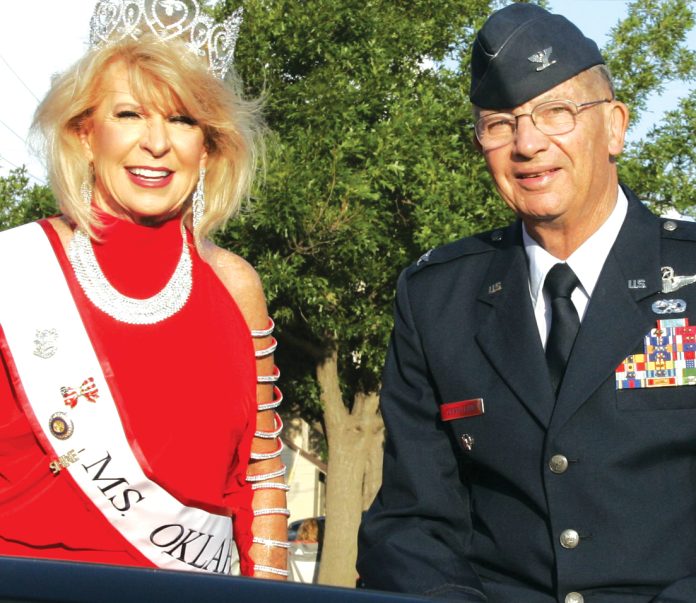
From left, Ms. Oklahoma Senior America Karen Tims and retired U.S. Air Force Col. Chuck DeBellevue look over from one of the first cars in the 4th of July 2003 LibertyFest Parade in downtown Edmond.
Edmond North High School Air Force Junior Reserve Officers Training Corps cadets march as the first Edmond honor guard in the 2023 LibertyFest Parade through downtown Edmond.
Story and photos by Darl DeVault, contributing editor
Billed as “Our America, Spanning the Generations,” this year’s Edmond LibertyFest parade featured seniors Ms. Oklahoma Senior America Karen Tims, 70 and her invitee, America’s top air ace from the Vietnam War, Chuck DeBellevue, 77.
Taking part for the first time in what is hailed as Oklahoma’s most extensive and most patriotic parade each 4th of July, the two seniors represented the older generation well. They said they were in awe of the patriotic outpouring of American pride displayed along the 1.5-mile downtown Edmond route from the often 10-deep crowd in the shady areas.
Bands, floats, clowns, Boy and Girl Scouts by the hundreds, marching groups, horse groups, Corvettes and antique cars, clowns, round-up clubs, Shriners and more provided color and excitement to the 51st annual parade.
The City of Edmond, the University of Central Oklahoma and The Edmond School District provides people, equipment and facilities to make the all-volunteer parade happen with the support of the Chamber of Commerce. This year the presenting sponsor was Citizens Bank of Edmond.
The parade is one of the largest in Oklahoma, attracting an estimated 120,000 people, some with their extended families in place as early as 6 a.m. in the dark along the route.
Tims, a businesswoman living in Arcadia, was crowned Ms. Oklahoma Senior America 2023 during the 15th annual pageant on April 15. She asked that the organization wait to send out news releases about her new role until she could find an event newsworthy enough to warrant the state’s attention.
“My goal in being a part of the LibertyFest Parade was to honor patriotism by more than saying we support America but by also showing the parade attendees a hero of patriotism by inviting Col. Chuck DeBellevue, our top air ace from the Vietnam War, to accompany me in the parade,” Tims said. “The ability to give a decorated veteran his rightful place in his hometown’s huge celebration is far more important than the idea that I was selected as Ms. Oklahoma Senior America. I was so grateful someone of DeBellevue’s military preeminence accepted my invitation, so I designed signs for the car doors and looked forward to seeing Edmond residents honor his service to our great country in the skies over North Vietnam.”
Tims said the cheering crowds along the parade route were fabulous, with most places crowded beyond capacity. So very many stood, and others saluted the Colonel and thanked him for his service.
“I had tears streaming down my cheeks at this heartwarming experience for him to receive this appreciation,” Tims said. “This was his first Edmond parade, and he was well pleased, and for me, it was quite an experience to have met this gentleman.”
Tims said people may recall that the military returning from Vietnam were not always treated respectfully. It made her happy to see this change in the appropriate behavior for someone who served for such a long and distinguished career in the Air Force on our behalf.
She says she was delighted to see so many enjoying the parade and the joy of seeing each participant because everyone was excited and having fun with huge smiles.
“I have to say my driver and his car drew a lot of attention from the young and not-so-young boys admiring his car,” Tims said. “Andy Archbald drove us in his black Cobra convertible. He had it shining and decorated with an American flag on each side at the front of the hood to denote a military dignitary.”
Tims says the notable excitement along the parade route was so much more than she had ever expected. She was impressed that so many people were having fun at this local event.
“I will ask Col. DeBellevue to consider we switch roles next year since my status only lasts a year,” Tims said. “He will likely be invited back because of the crowd’s huge patriotic outpouring for his attendance. I am hoping he will invite me to ride along to allow me to make such wonderful memories again.”
U.S. Air Force Capt. Charles B. DeBellevue, now 77, became America’s first and only six MiG victory credit flying ace in 1972 in the skies of North Vietnam as an Air Force Weapon Systems Officer (WSO).
DeBellevue was an integral part of a two-person aircrew in the McDonnell Douglas F-4 Phantom II, a two-seat, twin-engine, all-weather, long-range supersonic jet interceptor and fighter bomber. His air-to-air missile victories earned him the Air Force Cross and three Silver Stars.
Living in Edmond for 25 years now, the retired colonel says he witnessed a patriotic glimpse of America on display at the parade. “It is an honor to see my fellow citizens celebrate our independence with 100 parade entries and flock to the parade route to continue one of our best traditions,” DeBellevue said.
“Early in the UCO staging area, I saw the patriotic energy in the Edmond North High School Air Force Junior Reserve Officers Training Corps cadets,” DeBellevue said. “They looked sharp in their uniforms. Five members were the 2023 National Champions of the Air Force Association’s StellarXplorers Space STEM program. They were the best of 350 teams nationwide. They earned an all-expenses-paid trip to Space Center Houston in Texas. Members of the top three teams received scholarships to pursue their STEM education and career goals.”
DeBellevue said things got even better when he learned he was to ride in a black Mustang Cobra Convertible.
He said the parade exceeded his expectations. “The crowd was amazing – energetic, patriotic and proud to be celebrating the 4th of July,” DeBellevue said. “Being in uniform, I was impressed when veterans cheered as our car went by. Some clapped, some stood, and some saluted, which I returned. The center of this country is obviously very patriotic.”
Being near the start of the parade paid off, he said. “Once we completed the parade, I watched the rest come through,” DeBellevue said. “For me, the old tractors and the Corvettes were a big hit, as were the three Edmond high school marching bands celebrating the 247th birthday of this great country.”
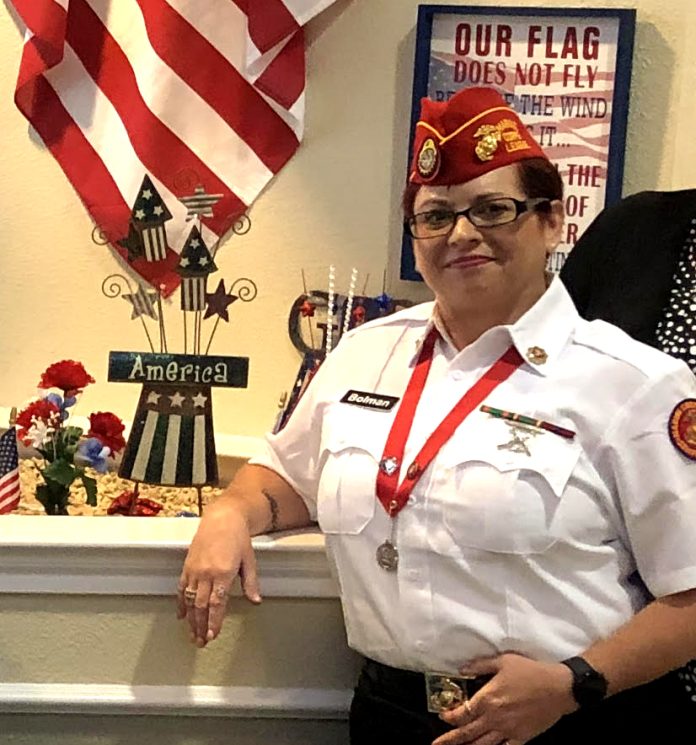
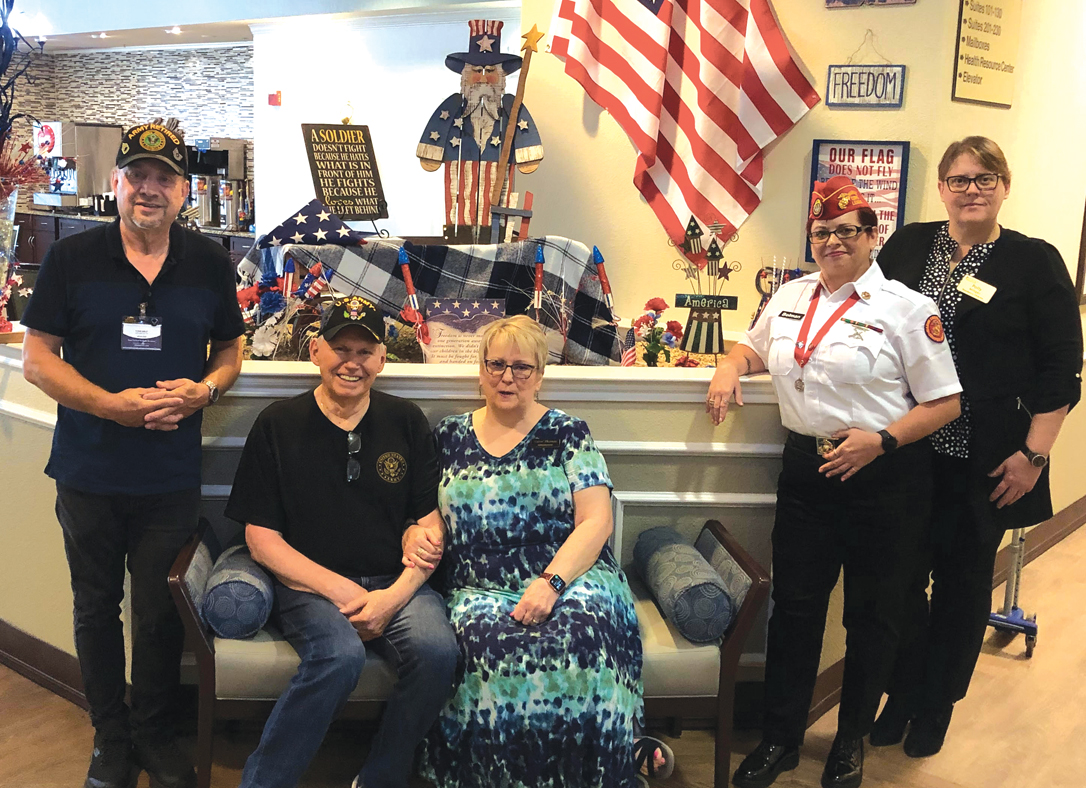
Kimberly Bolman, Acclaim resident and Marine Veteran.
Acclaimed Living in Oklahoma City has over 50 residents that are veterans. Pictured left to right is; Steve Sibley, Army veteran, and Financial Services Professional/Medicare Specialist at Sibley Insures; Jess (Army Veteran) and Carol Thomas, Acclaim residents; Kimberly Bolman, Acclaim resident and Marine Veteran and Polly Milligan, Acclaim Living Residential Director.
story and photo by Van Mitchell, Staff Writer
Kimberly Bolman, a United States Marine veteran, purchased a home in Blanchard, and planned to live there before two strokes changed her direction.
Today, she is a resident of Acclaim Living, located at 12525 N Pennsylvania Avenue in Oklahoma City, in part due to the fact that more than half of their residents are veterans and now call it home.
“I bought a house in Blanchard and then I had two strokes,” Bolman said. “Just having the veterans alone here attracted me. No matter what service you served in, the camaraderie is there. We all get help.”
Having a veteran presence was also appealing to Jess Thomas, United States Army veteran, and his wife Carol Thomas, who also call Acclaim Living home.
“We were wanting to downsize and move into a senior community, and we wanted one that we could be active in and that I didn’t have to worry about Jess, he is independent, but he doesn’t have full speech because he has a facial stroke,” Carol Thomas said. “So, if he wants to go out and do things on his own here, I don’t care. I know everybody knows him and I know that he’s in good hands if anything happens. We just felt really like we were home when we came in here.”
Mrs. Thomas said the Acclaim Living staff treats residents like they were family.
“The staff that works here doesn’t treat you like residents,” she said. “They treat more like family and it’s just a good atmosphere. They support veterans very well here. It is important to us. It’s important that we have people that support the veterans, that support us and keep our freedom.”
Polly Milligan serves as Residence Director at Acclaim Living. She said it is a privilege serving veterans.
“It’s important to me,” she said. “I’ve been a director for over 15 years and I’ve always put a huge focus on veterans because that’s where I see the largest amount of people get lost in the mix. Any of the communities that I’ve run have always had a huge veteran focus, as well as outreach programs, to get them in when other communities won’t accept them because they’ve maybe struggled with some PTSD issues or something like that. Then, those are the ones that I really reach out to, because a better environment can aid in settling that PTSD.”
Steve Sibley a retired Army veteran with Sibley Insures, who educates and advocates for veteran’ health benefits, recently visited Acclaimed Living, and brought in Veteran Affairs officials via the VA’s community outreach programs for veterans which are services that help veterans access health care, benefits and resources in various settings.
“The VA has a community outreach,” Sibley said. “It’s a focus on mental health outreach for veterans, and they meet weekly at the Black Rifle Coffee, which is just about a mile north of here. They’re (Acclaim Living) actually now scheduled to go to take veterans to that event twice a month. It’s a weekly event, but twice a month they actually will bus veterans out and it’s been a really cool deal. They (Acclaim Living) actually take people down to the VA for appointments, I think that’s really cool. So, that’s just another thing that they do here.”
Milligan said Acclaim Living stays in contact with the VA to let veterans know about housing options.
“We stay in touch with the VA housing department to see if there are people that are looking for placement that are, maybe, on the waiting list for a VA center and they don’t quite qualify yet, because of need,” she said. “We try to get our information to them so that they know that there’s a place that most likely would fit within their budget with their aid and attendance funds”
Milligan said Acclaim Living offers a variety of housing.
“Handicap accessible apartments are available,” she said. “And then, we have just regular home apartments that are available. It includes all of their utilities, their cable television, activities, transportation. We’ll take them to their appointments if they need that. All of their meals, everything’s right here included for them so that it’s a one stop shop for what they need.”
Mrs. Johnson serves as an Acclaim Living Ambassador, and she and her husband help welcome new residents.
“It’s made of residents that have been here for a certain length of time that are outgoing and want to help,” she said. “Then when a new resident comes, they hook that resident up with an ambassador that has similar interests and they fill out a form for that, and then we work with that new person and take them through the whole building, making sure that they know where everything is, how everything operates. We eat with them. We take them to different functions within the building and so, until they get comfortable and know people, so that they’re not just dumped in the door. We make them part of the community.”
Milligan said Acclaim Living honors its veteran residents with a variety of activities.
“We do activities that are in honor of our veterans, we try to do that a few times a year for different pinning, or just recognition, in general, of the veterans,” she said. “We always recognize our veterans on the veteran wall in our community and those are ones that have been here before, and are here now. So, it’s a history of our veterans that are displayed on our veteran wall. And then, we try to go to places that get them in touch with other veterans or happenings that are going on in Oklahoma City, so they can be a part of what other veterans are doing.”
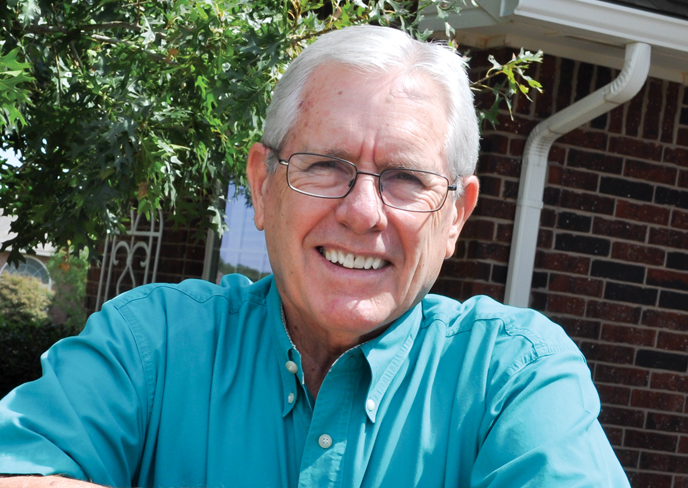
At 76, Ross Pruitt helps families navigate through life changes.
Story and photo by Bobby Anderson, Staff Writer
Ross Pruitt spent most of his life tending to the needs of the church family. But even in retirement, the former minister is still helping people find their way.
Pruitt is a retired Baptist minister who – after 35 years ministering in churches from Oklahoma to California – was more than ready for the golf course.
But he still felt a pull.
“I retired after those years, I guess, with still a lot of energy left,” he said. “I didn’t want to stop helping people. I got my real estate license and that’s exactly what I get to do now.
“I’m not beating the bushes to put in 50 hours a week like I used to but I do get to help people and that’s important to me.”
Licensed in 2014, Pruitt has continued serving others as a Realtor and certified senior real estate specialist through Metro Brokers of Oklahoma.
It puts him in a unique niche, helping families decide what to do with property that’s no longer needed or being used, but still has sentimental value.
As a certified senior real estate specialist, Pruitt is often called upon by families who have to take on the task of what to do with a parent’s estate either after a death or a move into a new living arrangement.
“That is what’s stressful for them,” Pruitt said. “Every time I’ve done it I’ve been glad I had the experience I had working with people intimately because emotions sometimes run high.
“After all those years I pretty much know when to hold hands and when to stand back.”
Homes and property take on a new meaning when they’re no longer needed. Oftentimes, family members will be torn or even at odds on what to do next.
And there are legal ramifications and processes that most are unfamiliar with.
“What I enjoy the best is helping people. Sometimes the paperwork and all that will bog you down,” Pruitt said. “If it helps people I’m all about it. At the end of the day if I was any assistance to them during one of the biggest decisions of their life, then that’s good.
“Most of the time most stress isn’t about the property and the value of the property, most of the time it’s on the family.”
Pruitt said he will often get clients who will come to him after they’ve tried to tackle the task on their own. Trying to sell a home without guidance can be daunting at best, and financially disastrous at worst.
“About 90 percent of people underestimate all that goes into it,” Pruitt said. “It’s stressful.”
Pruitt realizes that family members will often bring emotion into the situation. He knows when to interject and when not.
Whether it’s 20 acres or fine china, at the end of the day it’s always about the people for Pruitt and helping them make the best decision possible for their situation.
“Usually it’s an adult son or neighbor or family member they trust and that person is really just trying to get by day-by-day to help the family get all the possessions sold and all the paperwork,” Pruitt said. “I’m trained in this and I can take a lot of the load off their shoulders. It’s really a blessing for them to be able to rely on someone they can trust and someone who has the skills and knowledge to do it.”
Call Ross at 405-593-0134 or send him an email at [email protected].