Thursday, March 12, 2026

Helping a Senior Loved One With Financial Management

0

Story and photo by Lisa Gonzalez, Contributing Writer

As we age, managing financial matters can become more challenging. But staying on top of our finances is essential for avoiding financial fraud, minimizing debt, and making the most of our retirement savings. If you think your senior loved one is struggling with money management, it might be time to step in and offer to help with their financial matters. Today, Senior News and Living explores some common signs that your senior loved one may be struggling with their finances as well as some steps you can take to help out.

Look for Signs of Financial Management Issues

Financial management issues aren’t always obvious, even to close loved ones. Keep an eye out for some common signs that your senior loved one may be having a hard time tending to their financial responsibilities:

  • Unopened mail lying around the house.

  • Purchases that are out of character.

  • Unexpected changes in their investment portfolio.

  • Large bank withdrawals or transfers between accounts.

  • Taking longer than usual to pay bills and complete other everyday financial tasks.

  • Paying the same bill more than once.

  • Repeatedly calling the bank for passwords and pin numbers.

Some of these signs might also indicate that your senior has become a victim of financial fraud or financial exploitation. If you suspect this is the case, AgingCare.com recommends gathering as many details as possible and reporting your suspicions to local law enforcement.

Help Your Loved One Sell Their Business

If your senior loved one runs a business and they’re struggling to keep up with their business finances, this could be a good time to sell. Help your loved one prepare their business for sale by getting a professional business valuation. A business valuation will provide an objective perspective on the company’s value, void of any sentimental value your loved one may assign to it. A valuation is also important for arriving at a realistic asking price that buyers think is fair.

Obtain Power of Attorney

Getting a general power of attorney will enable you to act on the behalf of your senior loved one both financially and legally. You’ll be able to sign documents on their behalf, open or close bank accounts, withdraw funds, pay bills, cash checks, and even enter into contracts for utilities and services.

Be sure to approach your loved one with power of attorney discussions while they’re still able to make their own decisions. Since this can be a difficult conversation, work to build trust before broaching the topic. Offer to help with financial matters and decisions to show that you care about what’s going on in their life. Most importantly, avoid pressuring them, placing blame, or shaming them for their financial struggles.

Consider Relocating

Handling all of this long distance can be pretty daunting – if not impossible – and frequent car rides or plane trips can be exhausting, as well. If you feel like you might need to be closer to your loved one for a while to see that everything gets done right, you might want to look into buying a house in the area. Do some online research to see properties with your preferred amenities as well as price, and don’t be afraid to ask tough questions when you go to look at the house.

Take Over Regular Financial Tasks

Whether or not you have power of attorney, you can help your senior loved one with a number of regular financial tasks like paying bills or monthly budgeting. This is easier to do with a joint bank account. GetCareful.com recommends considering the pros and cons of a joint account before moving forward. While a joint account will allow you to monitor transactions and help your senior loved one with their finances, it can also create complications with taxes, estate planning, and social security benefits. Consider talking to a financial advisor about this decision to ensure it’s the right move for your family.

Many seniors need help with financial management at some point. If you have a parent, sibling, or spouse who is struggling with their finances, offer to lend a hand! Discuss their options, be respectful, and let them make decisions on their own. Whether you end up helping them sell their business or paying their monthly bills, your assistance will go a long way toward improving their financial well-being!

Senior News and Living provides readers a fresh publication filled with news and features with resources for the mature reader. Contact us today for more info!

USS Oklahoma Shipfitter 3rd Class John Donald Buried Feb. 9

0
Shipfitter 3rd Class John Donald.

Shipfitter 3rd Class John Donald of of Marietta, Georgia was born in Ball Ground, Georgia in July 15, 1913 and enlisted in Nashville, Tennessee on July, 6 1940. Donald’s duties were Using hand and machine tools of the metal shop for metal construction; to lay out metal sheets/sections for repairs to ship’s structure. Duties also included bending, repairing, and fitting pipes, tubing, and structural sections. Donald also maintained tanks and watertight fixtures along with performing tasks associated with forging, welding and soldering. His promotions included Apprentice Seaman upon enlistment, Seaman 2nd Class: Nov. 6, 1940, Seaman 1st Class: May 1, 1941 and Shipfitter 3rd Class: Sept. 1, 1941. He was lost Dec. 7, 1941 on The USS Oklahoma at Naval Base Pearl Harbor Hawaii. Awards and Decorations included Purple Heart Medal, Combat Action Ribbon, Good Conduct Medal, American Defense Service Medal (with Fleet Clasp), Asiatic-Pacific Campaign Medal (with Bronze Star), American Campaign Medal and the World War II Victory Medal. John Donald was re-intered in Arlington National Cemetery in Washington, D.C., on February 9th.

FIGHTING FOR INDEPENDENCE – SENIORS IN AMERICA

0
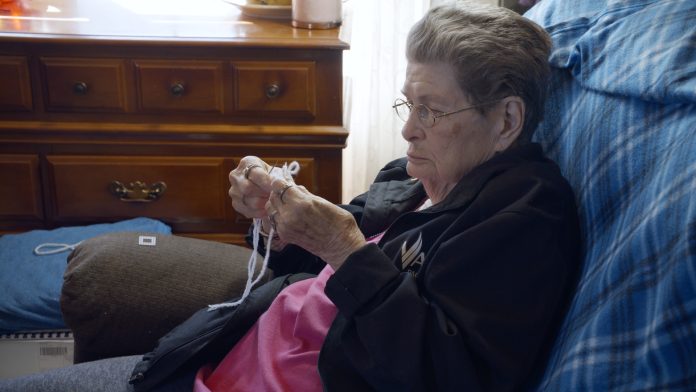
Alva Lee Holmes enjoys needlework at her south Oklahoma City home.

Story by Jake Strickbine

The freedom to come and go as she chooses is just one of the many things Alva Lee Holmes loves about living on her own.
At 97, Holmes knows having her own apartment is somewhat of a luxury. Part of an independent senior living community, it’s a life she doesn’t take for granted.
“I was 97 last month and to me I’m in good health and I didn’t used to be. When I was younger, I wasn’t,” Holmes said.
A few years ago, she was struggling with her health, worried she wouldn’t be able to live on her own much longer.
“I had a tumor in my thyroid, and I lost weight something terrible and my doctor never asked me why I was losing,” she said.
That’s when she learned about Valir PACE, a local program that is revolutionizing care for seniors who would otherwise require nursing home care.
Holmes saw a friend was benefiting from the program, so she quickly signed up, too.
“PACE is a holistic vision of taking care and a wellness program being proactive and not just chasing the injury, chasing whatever is wrong with an individual, but treating the whole of the individual,” said Jake Brownlow, President of Oklahoma City based Valir PACE.
It is a personalized and comprehensive approach that includes doctor visits, physical and occupational therapy, meals, medication, and transportation — an approach that allows seniors like Holmes to remain independent.
“I’m a lot healthier now than I was before I came,” she said.
Illness, falls and other injuries can quickly result in seniors losing their independence.
In fact, more than 17,000 Oklahoma seniors currently live in nursing homes. Yet, 48% of those homes rank below the national average for care, according to Medicare.gov. So finding a better option is a priority for many seniors.
February is National Senior Independence Month, a time when senior independence advocates stress that with the right care seniors can live independently longer.
“That’s the benefit of this program, it lengthens that time that they’re able to spend with their family and their care circles, with their church, with their friends and their neighbors,” Brownlow said.
In some cases, the Valir PACE team is even able to help seniors make necessary improvements to their homes, such as adding safety bars in bathtubs and showers, and ramps to help them get in and out of their homes.
PACE delivers medications to participants each week, helping ensure they don’t miss a dose due to cost or other factors.
It’s given Holmes the freedom to live life the way she wants, while still getting the care she needs.
“I don’t think I would be in this good of health if I didn’t come here to Valir PACE. I really don’t know that I would be here,” she said.
The program is currently working to help more seniors across Oklahoma get the care they need to remain independent longer. They recently opened a new Alternative Care site in Choctaw. And, they have plans to open additional sites across the state.
To learn more about the program, visit http://www.valirpace.org/ or call 405-609-3688.

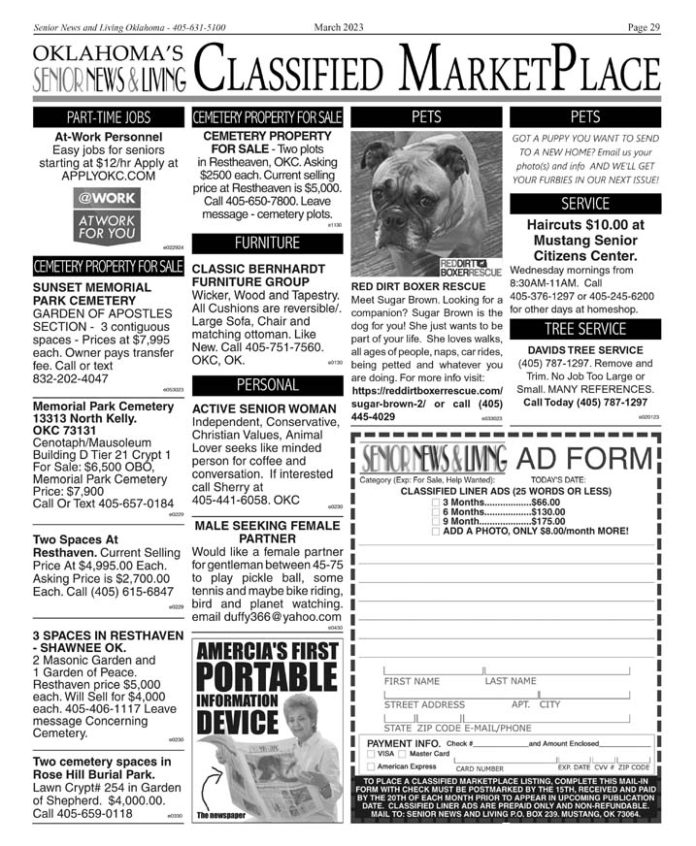
CLASSIFIED MARKET PLACE 03/01/23

0

COMICS PAGE: 03/01/23

0

Greg Schwem: Remember when we talked, no, really talked to one another?

0

by Greg Schwem

Greg Schwem believes some of the world’s biggest corporations seem a little needy lately, asking for feedback much too often.

The art of face-to-face communication took a huge hit due to the pandemic, and it has sadly also affected my favorite solo traveling game.
I’ve titled the game, “Walk Into a Bar and Get One Person Off Their Phone.”
I often find myself alone in strange cities and, rather than ordering room service and bemoaning the fact that the hotel TV package doesn’t include Netflix, I choose to explore my surroundings; trips that culminate in solo dining at restaurant bars. Brewpubs are my favorites, but I recently eliminated gluten from my diet and now must endure strange looks from brewmasters when I belly up to their establishments and order an apple-infused seltzer.
I choose a seat immediately next to, or if the bar is empty, one stool away from another patron. I prefer solo customers like myself, as they are usually scrolling their phones. I’ll say this about the cellphone: It eliminated the scarlet letter that often comes with dining or drinking solo. Instead of projecting a sad, “I have no friends,” vibe, you can pass yourself off as an important business person, albeit one with no friends and whose “business” is watching funny cat videos.
From there, it’s “GAME ON!” As an ice breaker, I might ask my intended targets what they are drinking or seek their reviews on whatever culinary dish has been placed before them. If they respond, I might make a comment about what is on the TV, although I have my limitations. Before I enter an establishment, I look at the screen and ensure the answer is “no” to the following questions:
1. Is “Wheel of Fortune” on?
2. Are the patrons actively watching it?
Recently I dined at a Chicago-area tavern known, among locals, for having some of the best barebcue ribs in the city. I will not name the establishment, for the bar only contains 10 stools and my chances to snag one diminish if I reveal the identity. Seated next to me were two bros in their late 20s, alternating between scrolling their phones and glancing at the Buffalo Bills/Cincinnati Bengals playoff game. I pounced.
“Which one of you has a dog in this fight?” I said, gesturing at the TV.
“He does,’” said Jordan, gesturing to his friend Paul, who stopped scrolling.
“Are you from Buffalo or Cincinnati?” I asked.
“Neither,” Paul said. “Just a die-hard Bills fan.”
From there, the floodgates opened. I learned Jordan was cajoling Paul to move to Chicago; Jordan had just gotten married; Paul liked the idea of marriage but was content (like all Gen Z types) with his dog.
It was such a pleasant encounter, particularly because my last three attempts at this type of interaction resulted in the following:
1. A woman in the Houston airport thought her Instagram account was, apparently, more interesting than anything I had to say.
2. A guy in a Grand Cayman tiki bar falsely accused me of “hitting” on his male friend. His UGLY friend, I might add.
3. A 50-ish woman in Miami suddenly became a huge TikTok fan after my opening line was, “Since this is the Miami airport, let me ask you…how many days have you been delayed?”
I thought it was funny.
I so long for the days when most of society was friendly, inquisitive and curious. Now we hide behind our social media accounts and within our AirPods. We can always find somebody more intriguing on our phone than the person sitting next to us. It is both infuriating and depressing.
My favorite writer, David Sedaris, once wrote that teenage boys would never want to be seen talking to an old man. I agree with that. But teenage boys do not sit at bars. Full grown adults do; and, if you are reading this, rest assured that I want to hear your stories.
I can look at my phone whenever I want, but this will most likely be my only encounter with you and it will only last until my check arrives. So please indulge me, or other strangers who strike up conversations in public establishments. If the conversation turns uncomfortable or creepy, just put in your AirPods or FaceTime a relative. But you may begin a friendship, strike up a business deal or discover you grew up in the same town if you make a little eye contact and then take it one step further.
Hell, you may even learn where to find the best barbecue in Chicago.
(Greg Schwem is a corporate stand-up comedian and author of two books: “Text Me If You’re Breathing: Observations, Frustrations and Life Lessons From a Low-Tech Dad” and the recently released “The Road To Success Goes Through the Salad Bar: A Pile of BS From a Corporate Comedian,” available at Amazon.com. Visit Greg on the web at www.gregschwem.com.
You’ve enjoyed reading, and laughing at, Greg Schwem’s monthly humor columns in Senior Living News. But did you know Greg is also a nationally touring stand-up comedian? And he loves to make audiences laugh about the joys, and frustrations, of growing older. Watch the clip and, if you’d like Greg to perform at your senior center or senior event, contact him through his website at www.gregschwem.com)

Mercy Opens Outpatient Infusion Center for Patients with Inflammatory Bowel Diseases

0

New service for patients with Crohn’s Disease and Ulcerative Colitis

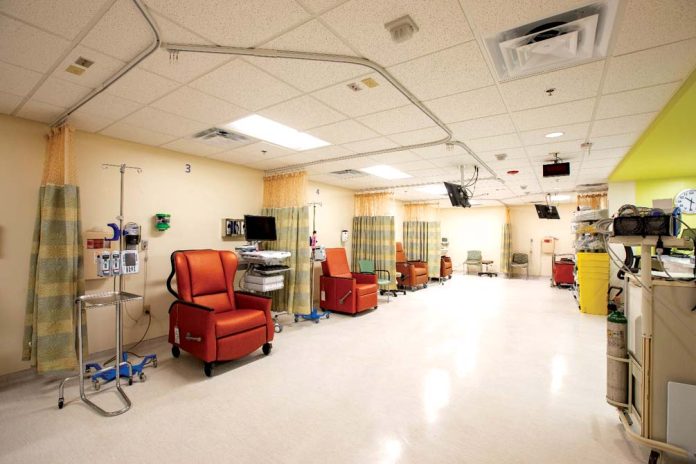
A new outpatient infusion treatment center for people with inflammatory bowel diseases (IBD) has opened at Mercy Hospital Oklahoma City. The center is part of Mercy’s efforts to expand gastroenterology services in the metro area.
Dr. Hussein Bitar, a gastroenterologist who specializes in the treatment of inflammatory bowel diseases, joined Mercy last year with the opening of the Mercy Gastroenterology and IBD Center, the only dedicated IBD center in the state.
“There’s a lot of excitement in this field with new treatments regularly coming on the market, and many are delivered intravenously,” said Dr. Bitar. “Having a dedicated infusion center for patients just down the hall from where they get lab work, imaging and visit our team in the clinic is a unique care model that makes the experience for patients much easier and streamlined. We’re proud to be the only center in the state with this service.”
Patients with moderate to severe Crohn’s disease and Ulcerative Colitis struggle with painful symptoms like abdominal pain, bloating, diarrhea, anemia, weight loss and fatigue. Many of these symptoms cause patients to experience severe dehydration. In addition to having access to the latest biologic infusion treatments, they’ll be able to get IV fluids and iron infusions as needed in the new center.
“We see a lot of really complex patients in various stages of their disease process, and many come to us for second or third opinions,” said Dr. Bitar. “Our long-term goal is to create a medical home where they can receive all their care in one location, and this infusion center is another step in that direction.”
Click here for more information about Dr. Bitar and Mercy’s IBD Center in Oklahoma City, or call (405) 752-3900.

Over the Counter (OTC) Hearing Aids Arrive

0

Story and photos by Ron Hendricks, Contributing Writer

They are here now! The Over the Counter (OTC) hearing aids. They are being advertised everywhere – the newspaper, TV, even on the radio. Hearing Loss Association of America Central Oklahoma Chapter (HLAA COC) does not endorse the OTC hearing aid but we don’t condemn them either. HLAA COC endorses education. Be a smart buyer.
Yes, less expensive hearing aids are now available by mail order. You can get a pair without visiting a doctor, audiologist, or even some hearing aid retailer. Think about it, you can now get a set of hearing aids at home in your underwear! But, will they work? Well, you should take a hearing test, but where? There are on line hearing tests available and even some may be taken over your smart phone. They are not in depth nor will they identify other potential health problems but they can tell if you have MILD or MODERATE hearing loss. * The OTC hearing aid may be for you but here are some points that you need to be certain you understand. There is no “free trial period.” * There is no one-size-fits-all. You may need to try several before you find one that works for you, * Understand the return policy of your seller. It is required to be printed on the box. There may be undisclosed fees so ask first. * This is not your grandma’s hearing aid. OTC aids may have various features but they are still not fully functioning ears. Be an educated buyer. * If your OTC aid does not function as advertised you can complain to the FDA at their website.
In short, if you have moderate hearing loss, you may be able to get a hearing aid that will helpful at a moderate cost but you must be an educated buyer. But, if your hearing loss is greater than mild, you should consult a professional. You are invited to attend the free HLAACOC educational seminar, on February 16, to hear a professional discuss the pros and cons of the OTC hearing aid. HLAACOC seminars are held every third Thursday, 11:30-1PM at the Will Rogers Garden Center, 3400 NW 36. Come and learn about hearing loss and how to live successfully in the hearing world.

Canterbury revisits historic concert with The Brubeck Brothers Quartet

0

Canterbury Voices will reprise jazz legend Dave Brubeck’s To Hope! A Celebration for the first time in 15 years, with guest artists The Brubeck Brothers Quartet, culminating in a celebration of Artistic Director Dr. Randi Von Ellefson’s final performance at the Civic Center Music Hall on Thursday, March 9 at 7:30 PM. To Hope! artfully combines elements of pure jazz with a setting of the Roman Catholic Mass, a sacred expression of joy and hope and possibility.
“I am excited about coming to Oklahoma City with The Brubeck Brothers Quartet to perform To Hope!, one of my father’s greatest achievements as a serious, classical composer.” says Chris Brubeck. “It is an uplifting, powerful musical and spiritual experience for the audience and performers. This piece is alive and ever-changing, along with its beautifully composed choral passages and gorgeous melodies.”
“This is one of Brubeck’s most beloved pieces for large chorus, soloists, and orchestra. I am so excited to bring the Brubeck Quartet back to OKC.” says Dr. Randi Von Ellefson. “It is filled with Brubeck’s joy of life, of music, and his fervent faith.” The concert event will also include three vocal soloists and members from the Oklahoma City Philharmonic.
Canterbury Voices Executive Director Pam Mowry says, “I can’t believe this is Randi Von Ellefson’s last Civic Center concert! He is leaving such a lasting legacy – what a remarkable journey in Oklahoma City. His positive energy and expert musicianship has brought joy to this organization and our musicians over the past 19 years. You simply won’t want to miss it!” Canterbury will host a champagne reception for Dr. Ellefson in the Civic Center lobby immediately following the performance.
Tickets are now on sale and group discounts are available. Call the Box Office at (405) 232- SING or visit https://canterburyokc.com/ for ticket information.

SAVVY SENIOR: Donating Your Body to Science

0

Dear Savvy Senior,

I am interested in possibly donating my body to science when I pass away. What can you tell me about this, and what would I need to do to set it up?
Getting Old

Dear Getting,
If you’re looking to help advance medical research, and in the process, eliminate your funeral and burial costs, donating your body to science is a great option to consider. Here’s what you should know.
Body Donations
Each year, it’s estimated that approximately 20,000 people donate their whole body, after death, to medical facilities throughout the country to be used in medical research projects, anatomy lessons and surgical practice.
After using your body, these facilities will then provide free cremation and will either bury or scatter your ashes in a local cemetery or return them to your family, usually within a year.
And, just in case you’re wondering, your family cannot not be paid for the use of your body. Federal and state laws prohibit it.
Here are a few other things you need to know and check into, to help you determine whether whole-body donation is right for you: * Donation denial: Most body donation programs will not accept bodies that are extremely obese, or those that have infectious diseases like hepatitis, tuberculosis, H.I.V. or MRSA. Bodies that suffered extensive trauma won’t be accepted either. * Organ donation: Most medical school programs require that you donate your whole body in its entirety. So, if you want to be an organ donor (with the exception of your eyes), you probably won’t qualify to be a whole-body donor too. * Religious considerations: Most major religions permit individuals to donate both their full body and organs, and many even encourage it. If you are unsure, you should consult with your pastor or spiritual adviser. * Special requests: Most programs will not allow you to donate your body for a specific purpose. You give them the body and they decide how to use it. * Memorial options: Most programs require almost immediate transport of the body after death, so there’s no funeral. If your family wants a memorial service, they can have one without the body. Or, some programs offer memorial services at their facility at a later date without the remains. * Body transporting: Most programs will cover transporting your body to their facility within a certain distance. However, some may charge a fee.
How to Proceed
If you think you want to donate your body, it’s best to make arrangements in advance with a body donation program in your area. Most programs are offered through university-affiliated medical schools. To find one near you, the University of Florida maintains a list of U.S. programs and their contact information at Anatbd.acb.med.ufl.edu/usprograms. If you don’t have Internet access, you can get help by calling the whole-body donation referral service during business hours at 800-727-0700.
In addition to the medical schools, there are also private organizations like Science Care (ScienceCare.com) and Anatomy Gifts Registry (AnatomyGifts.org) that accept whole body donations too. Some of these organizations will even allow organ donation because they deal in body parts as well as whole cadavers.
Once you locate a program in your area, call and ask them to mail you an information/registration packet that will explain exactly how their program works.
To sign up, you’ll need to fill out a couple of forms and return them. But you can always change your mind by contacting the program and removing your name from their registration list. Some programs may ask that you make your withdrawal in writing.
After you’ve made arrangements, you’ll need to tell your family members so they will know what to do and who to call after your death. It’s also a good idea to tell your doctors, so they know your final wishes too.
Send your senior questions to: Savvy Senior, P.O. Box 5443, Norman, OK 73070, or visit SavvySenior.org. Jim Miller is a contributor to the NBC Today show and author of “The Savvy Senior” book.

Social

0FansLike
0FollowersFollow
0SubscribersSubscribe