Friday, June 12, 2026

Exhibit Highlights Edmond’s Military History

0
The Edmond History Museum is housed in a former armory once utilized as home the Oklahoma Army National Guard’s 45th Infantry Division.
The Edmond History Museum showcases a variety of exhibits telling the history of Edmond, which includes exhibits on the Edmond Fire Department, military history, and an exhibit about Route 66.

The home of the Edmond History Museum, located at 431 South Boulevard has a history itself.

It once served as the armory home of the Oklahoma Army National Guard’s 45th Infantry Division.

“During the New Deal in the 1930s when President (Franklin D.) Roosevelt was putting people to work, the decision was made to build a lot of infrastructure that would help communities,” Amy Stephens, Museum Director said. “And just after World War I, there was still a lot of heightened interest in safety and security, and so armories were high on that list. There were, I believe, 52 armories built in Oklahoma. A handful remains now, and a couple of them are museums and some community centers and warehouses. This armory was built in 1936 by the PWA. This was built by the workers in our community, and it was for the National Guard 45th Infantry Division.”

“Vietnam’s effect on Edmond” 50th anniversary postage stamp.

Stephens said the 45th drilled out of the building until a new armory was built on Bryant Street in Edmond.

She said the old armory, which is owned by the City of Edmond, was utilized for storing lawn equipment, non-profit offices, and a theater group.

“For about 10 years, it had multiple purposes, including serving as the office of the Edmond Historical Society, which evolved into the Edmond History Museum,” she said.
The mission of Edmond History Museum is to celebrate Edmond history through preservation and education. Museum hours are 10 a.m.-5 p.m. Monday – Friday, and 1 p.m.-4 p.m. on Saturday.

Artifacts visually tell the story of Edmond from the land run to the present.

“We are a community museum,” Stephens said. “What makes us slightly unique compared to a lot of community museums is that we change exhibits frequently. It’s not the kind of place where you come and you see the farm equipment and then five years later, you come and it’s the same farm equipment on display. We have a few permanent exhibits to tell about how Edmond started and talk a little bit about the purpose of this building originally. But after that, we have 43,000 artifacts in our collection to tell different stories.”
Stephens said that variety of storytelling has led to an increase in visitors.

“We (museum team) put a lot of emphasis on marketing and helping people understand that this is a museum,” she said. “We do a lot more community programming than we used to, and we’re out in the community more. When the city remodeled the park that we’re sitting inside, that brought in a lot of new people who had never even been here. The number has impressively increased. A couple of years ago, our average attendance was between 15,000 and 20,000, which has been ongoing for several years. The last two years we’ve had over 30,000 visitors. This year, we were at 34,000. So, we almost doubled attendance from a couple of years ago.”

Stephens said the museum currently has a Vietnam War exhibit titled “Close to Home,” which pays homage to the service of those from Edmond in that war.

“Telling the story of wars is important,” she said. “In Edmond, we have such a large population of military members and veterans. And so, every few years, we are doing some kind of war topic. We were looking at the calendar, realizing that this is the 50th anniversary of the end of the Vietnam War and knew this was the time to tell a story that hadn’t been told in a while.”

Stephens added “What I think is important about this exhibit is we interviewed people who are still alive, and we’re telling their stories because they’re still around. And we’re so fortunate to be able to gather the information about what happened to them then, and how it affected the rest of their life, and where they are now because of it. We profile six individuals. Everything from pilots to being down on the ground fighting in the swamps. And so, the artifacts and stories are about real people and people that live here.”
Stephens said the museum also tells the history of Edmond’s fire department, and Edmond’s connection to the historic Route 66, which turns 100 in 2026.

“The exhibits we have are very Americana,” she said. “We are currently installing an exhibit on the history of the Edmond Fire Department. We felt like that was a colorful story that everybody could find some interest in. We do have a small permanent exhibit about Route 66 history. We don’t have a ton of huge artifacts. We have a lot of small things, and so it’s a smaller footprint.”

Stephens said in 2026 the museum will have a new exhibit focusing on Tammi Sauer, a local children’s author.

“Early next year, we will be focusing on one of our very prolific local writers, Tammi Sauer,” she said. “She’s published well over 30 children’s picture books, and many are award-winners. They were all done by traditional publishers. She’s just a rock star. We wanted to tell that because 52% of our visitors are children.”

The museum is also doing a partnership with the Edmond Quilt Guild as well as its annual 5th grade art contest.

“The quilt guild is bringing their experts in, and people can sign up for a session to bring their family quilts and have it assessed,” she said. “Every spring we do an art exhibit of 5th grade art about trees in our town. It’s an Arbor Day festival. So, we will continue with that.”
Stephens said within the next year, they are converting a garage space on the corner of the museum into an activity classroom space.

“We are naming it the Thunderbird Room in honor of the 45th,” she said. “We will have a large neon of the Thunderbird that will be hanging on the walls. We want to pay a little more homage to our veteran history here.” For more information visit
https://www.edmondhistory.org/ or by calling the museum at (405)-340-0078. Museum admission is free. •
story and photos by Van Mitchell, staff writer
Sailing into Navy’s Biggest Battle of WWII – Okinawa

0
Left: U.S.S. Chenango, a small carrier that served in the Atlantic and Pacific Oceans during WWII.Photo by Lanna Daniels
Eugene Bargas served as a Boatswain’s Mate on the U.S.S. Chenango, a Navy escort carrier, during WWII

Enlisting at Seventeen
Bargas was in high school when he enlisted in the U.S. Navy at age 17 in Oct. 1944. Two pals, Jimmy Jackson and Paul Cassilas, enlisted with him. Fortunately, all three came home and stayed friends for decades. After finishing training as a Boatswain’s Mate – a “jack-of-all-trades” sailor who performs a variety of duties – at the Great Lakes Naval Training Center on the shore of Lake Michigan,

Sea Duty
Bargas joined the U.S.S. Shenango (CVE-28), a small Navy escort carrier. The 53-foot vessel was manned by about 1,080 officers and enlisted sailors and launched SBD-3 Dauntless dive bombers (nicknamed “slow but deadly”) and Grumman F6F-3 and F6F-5 Hellcats.

His memories of life aboard the Chenango reveal both the routine and danger of carrier duty. “We had planes that they went out and done their job and we’d fold them up (wings) on the carrier, go downstairs, you know, that was it,” Bargas said. After an aircraft’s wing folded, called a “STO-Wing,” an elevator would lower one or two aircraft inside the carrier for safety and to provide more space for take-offs and landings.

Fire on the Flight Deck
He also remembered a day when a pilot’s landing went wrong. “I remember there’s one of them planes coming in and instead of him landing, he made a mistake and he hit the other planes that was already on the deck and they caught on fire. It wasn’t his fault…. It (arresting cable) stopped him, but not quick enough. I guess he didn’t cut the thing off before he was supposed to.” Bargas thinks one or two sailors were killed. The account is confirmed by Wikipedia. “On 9 April (1945), a fighter crashed upon landing and started a raging fire among the strike-loaded aircraft on Chenango’s deck.” The crew put out the flames and kept the ship operational.

Final Battle
That same month, the Chenango joined other Navy ships in the invasion of Japanese-held Okinawa. Wikipedia states, “She gave air cover in the feint landings on the southern tip of the island, then was assigned to neutralize the kamikaze (“divine wind”) bases in Sakashima Gunto.” These were suicide planes flown directly into the decks and superstructures of Allied ships.

Specific strikes by Chenango’s bombers and fighters included dropping 500- and 100-pound bombs on the runways at Nobara Airfield, damaging airfield barracks and control towers, and attacking fuel supplies
and ammunition. They also conducted combat air patrols to intercept Japanese aircraft and protect Allied ships.

According to the National WWII Museum, “The 1945 Allied amphibious invasion of Okinawa lasted from April 1 through the end of June and was the largest and deadliest operation conducted by American forces in the Pacific war.” The Navy’s “loss of life of nearly 5,000 sailors, with another 5,000 wounded, made Okinawa the Navy’s bloodiest battle of the war, greater even than its losses at Pearl Harbor.” Luckily, the Chenango’s crew escaped kamikaze aircraft attacks.

He sailed countless nautical miles. “For the time I was in, I covered a lot of territory.” Bargas said. “I went from one ocean to the other ocean. I went through the Panama Canal. I went to San Francisco and then later on when we came back, we came back through the Panama Canal. One ocean’s higher than the other. I didn’t know that. I couldn’t believe it.” Asked if he ever got seasick, he laughed. “Yes, I was sick for about a week.” Typhoons? He nodded. “We had several of them. The ocean’s rough.”

From War to Civilian Life
After being discharged as a Seaman Second Class on April 1, 1946, Bargas returned home and began building a civilian life. He married Patricia, and later, Joyce, and had six children and three step-children. His daughter, Lanna Daniels, said he first leased a Phillips 66 gas station in Tulsa before opening his own business, Bargas Garage, for twenty years. Nearly eight decades later, Bargas continues to serve his community. He attended the U.S. Navy’s 250th birthday celebration on Oct. 13 and has been asked to be the Grand Marshal in Claremore’s Veterans Day parade Nov. 11th. • Story by Retired Lt. Col. Richard Stephens, Jr., USAFER. See Rich Travel Niche

Faith and Faith Keep Shafer Striving to Give

0
George Shafer, a U.S. Army veteran, now serves as Generation Church’s Pastor of Digital Communications in Guthrie, and his wife Meredith serves as Pastor of Assimilation and Small Groups.

George Shafer, a U.S. Army veteran, was at his lowest point when his wife Meredith found him in their family’s treehouse with a shotgun aimed under his chin.
He credits her with getting him the help he needed when he was ready to end it all.
“I suffered a traumatic brain injury (while serving) and I got into a deep depression,” Shafer said. “I am a veteran that has struggled. I have struggled with the aimlessness, and the lack of passion, feeling worthless, feeling empty, feeling void.”
Shafer those feelings only heightened during the COVID-19 pandemic after he and his wife’s ministry which helped veterans struggling with addiction closed its doors.
“When the ministry (in Edmond) fell apart in the pandemic, I lost many relationships, and I really isolated myself. I hurt a lot of the friends that I had at the time,” he said.
Shafer said after Meredith found him in the treehouse; she went to work to get him help.
“She was relentless,” he said.
Meredith Shafer wrote in a Facebook post about her and George getting saved 12 years ago.
“Twelve years ago, today (Sept. 28) the Lord saved us,” she wrote. “I was pregnant with our youngest, and life had been in shambles for a while. Mr. Wonderful (George) was chained by addiction, and I was at the end of my rope. That day I found him in our kids’ treehouse about to take his own life. It turns out, he was at the end of his rope too and did not know how to get out of those chains. Twelve years ago, God met us in a treehouse and changed our lives forever. Not in an instant like we wanted, but over and over in the daily choices He showed us how to make.”
Shafer said their response to the pandemic helped shape his family’s future.
“When the pandemic hit Oklahoma, our family had a meeting around the dining room table. We were all nervous, but we discussed what opportunities were available in our new norm,” he said. “We told our kids that it was a difficult situation, but it was also globally difficulty being experienced by everyone. Meaning, the people who are quickest to adapt to change will be the most prepared when the pandemic was over. Our family received this well, and got to work! But they also helped me do the same.”
Shafer decided to go back to school online through Liberty University and receive his Masters of Divinity degree from Regent University.
“There’s just been a calling on my life (to complete his education), and I’ve known it for a very long time. And I ran from it. But when COVID hit that was one of the thresholds that was there for me to cross,” he said.
Shafer credits his wife and children for sticking with him through his studies.
“Meredith Shafer, Jack, Tate, Lucy, and Isaiah; this victory is for you,” Shafer wrote in a Facebook post. “For the missed: sports events, kid drop-off and pickup, parent/teacher conferences, etc. Thank you for helping me, believing in me, and trusting me for the past 7 years through both an undergrad and a challenging master’s program. For a guy who had a 9th grade education prior to college, there were days I wasn’t sure we were going to make it (math and Greek). You guys helped me break generational curses and change the trajectory of our family name.”
Shafer graduated with his master’s degree last spring but was still unsure of what was next for him.
That is when he and his wife felt a calling to come to Generation’s Church in Guthrie.
“I scheduled a meeting with my pastor Josh Seabolt (and told him his story),” Shafer said. “I told him I made a lot of mistakes, and he showed me the grace of Jesus Christ.”
Through that conversation, Shafer was later hired as Generation Church’s Pastor of Digital Communications, and his wife serves as Pastor of Assimilation and Small Groups.
He thanked Generations Church for giving his family a shot.
“To our Generations Church family, you will have no idea how much your love and support has meant to our family. So grateful for each of you,” he said. “It’s very humbling.”
Shafer is the former chaplain of the American Legion Lebron Post 58 in Guthrie, where he helped launch its Bunker 58 Esports program, which is designed to reduce veteran suicide by providing an environment of a connection, teamwork, and camaraderie for local veterans.
Shafer said his struggles help him better help other veterans.
“When I see that in somebody else, I’m able to recognize it,” he said. “Not because I’ve experienced exactly what that person has experienced, but it rekindles my desire to ensure that nobody ever feels that way again. To ensure that they understand that they’re made in the image of God, in the image of their creator, and that they have worth, and that they have value. Even if they no longer wear the uniform or serve the country, they still have value and they still have worth, and they still have things that they were put on this planet to do. And if I can help them get through this short, temporal period of feeling empty, it’s my honor to do that.” •
story by Van Mitchell, staff writer
For more information about Generations Church visit
https://www.generationsguthrie.com.

Women’s Health Clinic, Specialty Care Clinics Relocating

0
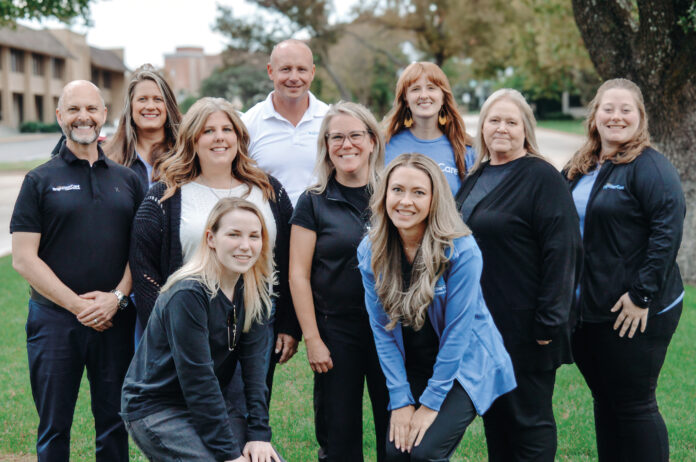
A ribbon cutting was held recently for the new VA clinic opening in northwest Oklahoma City. This new clinic will be where the Women’s Health Clinic and specialty care clinics are relocating from the VA Medical Center.

The VA OKC Healthcare System recently opened its newest VA clinic in northwest Oklahoma City.

This new clinic will be where the Women’s Health Clinic and specialty care clinics are relocating from the VA Medical Center.

The North Portland VA Clinic will consist of two separate buildings and will cover a total of 25,604 square feet, said Wade Vlosich, Director of the Oklahoma City HealthCare System. The facilities will employ 75 staff members.

Building 5, located at 3625 NW 56th Street, will house the Women’s Health Clinic, Imaging, and Lab services. This relocation will provide the women’s Veteran population with a facility outside of the VA Medical Center.

This move will offer an environment for female Veterans who may feel uncomfortable using the medical center due to past trauma.

Building 3, located at 3613 NW 56th Street, will house Physical Therapy, Occupational Therapy, Chiropractic, Acupuncture, Orthopedics, Podiatry, Urology, Optometry, Ophthalmology, and the Optical Shop.

“We’re really excited about this opportunity,” Vlosich said. “It started about four years ago with the growing female population here in Oklahoma. Right now, we have about 10,000 female veterans and that continues to rise every year. We’re netting about 400 female veterans every year. This year alone we’ve seen about 80,000 veterans, so almost 12%, 13% of our total population is female veterans. As we expand the services, we wanted to get a female specific clinic. We are proud of all that we’ve done to bring this to our female veterans.”

Vlosich led tours of the two buildings during a ribbon cutting ceremony Sept. 30.
“Over here will be the check-in (in Building 5),” he said. “We’ll have two entrances, one for females and then the other side is a commingled area where it’ll be for men and women because we do have some men that need mammograms. We will still have every service. The only thing that will be different is that the female specific primary care teams will be here. All our primary care teams will have females in each one of the sites.”

Vlosich said a survey was done about five years ago, and one the top requests was a one-stop shop for female veterans.

“One of the things they said they wanted was a one-stop shop, so when they come in, they can get pelvic floor, they can get GYN, they can get mammography, bone density,” he said.

“What they’re going to be working on when you come in to say for a female exam, they will have a screening for all of these set up for one day. If you need to come in and get bone density mammography, all of that can be done in one day so you don’t have to come out multiple times.”

Vlosich said the North Portland clinics will also include a VA Express Care (same day walk-in) Clinic, including a VA-specific Ortho Express clinic.
“We’re opening up two VA-specific Ortho express clinics because we have so many same day ortho needs that we’ll have urgent, like an express same day ortho clinic,” he said. “You don’t have to go to primary care or anybody, you just walk in, and they can get your x-rays and get all that stuff done here.”

The VA is the world’s largest and most comprehensive provider of sensory aides and prosthetic devices. Veterans enrolled in the VA health care system and referred by a physical medicine and rehabilitation physician can receive a full range of services and equipment like:

• Artificial limbs and surgical implants, including artificial joints and pacemakers

• Wheelchairs and other medical devices

• Aids for Veterans who are blind, have low vision, or are hearing impaired

• Adaptive equipment and modifications to make your vehicle or home more accessible

• Other devices and services to help increase your mobility, dignity, and independence

• Clothing allowance for Veterans with devices that damage their clothing

Vlosich said the North Portland clinics will have an orthotic space.
“We’ll have both prosthetics,” he said. “Instead of going up to the main campus and picking up prosthetic devices, you can come in here. There is a big ortho PT gym here and then an

OT that will work in this space. This is part of just expanding those services overall.”
Vlosich said the North Portland VA will be secure.

“There are some FBI and Homeland Security people in the building, so we’ve got a lot of that,” he said. “We do have a VA police area. We have an armory as well.” •
story by Van Mitchell, staff writer
Oklahoma Heros Inducted into Military Hall of Fame

0

The Oklahoma Military Hall of Fame celebrated its 26th Banquet and Induction Ceremony on Nov 1 at the Embassy Suites, Norman. This year’s class included 11 living and deceased service members representing all Services and all ranks, one civilian and the Kiowa Code Talkers of WWII. The 590 attendees were awed by their valor in battle. The Hall of Fame is one arm of the Oklahoma Military Heritage Foundation that also supports Hall of Honor Chapters in Oklahoma towns.

Mrs. Pamela Kloiber (center) received a Distinguished Public Service Award at the Military Hall of Fame on Nov 1, 2025.

After honoring our national symbols, each service medley was played and dinner served. Singer and performer Maggie Bond and guitarist Dennis Hoch, a Navy veteran of Vietnam, provided entertainment.

Induction Ceremony
After each inductees’ biography was read, the inductee or a representative took the stage with the person who submitted the nomination and the Ambassador who assisted their family’s attendance. Two inductees are highlighted.

Army Colonel Philip Adair
Lt. Col. Gale Clem, his daughter, accepted the award because he died in 2017. She noted, “He was very humble. He…would basically give credit to his fellow servicemen, the crew chiefs, the maintainers, and the other pilots with him…it’s a tribute to an entire generation of Americans…”

Marine Corporal Byron Gordon
Because Gordon died in 2017, his oldest grandson, Chad Higbee, accepted the honor. Gordon was at Bataan when it fell in April 1942. He jumped in the ocean and swam towards Corregidor Island, 3.5 miles away. Years ago, Gordon was asked why he swam. He replied, “It was either that or a Japanese bullet.” Higbee said his grandfather “was actually being encircled by two sharks that were very aggressive. Granddad wasn’t really an overtly religious person, but he did pray for help…And that prayer came in the form of a dolphin who drove off the sharks and then gave him a ride.” Many in the crowd gasped or laughed hearing that story.

Public Service Awards
After 10 military members, including the Kiowa Code Talkers, were inducted for valor, Major General (Ret.) Douglas O. Dollar, USA, who founded the Hall of Fame, and Colonel (Ret.) Kelly Zachgo, President of the Oklahoma Military Heritage Foundation, awarded Distinguished Public Service Awards to CAPT John Kielty, USN, and Mrs. Pamela Kloiber.

Dollar explained the purpose of the Hall of Fame. “We try to honor veterans for one thing, for valor. They’ve been outstanding in combat. The other criteria is that they may have done community/public service for veterans, and they certainly deserve recognition and encouragement.”

Zachgo was pleased with the night’s ceremony. “It was clear that attendees connected with the inductee’s stories and sacrifices. We’re here to honor Oklahoma’s veterans and tonight the cup for them was filled up and held high.”

Inductees not listed in October’s Veteran News Magazine

PVT Oscar J. Upham, U.S. Marine Corps, 1871 – 1949. Upham served in China during their 1899 – 1901 Boxer Rebellion. He received the Medal of Honor for heroic action erecting barricades under enemy fire. He served on the USS Oregon in the Spanish-American War.

CPL Byron C. Gordon, U.S. Marine Corps, 1919 – 2017. During WWII, Gordon deployed to China, Bataan and Corregidor. He endured 3.5 years as a prisoner of war, surviving harsh labor in prison camps and mines. Gordon was awarded the Bronze Star, Purple Heart, and POW medal.

RADM Albert L. Kelln, U.S. Navy, 1929 – 2022. Kelln graduated from the U.S. Naval Academy, served on the USS Blue and USS Ronquil during the Korean conflict, became one of the first officers qualified to operate a nuclear reactor and was Chief Engineer on USS Enterprise.

SSG Virgil Malone, U.S. Army, 1921 – 2004. During the Battle of the Bulge in WWII, Malone drew the enemy’s fire on himself so his fellow soldiers could eliminate a machine gun position. He was wounded in the head and awarded the Silver Star and Purple Heart for extraordinary valor.

SGT Gary L. Opela, U.S. Army. Opela deployed to Vietnam and twice earned the Silver Star. On July 24, 1970, he led a night defense, coordinated supporting fire, and evacuated wounded under heavy enemy attack. Opela helps veterans in Prague.

SGT Harold E. Wadley, U.S. Marine Corps. Wadley earned his first Purple Heart during the Vegas Hill battle, Korean War. With the 5th Marines in Vietnam, he received the Bronze Star with “V” for valor for rescuing wounded comrades. During Operation Swift, he was wounded, earning another Purple Heart and the Silver Star. •
story and photos by Lt Col Richard Stephens, Jr., USAFR, Ret.

For more information about the Oklahoma Military Heritage Foundation, go to https://okmhf.org.

Taking Passion in Coins to Next Level

0

Bill Norfleet has been collecting coins for years, and after retiring, he took his collecting to the next level by opening his business Brazito Coins and Collectibles, located at 2525 Northwest Expressway, Suite 222 in Oklahoma City.

Bill Norfleet, Brazito Coins and Collectibles, located at 2525 Northwest Expressway, Suite 222 in Oklahoma City.

“I’ve collected coins for a long time, and when I retired, I decided I’d just start selling some and buying some and trading back and forth,” he said. “It keeps me off the sofa. It helps me to meet people and do things.”

Norfleet sells/buying at coin shows, sells coins online, and meets with individuals by appointment only at his Oklahoma City office location.

“I’m not a high-pressure salesman at all,” he said. “I’m not going to pressure them to sell them (coins). I just try to help them (with coin information/values). Hopefully they’ll come back when they do want to sell them if they do.”

Norfleet said the internet has changed the way coins are sold.

“The online section is taking over from the storefront business,” he said. “Coin shows are not a storefront, but they’re akin to them. It’s face-to-face-stuff. I’m afraid that the (smaller) coin show deal is kind of dying.”

Norfleet said there are still larger coin shows that attract buyers/sellers from across the country.

“One of the biggest ones in the country is in Orlando, Florida,” he said. “We went to that one in January. It had 660 tables. We went to one a couple weeks ago in Houston. That’s a pretty good size show with 120 tables. There was a lot going on there. A lot of people buy and sell. The bigger shows have many different things there, and you draw a whole lot more people.”

Norfleet said to help better attendance at the Oklahoma coin shows, he is using email to help attract more attendees.

“We are trying something new. We’re going to send out an email to about the first 1,000 people that are identified as having an interest in coins,” he said. “We’ll send out a few emails, one of them four weeks before the event and one another week or 10 days before the event. We’ll see how that works.”

Norfleet said his website features a variety of certified coins.
Certified coins have been graded by an authoritative third party like the Professional Coin Grading Organization (PCGS) or Numismatic Guarantee Company (NGC).

A coin that has been certified will come in a tamper-evident encapsulation or slab from the organization that certified and graded it. This slab will have the necessary information to verify the coin’s grade and authenticity.

“A lot of what we have for sale are what are called certified coins, and they’re in a plastic container,” he said.

Norfleet said coin collectors have a wide variety of coin interests.

“It’s just wide (coin interests),” he said. “Two of the most popular of all time are Morgan dollars and Peace dollars. The (Morgan) were made from 1878 to 1921. Now there were some years in the 1920’s and 1930’s when they weren’t made because the price of silver got to where it didn’t make sense to make a dollar with it. They made a few in 1934 and 1935. The Peace dollars were made from 1921 to 1935. Gold coins are popular. The Indian head two-and-a-half-, five- and ten-dollar Indian head gold coins. The Saint-Gaudens coins are popular.”

Norfleet said he receives phone calls from people who are interested in selling their coins and inquiring about what they might be appraised at.

“We talk about what they have, and that gives me a good feel whether it’s worth their time and mine for us to get together or not,” he said. “I had one lady call and said she had a lot of foreign coins she was interested in getting appraised. I told her I didn’t handle foreign coins, but I gave her information on some people who do. Sometimes you get people who don’t have any children or grandchildren, or as is my case, don’t have any children or grandchildren who are interested in coins. That’s true of a lot of people. We try to be helpful to them in figuring out how to make that decision, whether they want to sell them or keep them.”

Norfleet said he has never lost interest in collecting coins.

“I just enjoy the hunt, but I’ve always enjoyed going to coin shows and taking a list with me of things that I want and looking for them,” he said. “Sometimes you don’t find what you are looking for. But a lot of times, you’ll find something.” •
story by Van Mitchell, staff writer
For more information about coins call Norfleet at (405) 495-4000, email [email protected] or visit www.brazitocoinsandcollectibles.com

Sapulpa’s 100-Year-Old Marine Recalls War and Resilience

0
Left: In front, William Mauch. Behind him, from left, Glenna Howard and Patricia and David Mauch. Claremore.

A Serious Start to an Interview
Stephens. “Sir, is there a story or two you want to share about your service?”

Mauch. “For the younger generation, World War II was terrible. I would like for them to know that. It’s not something you would be anxious to get into…The young people need to know it’s not like video games.”

Stephens. “Please elaborate. Do you mean in general or some of the things you saw?”

Mauch. “You’re constantly hoping you stay alive so you can come home and have the American dream to marry and have a family. And that’s constantly on your mind.”

Stephens. “How did your service or the war change you?

Mauch. “Yes. Physically, I was like 135 pounds. After I got through bootcamp, I’m about 175. I think a little bit stronger (chuckles). Mentally, you were kind of prepared because of the Drill Instructor. He instructed you on how tough you should be.”

Stephens. “What would you say about how you did?”

Mauch. “Well, you experience so many things that if you’re 17 or 18 when you go in, you’re very inexperienced. When you come out, you faced a totally new world of time while you were there.”

Stephens. “Do you mean facing a world of life and death?”

Mauch. “Yes. The value of life. You’re more confident if you’re in the Marine Corps, especially. You’re more confident in your life in the future, I think all the way through life after.”

Stephens. “Anything else you’d like to say?”

Mauch. “Marry a lady that you love, for sure, and that will take good care (of you). Enjoy your family as long as possible.”

William “Bill” Mauch, now 100, saw combat close up as he rode in amphibious assault landing tractors during two of the Pacific’s most grueling battles – Peleliu and Okinawa.

A young Marine William Mauch poses for a picture during WWII. Photo by William Mauch

Into the Heat of Peleliu
Between Sept. 16 and Oct. 20, 1944, Mauch was deployed to the island of Peleliu, a small island in the Palau archipelago located some 500 miles east of the Philippines. He arrived just after the initial Sept. 15 landing. He said, “I was in reserve maintaining the radio systems of about a dozen tractors in our company.”

Conditions were brutal. Temperatures soared to 115 degrees daily. “We drank contaminated water (from contaminated petroleum 55-gallon drums) and there was no way to bathe.” Relief came when the Navy supplied water purified through osmosis systems. Mauch said they were often dehydrated and suffered from dysentery and jungle rot in the crotch and armpits. “It was total misery.”

The Invasion of Okinawa
Five months later, Mauch “carried the first wave of troops to shore April 1, 1945”, during the invasion of Okinawa – the final island battle before an anticipated invasion of mainland Japan. Once again, he rode in amphibious tractors formally named as Landing Vehicle, Tracked, LVT4.

Each LVT4, Mauch explained, “would haul about 25 or 30 (personnel) in the rear, and the front was the driver and the radio operator, and then the commander would be also aboard…You could communicate back and forth on the tractor…I was responsible for the radio intercom systems for 12 of those LVT tractors.” He described how the vehicles were designed for transport and protection. “And then on the back was a drop tailgate, I’ll call it, and the troops would come out there and the tractor would protect them more or less while they got out. Then we could haul supplies, ammunition and things like that. Your initial job was to get the troops ashore.”

The Somber Duty of Burial
After the initial invasion of Okinawa, Mauch’s duties took a somber turn. “About the third day that we got a dispatch to pick up a load, and that was about, I’ll say six or seven dead bodies in body bags. We loaded them on our tractor…We’d haul them to the to the designated cemetery area.” The temporary gravesites were later uncovered and the remains returned to the United States.

Living Under Fire
In a Sapulpa Times interview by Micah Coquette, “Lifelong Sapulpan Bill Mauch turns 100, inducted into the Centenarians of Oklahoma Hall of Fame,” Mauch reflected, “’On that island, we were constantly under threat to our lives,’” adding, “’You have rifle fire, you have mortars, you have big guns and bombers every night. You have anti-aircraft shells that burst and can land on your tent. There’s just all these ways you could get killed.’”

Building a Civilian Life
Discharged in Feb. 22, 1946, Mauch returned to Sapulpa. His father took him to an Odd Fellows meeting where he reconnected with his high school mechanical drawing teacher. “He saw me there and he said, ‘Oklahoma Gas & Electric head called for a young man to train as an engineer…I’d like for you to go ahead…So I did and they hired me. And I spent three years as a junior engineer for OG&E.”

Realizing he needed to use his GI Bill, Mauch enrolled at Oklahoma A&M, spending nearly five years earning a degree in architectural engineering. Afterwards, “I went to work in the aircraft industry for Douglas Aircraft in their structural engineering in Tulsa. Later, McDonald Douglas bought them. I worked for them for 33 years.”

Love and Legacy
He married Helen in 1954, and together they celebrated 70 years of marriage before her passing in 2024. The couple raised four children and were blessed with six grandchildren and nine great-grandchildren. Today, William Mauch continues to live in his hometown of Sapulpa. • Story by Retired Lt. Col. Richard Stephens, Jr., USAFER. See Rich Travel Niche


Empowering Seniors through a Master’s in Social Work for Aging Populations

0

The demand for specialized social work professionals in senior care is increasing due to an aging population. A Master’s in Social Work (MSW) provides the necessary skills and knowledge to meet these growing needs. This article examines the role, benefits and impact of MSW-trained social workers in enhancing seniors’ quality of life.

The global population is rapidly aging, creating an urgent need for dedicated professionals to support seniors in various capacities. Social workers specializing in elder care are crucial in ensuring that older adults receive the necessary assistance and advocacy they deserve. An advanced degree such as a masters in social work is essential for those looking to make a meaningful impact in this field. This degree equips individuals with the expertise required to navigate the complex challenges associated with senior care, offering both theoretical knowledge and practical skills.

The Role of Social Workers in Senior Care

Social workers play a pivotal role in supporting seniors across different environments, including healthcare facilities, community centers and home care settings. They act as advocates, ensuring that seniors’ rights and needs are prioritized in every aspect of their care. Through counseling services, they provide emotional support and guidance, helping older adults cope with life’s transitions and challenges.

Moreover, social workers are instrumental in resource management, connecting seniors with essential services and benefits. This includes coordinating healthcare services, facilitating access to community programs and assisting with financial planning. By leveraging their knowledge of local resources and policies, they empower seniors to lead fulfilling and independent lives.

In addition to direct support, social workers are often involved in developing policies and programs that address the broader issues affecting aging populations. Their insights and experiences on the ground enable them to advocate for systemic changes that enhance the overall quality of life for older adults.

Advantages of Pursuing a Master’s in Social Work for Senior Care

A master’s degree offers a comprehensive curriculum that covers various aspects of social work practice, including human behavior, social policy and ethics. Such programs emphasize the development of specialized skills needed to address the unique challenges faced by seniors. The flexibility offered by online MSW programs makes it accessible for individuals balancing other commitments while pursuing advanced education.

The curriculum is designed to prepare students for real-world scenarios through case studies, internships and interactive coursework. This hands-on approach ensures that graduates are well-equipped to handle diverse situations they may encounter in their careers. Furthermore, exposure to different areas within social work allows individuals to discover their niche within senior care.

Pursuing an MSW also opens up opportunities for career advancement and specialization. Graduates can choose to focus on specific areas such as geriatric care management or policy development, tailoring their expertise to align with personal interests and professional goals.

Career Opportunities for MSW Graduates in Senior Services

An MSW degree unlocks numerous career paths within the realm of senior services. Graduates can pursue roles as geriatric social workers, where they directly engage with elderly clients to address their psychosocial needs. These professionals often work within hospitals, long-term care facilities, or community-based organizations dedicated to supporting older adults.

In addition to direct practice roles, there are opportunities in program management and policy development aimed at improving services for aging populations. Social workers are valued contributors to interdisciplinary teams that design initiatives focused on enhancing seniors’ health outcomes and overall well-being.

The growing demand for skilled social workers within senior living communities further underscores the importance of obtaining an MSW. As more seniors seek supportive living environments that cater to their evolving needs, the expertise provided by trained professionals becomes increasingly vital.

Wrapping Up: Impact of Social Work on Improving Quality of Life for Seniors

Social workers have made significant strides in improving the quality of life for seniors through targeted interventions and personalized care plans. Programs that promote independence by providing mobility aids or home modifications enable seniors to age comfortably in place. These initiatives not only enhance physical safety but also contribute to mental well-being by fostering autonomy.

Effective counseling interventions can alleviate feelings of loneliness or depression among older adults. By facilitating group activities or peer support networks, social workers help build strong community ties that combat isolation – a common challenge faced by many seniors.

The role of social workers extends beyond individual support; they also advocate for policies that protect seniors’ rights and improve access to essential services. Their efforts contribute significantly towards creating inclusive communities where older adults can thrive with dignity and respect. For more information on how you can make a difference through a career in social work focusing on senior care, explore resources available from trusted organizations online.

Bridging Generations: How Senior Care Education is Transforming Lives

0

The growing demand for senior care specialists is opening new doors for both caregivers and seniors alike. From flexible education options to enhanced care quality, healthcare professionals are increasingly choosing to specialize in senior care – a trend that’s revolutionizing care delivery for our aging population.

As America’s senior population continues to grow, the need for specialized healthcare professionals has never been more crucial. This shifting demographic has sparked a revolution in healthcare education, particularly in programs focused on geriatric care. The intersection of technology and education is opening doors for both experienced healthcare workers and those looking to enter the field, while simultaneously improving the quality of care for seniors.

The Evolution of Senior Care Education

The landscape of healthcare education has transformed dramatically over the past decade. With the emergence of online AGNP programs and other specialized nursing degrees, healthcare professionals can now advance their careers while maintaining their current positions.

This flexibility has led to a surge in qualified practitioners who better understand the unique needs of older adults, resulting in more comprehensive and empathetic care delivery. The integration of modern learning methods with traditional healthcare principles has created a new standard in professional education, enabling practitioners to develop specialized skills while maintaining work-life balance.

Technology: Breaking Down Barriers to Education

Modern educational platforms have revolutionized how healthcare professionals learn and interact with course material. Virtual simulations, interactive case studies and real-time collaboration tools enable students to gain practical experience while studying remotely. These technological advancements have made quality education more accessible than ever before, particularly for those in rural areas or with demanding work schedules.

Through sophisticated learning management systems and virtual classrooms, students can engage with instructors and peers, participate in group discussions and access comprehensive learning resources at their convenience. This technological integration ensures graduates are well-prepared to handle the complexities of senior care.

The Impact on Senior Care Quality

The rise in specialized education programs has directly influenced the quality of care received by seniors. Healthcare professionals with advanced training in geriatrics demonstrate better understanding of age-related conditions, medication management and the importance of holistic care approaches.

These specialists are equipped to recognize subtle changes in health status and implement preventive measures before conditions worsen. Their expertise extends to managing complex medical conditions while considering the psychological and social aspects of aging. This comprehensive knowledge allows them to develop more effective treatment plans, resulting in improved health outcomes and enhanced quality of life for elderly patients.

Creating Stronger Support Networks

Education extends beyond clinical skills to encompass family dynamics and community resources. Today’s healthcare professionals learn to navigate complex family situations, coordinate with various care providers and connect seniors with valuable community services. They develop expertise in facilitating family meetings, mediating conflicts and helping families make difficult decisions about care options.

These professionals also build strong relationships with local support services, creating comprehensive care networks that address both medical and social needs. This integrated approach ensures seniors receive well-rounded support that considers their physical health, emotional well-being and social connections.

Empowering Caregivers Through Knowledge

Professional development opportunities have become increasingly accessible to family caregivers. Educational institutions now offer certificates and workshops designed specifically for non-professional caregivers, helping them understand senior health needs and access available resources. These programs cover essential topics such as safety measures, basic medical care, stress management and self-care strategies.

Caregivers learn to recognize warning signs of common health issues, implement preventive measures and effectively communicate with healthcare providers. This knowledge-sharing strengthens the entire care ecosystem, reducing caregiver burnout and improving the quality of care provided to seniors.

Building Bridges Between Generations

The focus on geriatric education has fostered greater understanding between generations. Healthcare professionals are learning to appreciate the wisdom and experiences of their elderly patients, while seniors benefit from caregivers who are better equipped to address their unique needs. This mutual understanding creates stronger bonds and more effective care relationships.

Educational programs now emphasize cultural competency and intergenerational communication, helping practitioners bridge potential gaps in understanding. These strengthened connections lead to better compliance with treatment plans, increased trust in healthcare providers and more positive outcomes for seniors receiving care.

A Future of Enhanced Senior Care

As educational programs continue to evolve and adapt to changing healthcare needs, the future of senior care looks increasingly promising. The combination of specialized knowledge, technological advancement and improved accessibility to education is creating a new generation of healthcare professionals who are passionate about and dedicated to providing exceptional care for our aging population.

Enhancing Senior Health Through Wearable Technology and DNP Acute Care Programs

0

Wearable technology is transforming senior healthcare, offering innovative solutions for monitoring health. The integration with nursing programs is pivotal in advancing patient care and ensuring better health outcomes. These technologies empower seniors and healthcare providers alike, paving the way for a healthier future.

The landscape of senior healthcare is rapidly evolving with the introduction of advanced technologies. Among these innovations, wearable technology stands out as a transformative tool, reshaping how seniors monitor their health and manage medical conditions. The relevance of DNP acute care programs in this context cannot be overstated, as they are crucial in training nurses to adeptly integrate these technologies into patient care strategies. As the senior population grows, these advancements play a critical role in improving healthcare outcomes and quality of life for older adults.

Wearable Technology in Senior Healthcare

Wearable technology encompasses a range of devices designed to monitor various health metrics, making it an invaluable asset in senior healthcare. Devices such as smartwatches, fitness trackers, and even smart clothing have become increasingly popular among seniors for their ability to provide continuous health monitoring. These gadgets offer essential features like fall detection and heart monitoring, which are particularly beneficial for older adults who may face mobility challenges or cardiac concerns. Additionally, many wearables come equipped with medication reminders, helping seniors adhere to their prescribed regimens more effectively.

The appeal of wearable technology lies not only in its functionality but also in its accessibility. These devices are generally user-friendly, allowing seniors to engage with their health data without feeling overwhelmed by complex technology. Moreover, the real-time feedback provided by wearables empowers seniors to take proactive steps toward managing their health, fostering a sense of independence and confidence. However, it is important to acknowledge potential challenges such as device affordability and the digital literacy required for optimal use.

Impact of Wearable Technology on Senior Health

Wearable technology has a significant positive impact on senior health. By providing continuous monitoring, these devices enable early detection of potential health issues, allowing for timely intervention and treatment. Real-world examples abound where seniors have experienced significant improvements in their quality of life through the use of wearables. For instance, individuals with chronic conditions like diabetes have benefited from the constant monitoring capabilities of smart devices, which help them maintain stable blood sugar levels.

Despite its advantages, there are limitations that must be addressed to maximize the effectiveness of wearable technology among seniors. Issues such as data privacy concerns and technical malfunctions can pose significant barriers to adoption. In addition, not all seniors may be comfortable with or willing to embrace these technologies due to unfamiliarity or skepticism toward digital solutions. Therefore, it is vital for healthcare providers to offer support and education to ensure that seniors can fully benefit from these innovations.

Role of DNP Acute Care Programs in Senior Health

DNP acute care programs serve a pivotal role in equipping healthcare professionals with the skills necessary to integrate modern technologies into patient care practices effectively. These programs focus on developing clinical expertise and leadership abilities among nurses, enabling them to harness wearable technologies efficiently within acute care settings. As nursing education evolves alongside technological advancements, these programs prepare practitioners to meet the diverse needs of an aging population through enhanced patient monitoring and treatment strategies.

Incorporating wearable technology into acute care environments allows for more comprehensive patient oversight, facilitating timely interventions and improved health outcomes. The synergy between technological tools and advanced nursing education results in a robust framework for addressing complex healthcare challenges faced by seniors today. By leveraging this combination, healthcare providers can deliver personalized care that promotes well-being and longevity among older adults.

Combining Wearable Technology with DNP Acute Care Programs

The integration of wearable technology with DNP acute care programs creates a powerful synergy that enhances senior health management significantly. Through advanced nursing education, professionals gain a deeper understanding of how to utilize technological tools effectively within clinical settings. This knowledge empowers them to implement strategies that address the unique needs of elderly patients while optimizing resource allocation in healthcare facilities.

Examples abound where this combination has led to remarkable improvements in patient outcomes among seniors receiving care through integrated approaches involving both wearables and advanced nursing practices. Such initiatives demonstrate how collaboration between educational institutions and healthcare organizations can drive innovation within the industry while ensuring optimal patient experiences across various contexts. As we look toward future trends in senior healthcare delivery models driven by cutting-edge technologies like artificial intelligence (AI) and machine learning (ML), continued investment in education remains essential for sustaining progress toward better overall wellness outcomes worldwide.

Future Trends and Innovations in Senior Healthcare

The future of senior healthcare promises exciting developments driven by emerging trends within the realm of wearable technology innovation coupled with evolving educational paradigms centered around advanced practice nursing curricula like those offered through DNP acute care program initiatives nationwide today! Among some promising prospects on the horizon include further miniaturization devices enabling even greater portability convenience factors combined with enhanced functionalities offering an expanded range of actionable insights relevant to clinical decision-making processes overall!

Moreover ongoing efforts aimed at refining interoperability standards across diverse platforms ensuring seamless data exchange interoperability critical to achieving a truly integrated holistic approach to managing complex chronic conditions prevalent in aging populations worldwide now possible than ever before thanks rapid pace of technological evolution taking place right before eyes every day! Ultimately goal remains the same always been namely improving the lives of individuals entrusted to us professionals dedicated to caring compassionate service above else shared vision brighter tomorrow awaits us all working together collectively to achieve common objectives of paramount importance to humanity itself moving forward into uncharted territories unknown yet full promise potential unlimited possibilities awaiting discovery exploration ahead future generations come after us here today!