
Thursday, June 18, 2026

Tinker Business Owner Receives Purple Heart Award

0
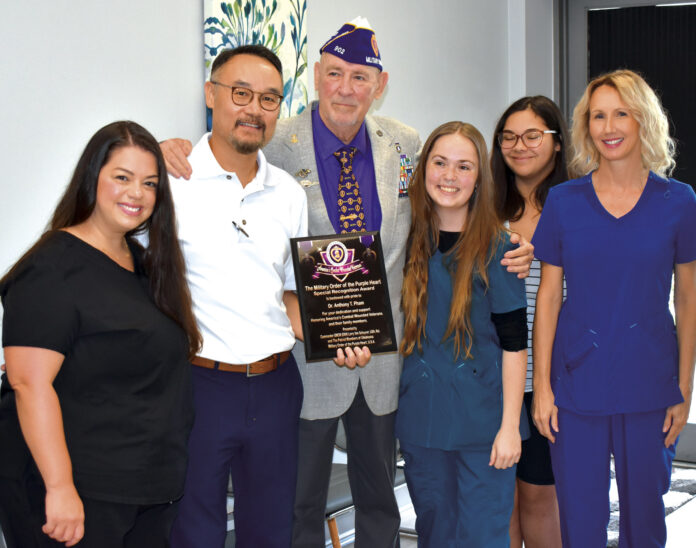
From left, Jen Jones, Dr. Anthony Pham, Larry Van Schuyver, Kerrigan Bircher, Nicole Barreiro, Mindy Pham (Anthony’s wife) after the Purple Heart.

On September 18, as Dr. Anthony Pham was performing his normal vision exams and prescribing eyeglasses at Tinker Eye Care, he received a nice-to-have surprise award.
A “Special Recognition Award” came from the Oklahoma Military Order of the Purple Heart, presented by Master Chief Petty Officer Larry Van Schuyver, State Commander.
Schuyver said the award was given “because over and over again, he’s taken the time to help with our elderly, disabled veterans and other families. He’ll help you any way he can. He’s an honorable, decent man and we’re proud to welcome him to our Purple Heart family.”
Staff, family and Joanna Bunde, Visual Merchandizer at Tinker’s Base Exchange, clapped with their approval.
Afterwards, Pham, who owns and manages the store, explained how he felt. “I’m honored to receive this. It’s my privilege to serve as a civilian optometrist.”
The Tinker Eye Care office serves 250 customers a week with primary eye care (exams, eye disease, contact lenses and more). • story by Lt Col Richard Stephens, Jr., USAFR, Ret.


Tahlequah’s Purple Heart Monument Adds QR Link to Vietnam Virtual Wall

0

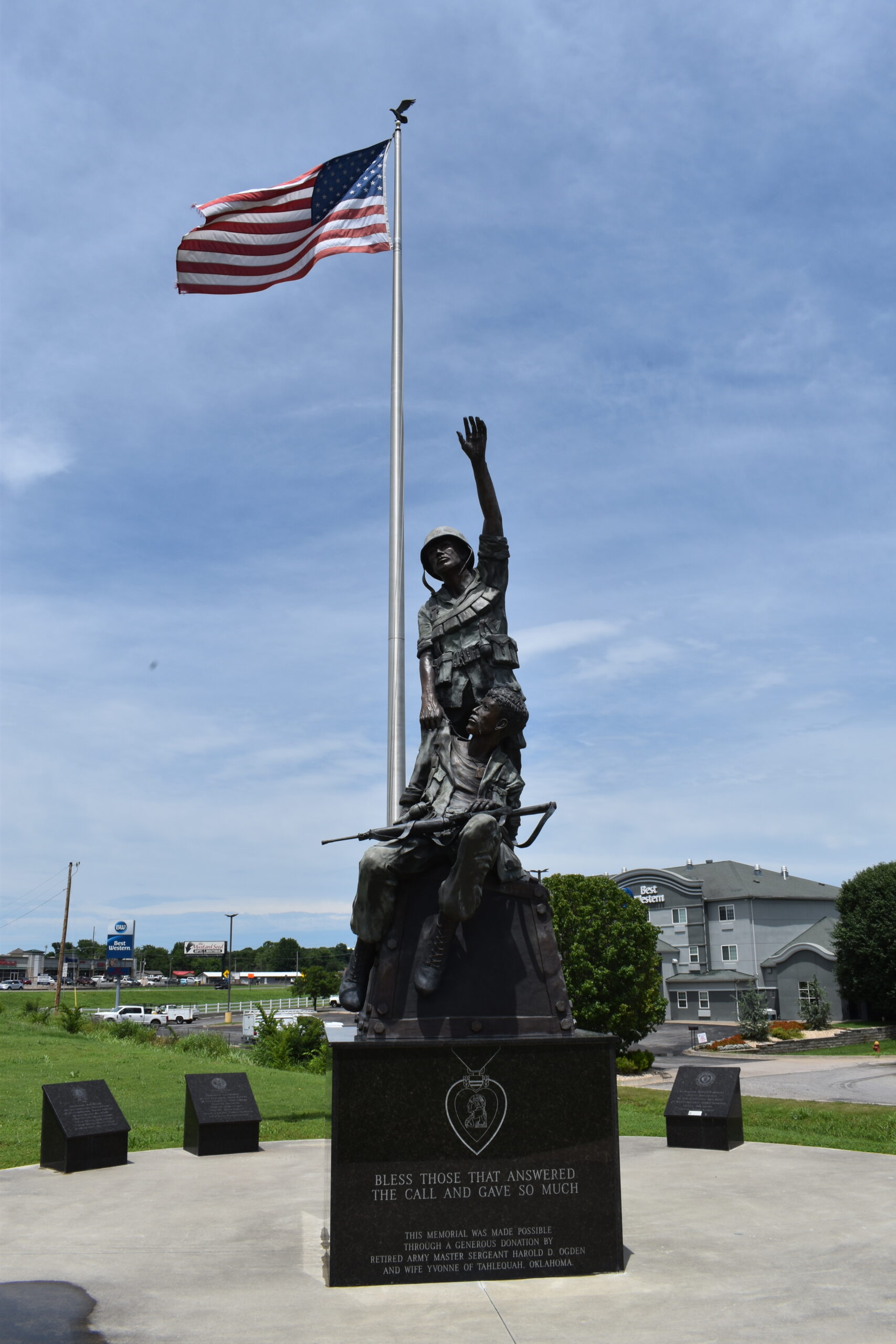
The National Purple Heart Monument in Tahlequah is the only national moument dedicated to Purple Heart recipients.

Don Nichols, Adjutant of Chapter 617 in Muskogee, Oklahoma, announced that the Department of Oklahoma’s Military Order of the Purple Heart is enhancing the National Purple Heart Monument in Tahlequah with a new QR code. The monument, created to honor all American veterans, is already unique for its existing QR code that lets visitors view veterans’ stories while on site.
The new addition will connect visitors directly to the Virtual Wall®, “an on-line web site that contains memorial pages honoring the 58,261 women and men whose names are inscribed on the Vietnam Veterans Memorial in Washington, D.C” according to the Vietnam Veterans of America. By scanning the code with a smartphone, guests can access detailed profiles and service information for each individual named on the Wall.
“We’ll have the only monument that has that capability,” Nichols said, that provides a direct link to the Virtual Wall®. He added, “We did that to let the families of veterans know they aren’t forgotten.” The Purple Heart Monument is located at the corner of Muskogee Avenue and the Bertha Parker Bypass, at 2001 South Muskogee Avenue. Scan this code to visit. • story by Don Nichols, Adjutant of Chapter 617 in Muskogee.

Life of Outlaw and Mummy Elmer McCurdy to be Highlighted in Museum Webinar

0

On October 7, 1911, a gunfight erupted between a posse of lawmen and train robber Elmer McCurdy. Elmer would not survive the encounter. He would, however, go on to become a legend. The story of outlaw-turned-mummy Elmer McCurdy garners worldwide interest and has been featured in books, documentaries and a Broadway musical. The Oklahoma Territorial Museum and Carnegie Library in Guthrie is the home of his story, and the “Boot Hill” section of Summit View Cemetery on the edge of town is his final resting place.
Join the Oklahoma Territorial Museum on Zoom on Tuesday, October 7, at noon as museum director Michael Williams moderates a discussion on the life and afterlife of Elmer McCurdy with David Yazbek and Erik Della Penna, creators of the Broadway musical “Dead Outlaw.”
Yazbek is an American writer, musician, composer and lyricist. He wrote the music and lyrics for the Broadway musicals “The Full Monty,” “Dirty Rotten Scoundrels,” “Women on the Verge of a Nervous Breakdown,” “The Band’s Visit,” “Tootsie” and “Dead Outlaw.” He won a Tony and a Grammy for “The Band’s Visit.” He also consulted on the musical “Buena Vista Social Club.”
Della Penna is a composer, lyricist, instrumentalist and vocalist who has appeared on over 60 rock, pop and Americana albums. He has toured and recorded extensively with Joan Osborne, Natalie Merchant and Joan Baez and has worked with legendary music producer T Bone Burnett. He is conservatory-trained, holding a BFA in Classical Guitar from the Mannes School of Music (now The New School). He also plays the banjo, lap steel guitar and mandolin. In 2024, he won the Drama Desk Award for Outstanding Lyrics for “Dead Outlaw,” which was off-Broadway at the time.
This event is free; however, spots are limited, and registration is required. A registration form is available online.
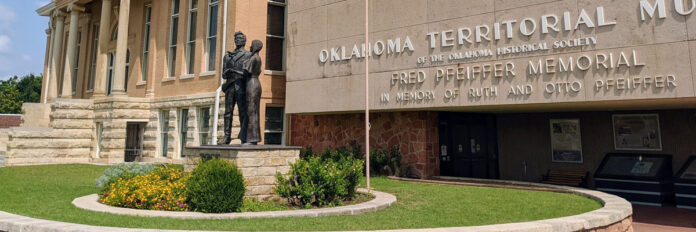
The Oklahoma Territorial Museum is located at 406 E. Oklahoma Ave. in Guthrie. For more information, please call 405-282-1889. Please visit okhistory.org.

https://www.sibleyinsures.com/


$8 million Gift To Create Brain Disease Research Hub at OMRF

0

Herman Meinders and the Meinders Foundation have combined for an $8 million donation to the Oklahoma Medical Research Foundation. The gift aims to transform neurodegenerative disease research in Oklahoma.
OMRF will add a new floor to its research tower that will serve as the hub for the Meinders Center for Neurodegenerative Research, the state’s first dedicated center to study brain diseases, including Parkinson’s and Alzheimer’s.
Meinders, an Oklahoma City businessman and philanthropist, contributed $2 million toward this gift before he died in March. The Meinders Foundation then increased the gift by an additional $6 million.
“This generous donation will help us build upon the groundbreaking discoveries our scientists have already made involving neurodegenerative diseases,” said OMRF President Andrew Weyrich, Ph.D. “Our ultimate goal is to improve diagnostics and treatment options for the millions of Americans who live with one of these debilitating diseases.”
At OMRF, 10 scientists lead labs that study various aspects of neurodegenerative diseases. The combined gift by Herman Meinders and the Meinders Foundation will integrate the work of these labs, leading to a more comprehensive understanding of the causes behind brain disorders, including the environmental and genetic factors that increase the risk of developing one.
Meinders and his wife, LaDonna, were passionate supporters of causes that included research and treatment of neurodegenerative diseases. Their gifts established the Meinders NeuroScience Institute and the Meinders Center for Movement Disorders at Oklahoma City’s Mercy Hospital. Both centers provide advanced treatment for Parkinson’s disease, which Herman Meinders lived with over his final 10 years.
The couple also were longtime supporters of OMRF, and their foundation became aware of OMRF’s focus on neurodegenerative diseases shortly before Herman’s death.
OMRF scientist Mike Beckstead, Ph.D., had recently been awarded a National Institutes of Health grant to create novel research model for Parkinson’s research. Mo Grotjohn, treasurer and trustee for the Meinders Foundation, read a resulting newspaper article about the grant a few weeks before Herman’s death.
“As I learned about Dr. Beckstead’s research, I became convinced this was an endeavor worth pursuing, so I contacted OMRF Board Chair Len Cason and shared the information with members of the Meinders family,” Grotjohn said.
In Parkinson’s, nerve cells produce less dopamine, resulting in a loss of muscle control, balance and movement. It is second only behind Alzheimer’s as the most common neurodegenerative disease, affecting an estimated 1 million people in the U.S. and 10 million worldwide.
In addition to studying Parkinson’s and Alzheimer’s, OMRF scientists have made major breakthroughs for people living with other brain diseases.
For example, research at OMRF led to the only treatment approved by the Food and Drug Administration for neuromyelitis optica, which robs people of movement, balance and sight. OMRF scientists also pioneered an investigational drug for glioblastoma, a deadly form of brain cancer.
“With this gift from Herman Meinders and the Meinders Foundation, we hope to make similarly meaningful headway toward improved treatments for Parkinson’s and Alzheimer’s,” Weyrich said. “Doing so would honor the memory of Mr. Meinders.”

Beetle Bailey

0

Word Search – Military Discounts

0

Blondie – Cartoon

0

80th Anniversary of WWII Commemorative Edition

0

Not a Gentle Giant The USS Alabama Battleship

0
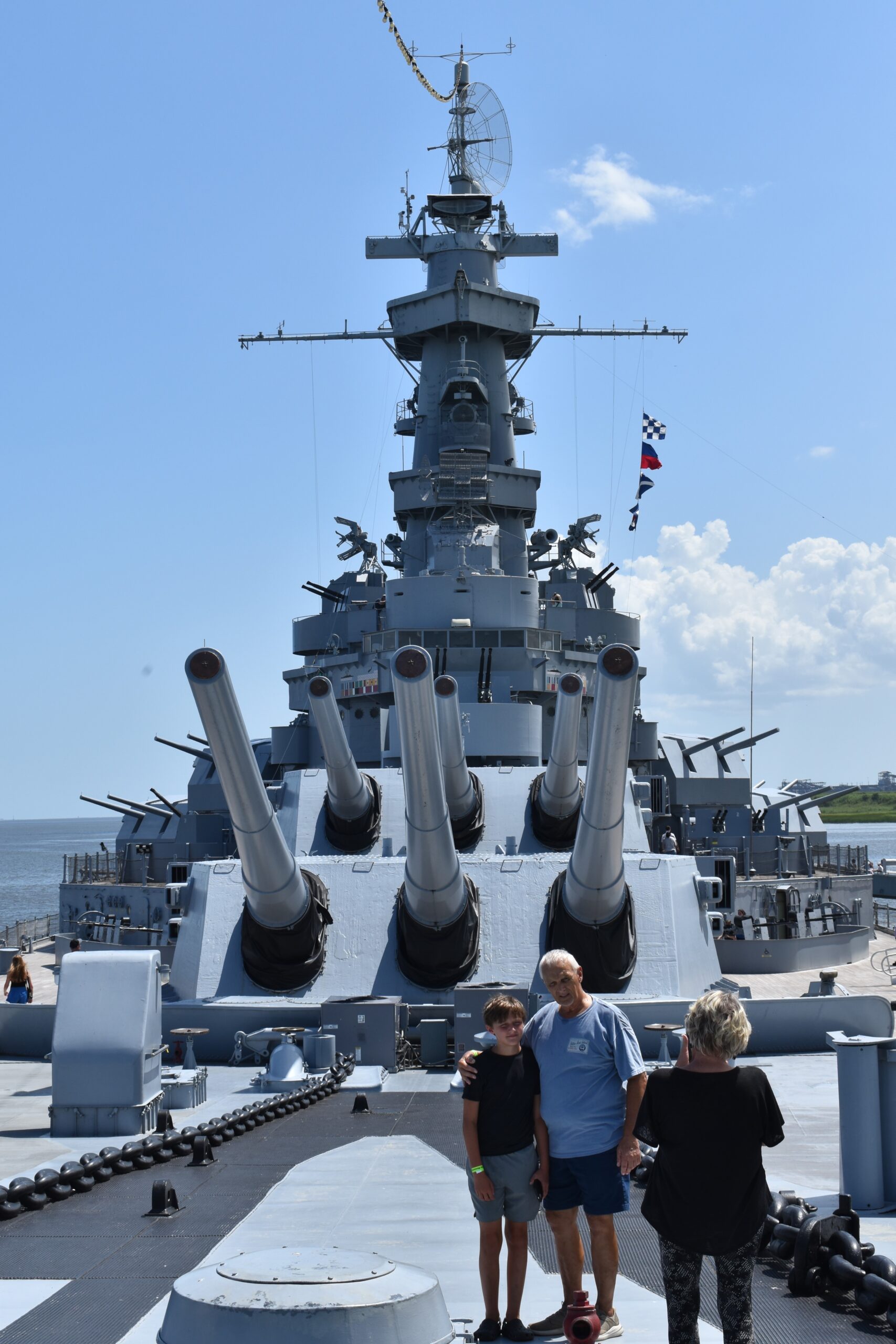
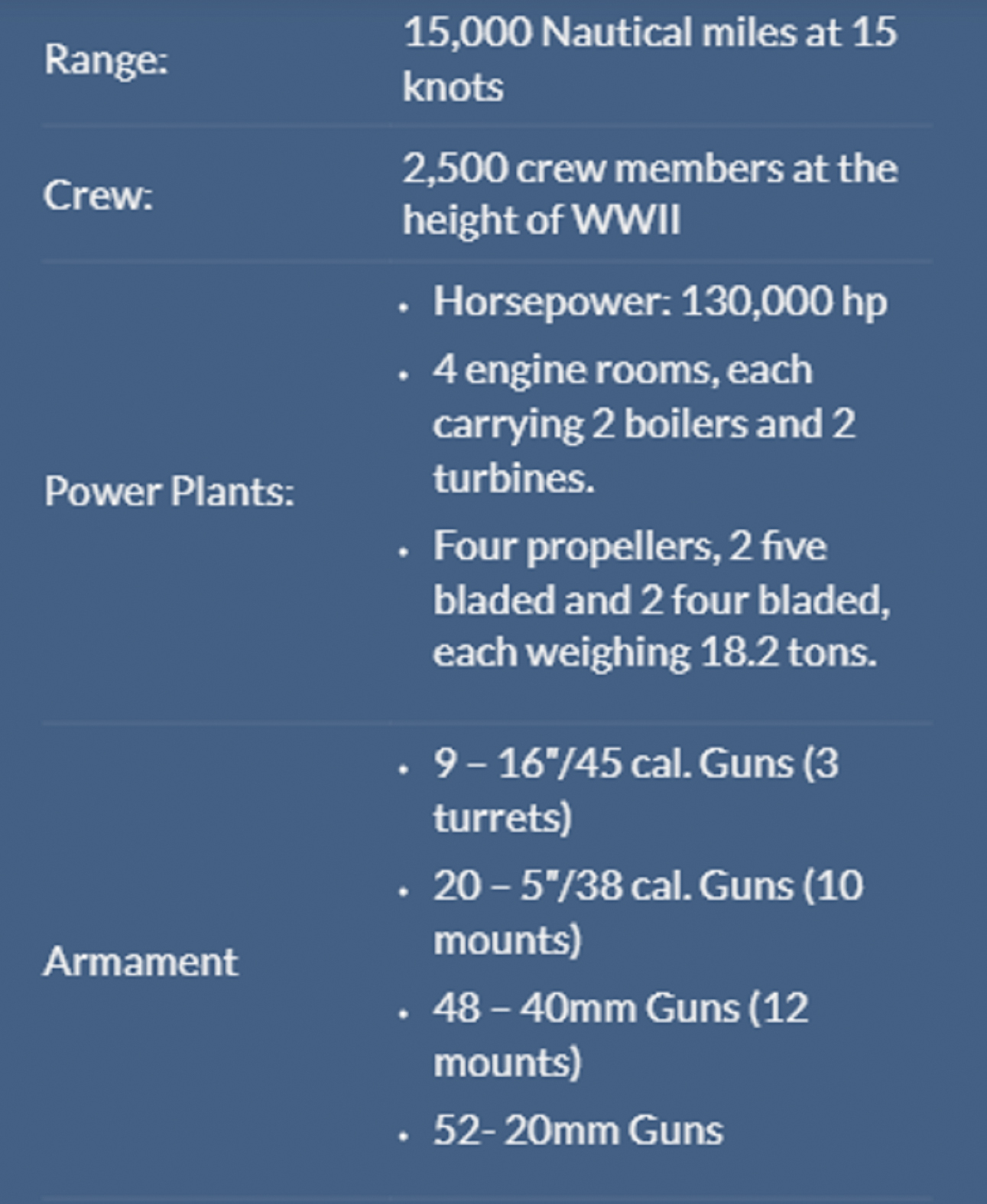
USS Alabama WWII battleship moored at Mobile, Alabama. It has 9,16- inch-45 caliber guns, 20, 5-inch-38 caliber guns and 20mm and 40mm cannons
Visitors can go in the USS Drum, a WWII submarine. It earned 12 batttlestars and sank 15 Japanese ships. Mobile, Alabama is in the distance.

There’s a lot to like at the 155-acre Battleship Memorial Park in Mobile, Ala.: USS Alabama, a WWII South Dakota Class battleship; USS Drum, a WWII submarine; Medal of Honor Aircraft Pavilion; 29 aircraft from WWII to the Cold War Era on the grounds; and four memorials to veterans. Whew! You’ll spend about four hours taking it all in.

USS Alabama

Since 1965, about 3.5 million people a year go on one to three self-guided tours (red, yellow, green) through four decks (floors, for landlubbers) of the ship from bow to stern (front to rear) to learn the story how her brave and dedicated crew helped win the war. Each tour takes about 45 minutes.

Peer into the rooms of bakeries, workshops, brig, intercom (communications), gunnery-aviation, and plotting (firing guns) and walk along seamen’s bunks (or “racks”) and the mess hall.

These areas have displays. There are original sailor uniforms in the quartermaster (supply) room; dishes, pots and pans in the galley (kitchen); and papers, family photos, uniforms and radios left behind in multiple offices; and medicine in the dispensary.

While touring the ship, Mike Thomas of Ft. Worth said he got a “better feel of what crewmen felt and how they existed. It’s like a mini-city.” True. The Alabama sailed with 2,500 sailors and Marines. For Larry Genson of Michigan and Dwanda Schwaz of Mobile, the informative displays and placards were useful. “I like to see how they lived; their food and quarters” Larry explained.

Special exhibits tell visitors about the USS Mobile, Iwo Jima 1945, the Imperial Japanese Navy, 20mm Oerlikons and 40mm Bofors (cannons), Navy divers and more. Jeff and Karen Banks visited from Johnson City, Tenn. They said, “I love the history (of the ship). Many exhibits opened up to see how the ship worked, taking us back into time.” Alabama veterans recounted their sea tours on video in a couple of places.

Genevese Harris, Director of Marketing, said visitors visit about two-thirds of the ship, which is 680 feet long and 108 feet abeam (wide). Be sure to lift your legs and lower your head in doorways. The tour is not suitable for people using walkers and wheelchairs. Most of the ship is air conditioned.

History and warfare

The keel of the USS ALABAMA (BB-60) was laid at the Norfolk Navy Yard, Portsmouth, Virginia, on February 1, 1940, became operational on March 20, 1943, was decommissioned on January 9, 1947 and became a tourist attraction in 1965.

The Alabama’s advanced design enabled it to steam at 28 knots, almost 32 miles per hour.

The crew of the Alabama earned nine battle stars, engaged in 10 bombardments, and shot down 22 aircraft in her 51-month sailing history in the Atlantic and Pacific Oceans. Placards stated while the original role of battleships was to “engage surface ships, their role shifted to include playing shepherd to the carriers, protecting them from both aircraft and enemy ships” and “gunfire support for allied troops on the ground.”

Asked why preserving and displaying warships like the USS Alabama is important, Harris said, “It’s a part of our history. It’s good for the younger generation to see what was done in the past.” For more information, go to the USS Alabama Memorial Park website or watch a 29:30-minute video titled, “Legacy of a Titan,” on YouTube.

USS Drum

See how the 72-member “Silent Service” crew worked and lived before you leave. According to park’s website, “Of the DRUM’s 13 war patrols, all save the second, ninth, and last two, were designated “successful.” She received a total of 12 battle stars for World War II service. She is credited with sinking 15 ships, a total of 80,580 tons of enemy shipping, the eighth highest of all U.S. submarines in total Japanese tonnage sunk.”

Medal of Honor Aircraft Pavilion

The hanger holds aircraft from WWII to the Cold War. The collection includes a Red Ball Express display, honoring those men who ran supplies during WWII; a Red-Tail P-51 airplane; and a VH1-N/ Bell 212 helicopter used by several presidents. A highlight is walking around a once super-secret A-12 Black Bird spy plane.

Memorials

The Korean War, Vietnam War, Fallen Guardian and Fallen Hero 9/11 Memorials pay tribute to the men and woman who served during those periods.

Park information

The park is open 8-5 daily. Prices range from free (children up to 5, active duty military), $6 (ages 6-11), $18.00 (ages 12-55), and $15 (veterans, ages 55+). Stevie’s Kitchen grills burgers and hotdogs and serves salads, pizza and drinks. • story by Lt Col Richard Stephens, Jr., USAFR, Ret.

105 Years of Devotion to Faith, Family and Nation

0
Woodie Sylvester at 105 years old in July 2022. He served in North Africa, Italy, France and Germany during WWII. After,owned two movie Weatherford theaters
Woodie Sylvester with two fellow soldiers in WWII. He served from April 1942 to June 1945. Photo provided by his family
Woodie Sylvester at the wheel of a jeep with two fellow soldiers during his service in WWII. Photo provided by his family

At the age of 89, Woodie Brod Sylvester of Weatherford, Oklahoma, was asked to write about his experiences during WWII. The result was a five-page military autobiography. It’s too long to print verbatim, but a summary of locations and activities are listed with several copied passages. Since the events took place 60 years ago, he didn’t remember all the details.

The big take away is that Woodie served in the US Army Signal Corps starting on April 10, 1942, for over three years – two-and-a-half of them in continuous combat conditions – without leaving the war front. During WWII, soldiers had to serve for the duration plus six months.

Woodie said, “I started out as a buck private (E-1) and I turned out to be the personnel Sergeant Major (E-6) of a battalion with 500 men,” a testament to his ability to increase responsibility and lead men in war. His life story is one of dedication to God, family and nation.
He was born on August 2, 1917, in Chilton, Texas, to Woodie Alvin and Ida Marie (Brod) Sylvester. On August 9, 1938, Woodie and Mattie Elizabeth Adams eloped and married. They birthed three children: son, Sam and two daughters, Jana and Sue after the war.

Below are short descriptions of his amazing duty.

Location Dates and towns identified

North Africa – Landed in Casablanca, Morocco, on Christmas Eve 1942.
On January 10, 1943, headed east towards Tunis, Tunisia. Woodie stated he was close to a soldier who stepped on a land mine and was killed; luckily, he was not hurt. In February 1943, his unit arrived at the Kasserine Mountains, where the Germans defeated the Americans and English in a major battle. Afterwards, General Patton arrived with the 3rd Army and they pushed the Germans out of North Africa.

Sicily – Sailed to Gela, Sicily. GIs gave food to hungry children. Marched to Palermo and made it there in about 31 days.

Italy – Landed on a beach north of Paestum, south of Pompeii, and fought in a battle. Afterwards, soldiers went up to tour volcano Vesuvius and made ash trays out of molten lava. Progressed north to Naples. Spent his second Christmas (1943) in Caserta. Marched to the monastery, Monte Cassino, in February 1944, and saw Allies bomb it. Proceeded north to Rome where Woodie and his company went to the Vatican and were given an audience with the Pope.
Corsica – Sailed to this island, preparing to invade France.

France – Sailed to St. Tropez, French Riviera. His unit joined other invasion forces, such as the 95th Infantry Division. Marched north, following the Rhone River, then moved between Lyon and Dijon. Reached Epinal. In late December 1944, his unit rested in Strasbourg, but retreated back to Epinal because of fears the Germans might win the Battle of the Bulge.

Germany – In 1945, crossed Rhine River and advanced to Heidelberg, then past Camp Dachau, infamous concentration camp. Woodie said they could smell Dachau for miles before they saw the camp but did not have any idea what the smell was. Arrived Darmstadt, and headquartered in the ruins of a university. Rotated back to Lubbock, Texas, in the summer and separated in October 1945.
Several passages of Woodie’s recollections are provided in this story.

North Africa – “The third echelon (of the signal battalion), which I was assigned to, sailed from Boston in early December, landing in Casablanca, Morocco, on Christmas Eve 1942…At Casablanca, we were housed in a warehouse and this would be the last inside housing for many, many months…We left Casablanca around January 10, 1943. Our company, “A,” laid landlines for communications between frontline troops and HQ. It was very cold and we were sleeping in pup tents on sandy grounds. We would sleep at night and in the morning would wash our clothing in gasoline to kill the (sand) fleas. We started to suffer casualties from mines and other actions. Mine fields were everywhere. Many civilian children and adults suffered from these mines as well as our own troops.

We moved daily…toward Tunis, Tunisia, keeping as much pressure on the German army as possible. As we advanced through the desert, we arrived at the Kasserine Mountains. The German army under the direction of German General Rommell was waiting with the powerful Mark 4 tanks. The allies experienced great losses of men and equipment until the American tanks under the direction on General Patton arrived.
At times, the moves were so fast the line crews could not string wire fast enough to keep up with Patton’s tanks. The wire being laid on the ground would break as fast as the line crews could put new wire in place due to tanks and half-tracks.

Italy – We finally entered Rome…So, some of us headed for the Vatican…We entered and were shown through the buildings and then told to be seated in a certain chapel. There were about 100 men in our group…and the Pope appeared and made a short statement. He spoke English quite well and also gave each man a cross to carry. This was a great honor…

France – The battalion…went into Strasbourg, France…We made our headquarters this time in a small hotel. Christmas of 1944 was only a few days away. We were supplied with all kinds of Christmas food, including fresh turkeys. About this time the Battle of the Bulge started and we were ordered to vacate and retreat at once back to Epinal. We destroyed all of our food supplies that we had received for Christmas.

Germany – On our way to Darmstadt, we passed the Camp Dachau where the Jewish people were confined…we could smell this camp but didn’t know about what was happening on the inside. Other troops came in and liberated these people that were nothing but walking skeletons.

I must comment that the men I served with were the “best”. Nothing could be said about them except “great-wonderful and they were like my brothers.”
Woodie earned a Bronze Star on 19 May, 1945. Other medals received: WWII Victory Medal, Europe-Africa-Middle East Medal, American Campaign Medal.

Texas – I met my wife, Mattie, at Temple, Texas. This ended my 3 1/2 years in the military and I never had a leave to go home prior to this date.

Woodie told his life story to Stephens in July 2022, two months before he died. Woodie strongly believed in marriage. “When we got married, that was a lifetime thing. It’s not anymore.” Woodie and Mattie were married for 72 years.

In 1965, Woodie and Mattie purchased and operated a theater and a drive-In theatre they built in Weatherford. He served as a Weatherford City Commissioner for nine years, bringing the 3M Company to Weatherford and developing Rader Park. He was very active in the Weatherford Rotary Club (a Paul Harris Fellow), Weatherford Chamber of Commerce, First Baptist Church and the American Legion Post 091 (a member for 65 years).

In 1980, Woodie and Mattie retired to enjoy the fruits of their labor. At the age of 105-years, Woodie died on September 11, 2022.

Woodie is survived by his son, Sam Sylvester, and wife, Gwyn of Eufaula; two daughters, Jana Hale and husband, Doug and Sue Nabors and husband, Tommy, all of Weatherford. •
story by Lt Col Richard Stephens, Jr., USAFR, Ret., and CAPT Douglas Hale, USNR, Ret.