Saturday, March 14, 2026

OU Health to Participate in National Study of ‘Long COVID’

0

OU Health is projected to receive more than $1 million to participate in a National Institutes of Health (NIH) initiative to better understand the long-term effects of COVID-19 infection. Enrollment in the study begins soon, and researchers will follow participants for up to four years.
The NIH launched the RECOVER (Researching COVID to Enhance Recovery) Initiative to learn why some people have prolonged symptoms (often referred to as “long COVID”) or develop new or returning symptoms after the acute phase of infection from SARS-CoV-2, the virus that causes COVID-19. The most common symptoms include pain, headaches, fatigue, “brain fog,” shortness of breath, anxiety, depression, fever, chronic cough and sleep problems.
“This is a unique opportunity to be part of a nationwide study that investigates the impact of post-acute sequelae from SARS-CoV-2 infection (PASC), which includes long COVID. In other viral infections, you rarely see long-term symptoms at the rate we have seen with COVID-19. If we can understand the biological underpinning of these symptoms, that may help us to better treat people who continue to have problems for weeks or months after the infection is over,” said Timothy VanWagoner, Ph.D., co-principal investigator of the study for OU Health.
VanWagoner is deputy director of the Oklahoma Clinical and Translational Science Institute (OCTSI) at the OU Health Sciences Center. The OCTSI unites universities, nonprofit organizations, American Indian communities, public agencies and primary care providers in research addressing the health outcomes of Oklahomans. OCTSI’s existing infrastructure will be used to enroll patients from across the state, including those in rural and medically underserved areas. OU Health is among more than 30 academic healthcare institutions across the nation enrolling patients in the study.
OU Health will enroll approximately 80 adults in three different study categories. One group will include individuals with a past COVID-19 infection who continue to have symptoms. Another group will be comprised of people with a recent COVID-19 infection who may or may not continue to have symptoms. To serve as study controls, the final group will feature people who have never had COVID-19. Participants will be asked to undergo laboratory tests and other analyses, depending on the category.
Current data show that 10% to 30% of people who have had a serious COVID-19 infection will continue to experience symptoms for at least one month. Researchers don’t know why symptoms persist long after the infection or why some people have little to no symptoms.
“The RECOVER study is important because researchers around the country will be sharing their findings in real time in an effort to find answers as quickly as possible,” said Judith James, M.D., Ph.D., co-principal investigator of the study for OU Health and director of the OCTSI. “We hope to discover factors that put people at higher risk for ‘long COVID’, as well as protective factors. That information will be critical for preventing and treating the long-term effects of the virus.”
The current study will focus solely on adults; however, a study in children and adolescents will be forthcoming.
For more information about enrolling in the OU Health study, call (405) 271-3490 or email [email protected].

Reps. Bice, Lucas visit OMRF

0
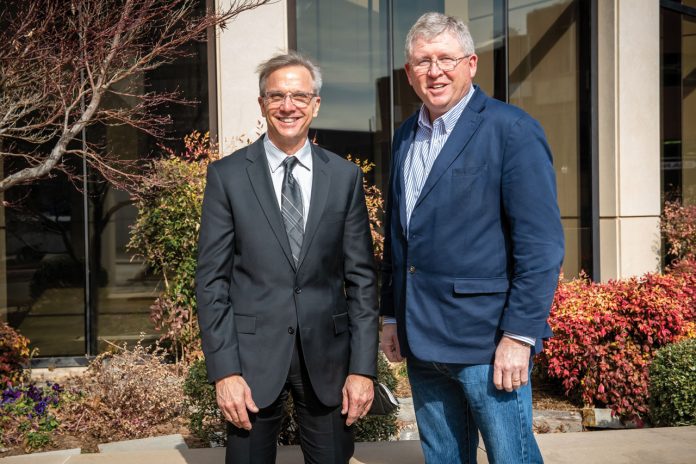
U.S. Rep. Frank Lucas (OK-03) visited the Oklahoma Medical Research Foundation for an update on work at the Oklahoma City-based nonprofit biomedical research institute. From left, OMRF President Andrew S. Weyrich, Ph.D., Rep. Lucas.


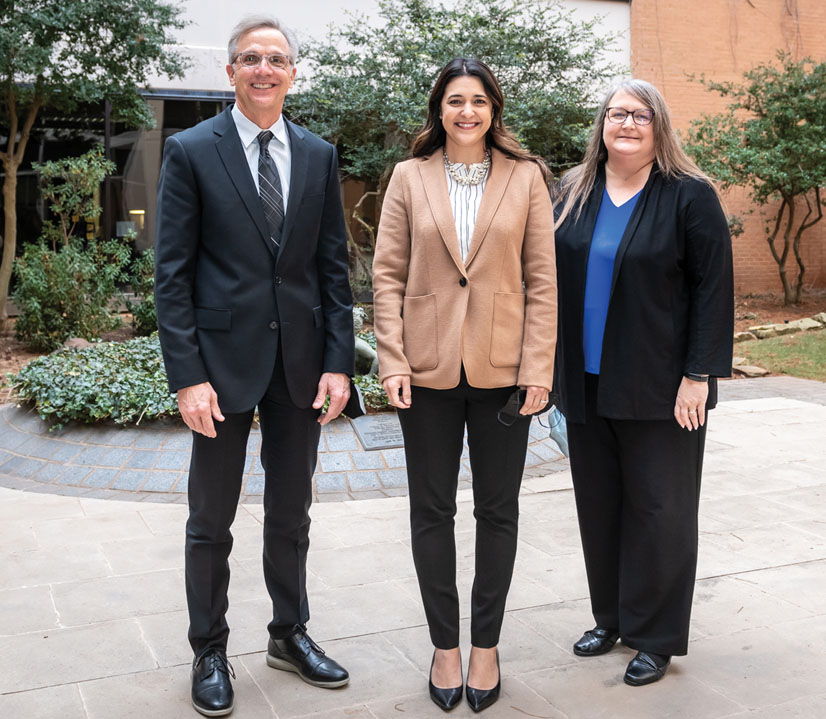
U.S. Rep. Stephanie Bice (OK-05) visited the Oklahoma Medical Research Foundation for an update on work at the Oklahoma City-based nonprofit biomedical research institute. From left, OMRF President Andrew S. Weyrich, Ph.D., Rep. Bice, and OMRF Vice President of Clinical Affairs Judith James, M.D., Ph.D.

The Oklahoma Medical Research Foundation this week welcomed U.S. Reps. Stephanie Bice (OK-05) and Frank Lucas (OK-03) for updates on work at the Oklahoma City-based nonprofit biomedical research institute.
Bice and Lucas met with OMRF President Andrew S. Weyrich, Ph.D., and scientists from three of the foundation’s research programs.
Bice received a briefing on Covid-19 research from OMRF Vice President of Clinical Affairs Judith James, M.D., Ph.D., who leads a team of scientists studying the body’s immune response to Covid-19 and whether the virus may trigger autoimmune conditions such as lupus and rheumatoid arthritis. James is also the lead investigator on a nationwide National Institutes of Health-funded trial to assess how to elicit a stronger immune response to the Covid-19 vaccine in people with certain autoimmune diseases who did not respond well to an original vaccine regimen.
“Federal funding for biomedical research is vital,” said Bice, a member of the House Science, Space and Technology Committee. “I’m proud that OMRF is part of my district. The cutting-edge work scientists are doing here is inspiring and impacts not just Oklahomans, but all Americans.”
Lucas met with OMRF researchers Michael Beckstead, Ph.D., who is studying the role of the naturally occurring brain chemical dopamine in opioid addiction, and Courtney Griffin, Ph.D., whose work on blood vessels shows promise for restoring vision in those who have lost eyesight due to diabetes or premature birth.
A champion of ensuring rural students get access to quality science, technology, engineering and math education to bolster their career opportunities, Lucas applauded OMRF’s efforts to train the next generation of scientists through in-state recruitment as well as in the foundation’s Fleming Scholar Program and Langston University Biomedical Research Scholars Program.
“Basic research like what scientists are doing at OMRF is fundamental to advances in human health, but it requires a strong STEM workforce,” said Lucas, the ranking member of the House Science, Space, and Technology Committee. “OMRF plays an important role in making careers in STEM a reality for Oklahomans.”
OMRF, which is celebrating its 75th anniversary, has nearly 500 staff members and scientists in more than 50 labs studying cancer, heart disease, autoimmune disorders, and diseases of aging. The foundation’s discoveries have yielded hundreds of patents and three life-saving drugs available in hospitals and clinics worldwide. Most recently, Adakveo became the first targeted therapy approved in the U.S. for sickle cell disease, which affects an estimated 100,000 Americans.
“The Oklahoma congressional delegation’s commitment to biomedical research is steadfast and admirable,” said Weyrich. “Their decades of support for OMRF’s scientists and our mission of making discoveries that make a difference has changed and saved lives.”

Collected Wisdom: Retiree starts new path

0
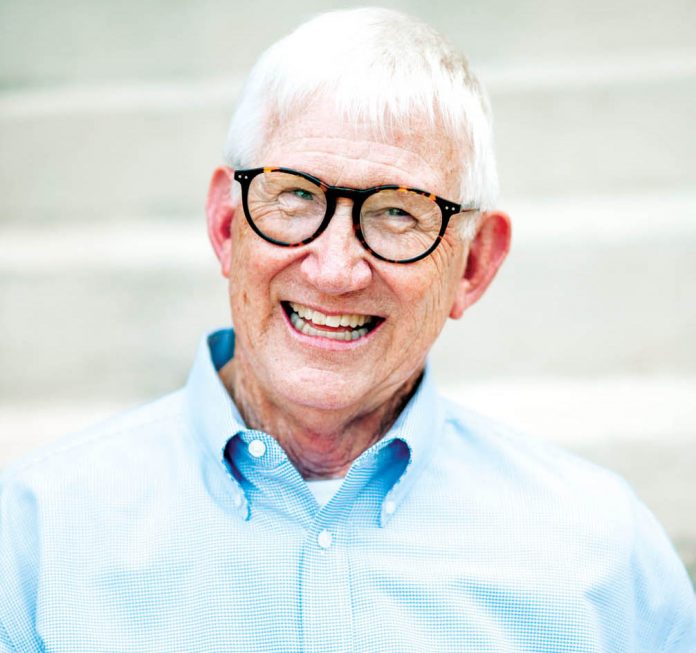
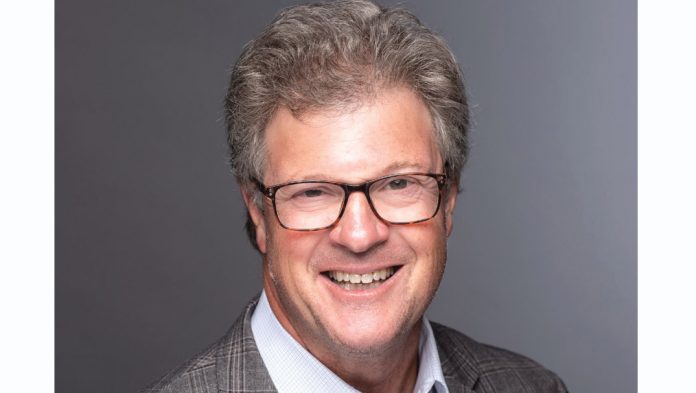
At 70, Mike Bumgarner is starting a new chapter in life by helping others as a life coach.

story and photo by Bobby Anderson, Staff Writer

For the past 17 years as a hospital chaplain, Mike Bumgarner helped patients and families with some of the toughest decisions they would ever face.
For nearly two decades before that, he served in ministry, helping guide individuals on their individual spiritual paths, navigating life’s ups and downs along the way.
“My greatest joy has always been just being with people. I’m an extrovert and I get energy from being with people,” Bumgarner said. “But focusing conversation and having a conversation around focused issues and helping people make determinations how they want to make their life better whatever that means … I get such great joy out of watching light bulbs come on in peoples’ minds.” (story continues below)

https://scissortaildermatology.com/

So there was little doubt in his mind that when he retired from the hospital and turned 70, the next chapter of his life would still be centered on helping people, this time as a life coach.
Bumgarner started his road to professional coaching in 2012 with formal training.
“I knew I wanted to do life coaching after I went through all of that,” he said. “The biggest challenge in doing coaching well is learning to ask really good questions instead of giving advice.”
Bumgarner is a member of The International Coaching Federation with the designation of Associate Certified Coach. Before serving as a hospital chaplain for 17 years, he served as a college minister for 22 years.
For 19 years he served on church staff as a college minister and pastoral care.
A staple in the Norman community, he also served on the Board of Education for Norman Public Schools.
He is able to incorporate his experience through years of chaplainship into his practice. He can help people through end-of-life issues, debriefing after tragedy, and general guidance for individuals and families facing traumatic experiences, terminal illness, or death.
It was friend Kelly Lashar, MA, LPC who Bumgarner says helped him make his dream a reality.
Lashar is co-founder of Restore Behavioral Health, a private counseling practice of independent contractors providing mental health and relationship care to the community.
With locations in Norman, Edmond and Midtown OKC, a team of different types of therapists and coaches, faith and non-faith based, bring a variety of education, training, experiences, personalities, and specialties.
The business plan for Bumgarner isn’t grandiose. He’s not out to build a practice for the masses.
He’d like to work two or three days per week, pouring into maybe 20-30 clients each month.
“None of us have it figured out,” he said. “A coach partners with a client or a team or a business to help them discover and put into action any agenda they deem will benefit their progress as a person or a company or a team.”
In short, coaching is designed to help a person maximize their potential.
That can take a lot of directions and oftentimes uncovers needs that have been hidden for some time. That’s why Bumgarner has a keen ear.
“If a client comes to me for coaching and it becomes obvious after two or three sessions that they are stuck in some issue from the past that is still greatly impacting their present, ethically I would offer the opportunity to refer them to a therapist,” he said. “You may not be knee-deep in the mud but you’re certainly ankle deep and you need to sit down and talk about this and that isn’t what I do.”
“Ethically, my job as a coach is to make sure I’m always distinguishing to you what I do as opposed to what you’re asking for.”
He says coaching is about discovery. Therapy is about recovery.
“I’m going to help you determine issues, challenge you on any kind of obstacles, any kind of belief systems or assumptions that could be inhibiting you from achieving whatever goal you’re setting,” he said. “That requires that I listen very deeply to what is said and what is not said and help you surface those things and help you design action plans to get you from where you are to where you want to be.”
And, ironically that is driven by the client.
“Coaches never tell clients what to do,” he said. “Clients in every session set the agenda. If they decide in the middle of the session they want to go a different direction the job of the coach is to go with them.”
But “there is a lot of collected wisdom,” Bumgarner smiled.

Oklahoma City’s Forgotten Early History

0
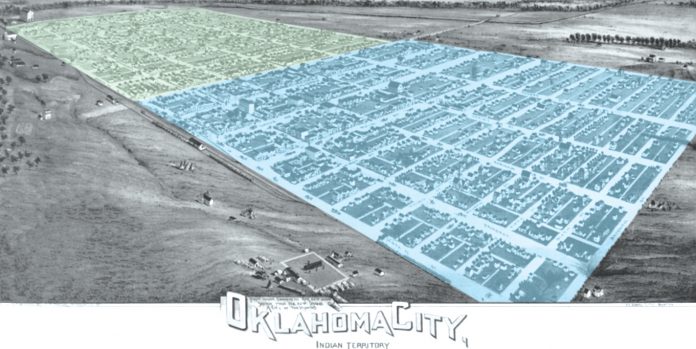
The green highlights Oklahoma City governed by Mayor Couch. The blue highlights South Oklahoma (south of Reno), separately governed by Mayor Patrick and others until July 1890.

Story by Darl Devault, Contributing Editor

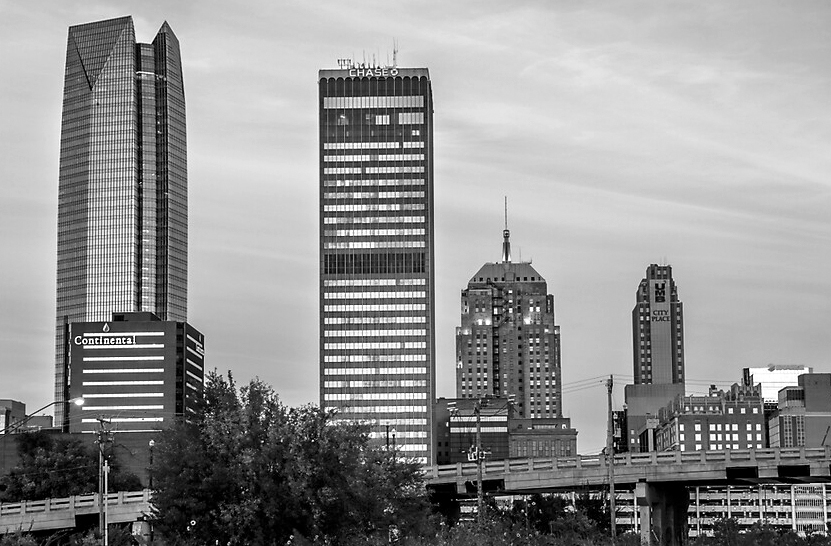
Built in 1931, the art deco First National Center at right begins an upward sweep to today’s 50-story giant of the plains Devon Tower at left. When first built in 2011 it was the tallest building between Chicago and Dallas. The BancFirst Tower’s steel and glass facade in the center was built in 1971.

Many seniors have read that Oklahoma City was built in a day, although historians will tell you that many facets of its rich Western Heritage have not been brought forward to today. That could not be truer than what is commonly thought of as Oklahoma City’s history.
“The world can find the real story of Oklahoma City online at The First Eight Months of Oklahoma City (okgenweb.net), which provides a factual account of the birth of Oklahoma City in its two halves,” said Larry Floyd, 69. The adjunct U.S. history teacher at OSU-OKC said in an interview, “Research often bears out far more detail and sometimes a more surprising history than what gets published in popular accounts of any historic event.”
Although more than 50,000 settlers swarmed into the 2-million-acre “Unassigned Lands” of central Oklahoma Territory during the land run of April 22, 1889, Oklahoma City was not built in a day, month, or even a year. (story continues below)

https://www.sibleyinsures.com/

Most future Oklahoma City residents came in by train to the Oklahoma Station townsite, arriving from the north and the south. The train coming north from Purcell was one hour late to the central depot for the three largest railways in the Southwest: Rock Island, Katy, and Santa Fe.
Because of this Oklahoma City began as two cities. Soon known as Oklahoma City and South Oklahoma City, this instant Western heritage was energized by people seeking the last of the free land folks had moved west to settle. Part of that heritage was the abundance of land, a fact that complicated the city’s beginning.
Many settlers wanted to claim their 160 acres while living close to the new townsite since it featured transportation and water as the North Canadian River ran through it. The 22 packed railroad cars arriving an hour late from Purcell brought new residents to a townsite already filled by hundreds of new Oklahoma Cityans. They had already staked their claims after arriving first on the train from Guthrie.
Oklahomans have consistently proven themselves resourceful, so the late arrivals set about creating South Oklahoma south of the Oklahoma City townsite. For every description of people staking claims and securing lots, the same took place on a prairie south of Reno Avenue in the new South Oklahoma City.
When G.W. Patrick found the most desirable lots taken and unable to do any better, he staked two lots on the south side of block three. His fellow late arrivals from the train followed his lead.
On April 23, Patrick began surveying south from the section line at Reno Avenue as the Citizens’ Survey began working north. Encountering no conflicting surveys, Patrick’s crew laid out 35 blocks along seven streets, and settlers made adjustments as required.
By Saturday, April 27, the citizens of South Oklahoma elected Patrick mayor and a full slate of city officials. They also drafted and adopted a city charter. Oklahoma City to the north elected Capt. W.L. Couch as mayor on May 1.
According to the City Directory published by the Oklahoma Chief newspaper in August 1889, South Oklahoma contained approximately 1,300 residents compared with about 3,700 north of Reno Avenue in Oklahoma City. The commercial district was mainly in Oklahoma City (except for the south side of Reno Avenue) and was the most densely developed portion of the two cities.
During the 15 months of its separate existence, South Oklahoma City saw three months of public schools, two churches, construction of an ice factory, lumberyards, and hundreds of homes built.
On May 2, 1890, the U.S. Congress passed the Organic Act, which provided for the organization of Oklahoma Territory and governing municipal incorporation. A petition was accepted on July 15, 1890, consolidating Oklahoma City and South Oklahoma into Oklahoma City.
This info is available online at https://www.89ertrail.com/12/# .
Capitol Hill was incorporated as a city in 1905. By then, a strong sense of community and civic activity made this area an economic and cultural force remaining independent until it joined with Oklahoma City in 1911.
The southern part of Oklahoma City continued to provide space to grow in the decade of statehood in 1907, Oklahoma City became the nation’s fastest-growing city from 1900 to 1910 and the new state’s capitol city.
Oklahoma City’s first major park, Wheeler Park, was established on the banks of the North Canadian River in 1903. The park included extensive gardens and places to relax and picnic. In 1904 the city’s first zoo opened in the park. After two great floods swept down the river in 1923, wiping out Wheeler Park, the zoo was relocated. The playground, park, and baseball diamonds were restored.
Oklahoma City’s first airport was built in south Oklahoma City. In 1911, the Oklahoma City Municipal Airfield opened the skies for future travel. The airfield brought new opportunities and visitors to the city, and in 1941 it was rededicated as Will Rogers World Airport.
Oklahoma City has since capitalized on its strategic central location from its beginning to its present status as the crossroads of America. Just like its beginning as a railroad hub, it assumed the crossroads are our nation’s two main interstate highways (I-35 and I-40). They intersect in Oklahoma City and share the same roadway for two miles. Even before the interstate highway system, OKC gained from being on historic Route 66 from Chicago to Los Angeles.
Farmer-stockmen found the city’s location along the North Canadian River strategic and its railroad services a lifeline to the rest of the country. Once the area’s largest employer, the Oklahoma City Stockyards and its business district maintain a high profile, it is a tourist destination and unofficial Western heritage center. Although no longer a focal point for local slaughterhouses, the daily cattle auctions still make it the world’s largest stocker/feeder market.
The city has cultivated its place as the centrally located Western Heritage center. It hosts more horse-related shows and competitions each year than any city globally. The National Cowboy and Western Heritage Museum is the official steward of that Western heritage. After a recent expansion, it now houses the most extensive collection of Western art and Americana west of the Smithsonian.

University of Oklahoma Newspaper Archive Available Online

0
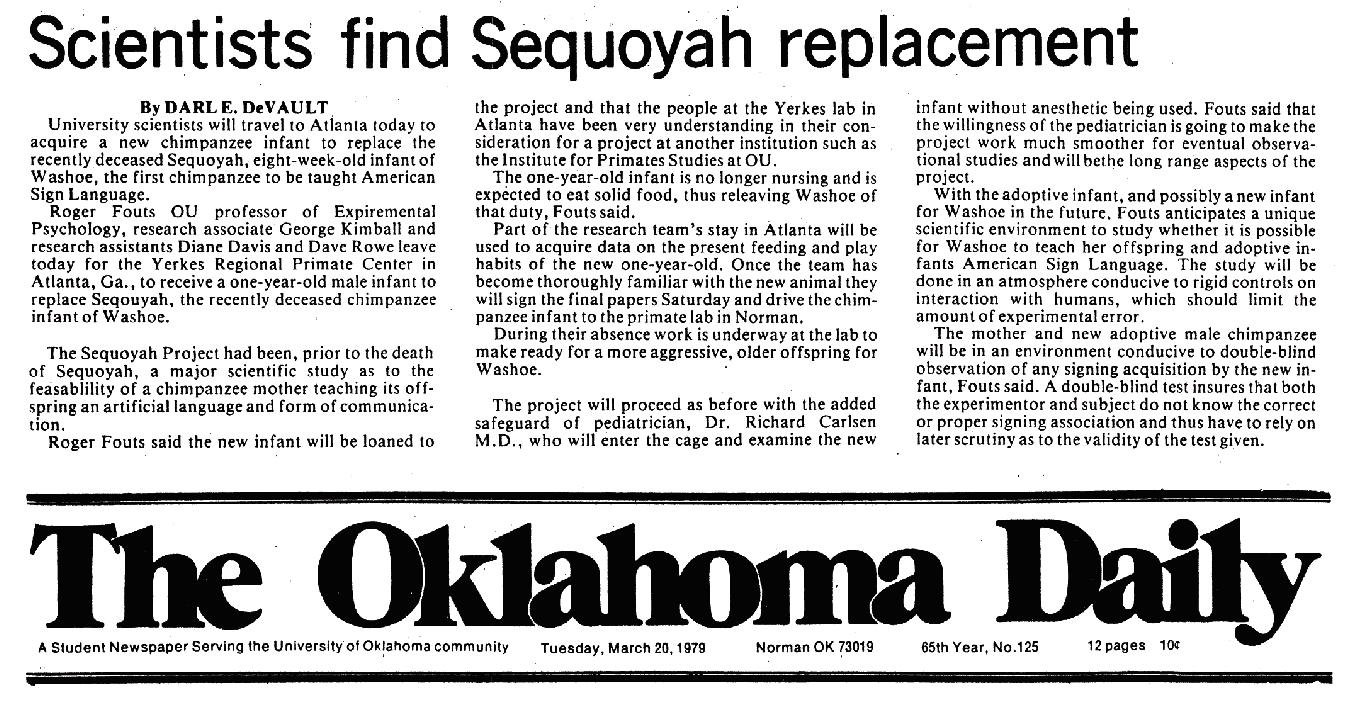
Now available free online, this front-page article by Darl DeVault detailed OU scientists starting their journey to secure a new infant chimpanzee for Washoe, the first chimp to be taught American Sign Language, in the March 20, 1979, issue of “The Oklahoma Daily.”

Story and OU story scans by Darl DeVault, Contributing Editor

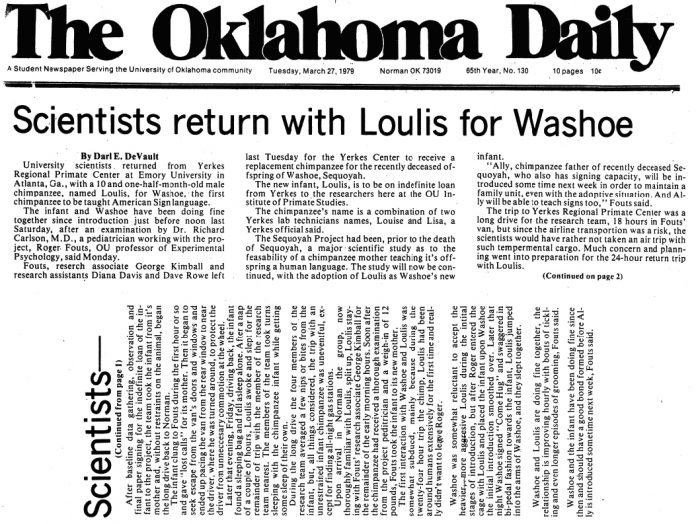
Now available free online, this front-page article by Darl DeVault detailed OU scientists returning to the Institute for Primate Studies at OU with an infant chimpanzee for Washoe, the first chimp to be taught American Sign Language, in the March 27, 1979, issue of “The Oklahoma Daily.”

Remembering is a common theme among seniors, which comes with being retirement privileged and the contemplation of a full life rich in accomplishment. This gift of remembering was recently brought home by the power of technology and the Internet when Oklahomans made the 120 years of the University of Oklahoma’s student newspaper available to read online.
For many who wrote for the paper or attended OU, the linkage of personal memory to the passage of time in their lives becomes more precious as they age.
Oklahomans and interested people worldwide can explore and search OU’s history from their computers, one article or photograph at a time. This opportunity puts our state and our state’s most prominent research university in a new light in the age of the Internet, now 30 years on. (story continues below)

https://careplusathome.com/

The Oklahoma Historical Society recently partnered with the Carl Albert Congressional Research and Studies Center (CACRSC) to digitize the OU’s student newspapers, including all issues from 1897 to 2017.
“The Oklahoma Historical Society is excited to make the OU’s Student Newspapers Collection available on the Gateway to Oklahoma History (https://gateway.okhistory.org/explore/partners/CACR/),” said Chad Williams, Oklahoma Historical Society director of research. “Through this partnership with OU and the Carl Albert Congressional Research and Studies Center, along with the University Library and Journalism School, we have made the entire history of OU available with a click of your mouse.”
9,557 OU student newspapers are now available to research, read, and revisit. As the senior archivist at the Carl Albert Center’s Congressional Archives, JA Pryse, an OU graduate, supervised the digital scanning and indexing.
The OU Student Newspapers Collection comprises work produced across various publications chronicling the evolution of OU since its earliest days.
“Just as town newspapers are a snapshot of every community in Oklahoma, the student newspaper is a daily snapshot of the history of OU and their students and faculty throughout the years,” Williams said in an interview. “Inclusion of these newspaper issues on the free online Gateway to Oklahoma History allows that history to come alive for generations to come as they share these word-searchable digital files on social media or download them to their computer.”
From its 1897 beginning as a student-run semiweekly, the newspaper’s name has evolved. The collection includes the “Sooner State Press,” founded by H. H. Herbert as a School of Journalism teaching tool from 1920—75.
By the mid-1970s, the pre-computer newsroom printed it as “the Oklahoma Daily.” By the time the newsroom was powered by CompuScan VDTs and an electronic back shop, it was slugged as “The Oklahoma Daily.” Going online, the print edition now known as “OU Daily” became weekly while the “OU Daily.com” is updated daily, complete with videos.
For more than 120 years, the paper has been OU’s public forum in all its forms. It has been the only independent, entirely student-run media outlet dedicated to serving OU’s students, faculty, staff, and alumni on campus, in the state, and worldwide. The paper has won 47 major national organization awards, making it one of America’s leading university newspapers.
Former OUDaily staffers are now foreign correspondents, editors, and reporters for The Wall Street Journal, CNN, The Washington Post, Bloomberg News, and many others. The paper has also educated a Pulitzer Prize winner, its current staff advisor, Seth Prince.
As with every collection on the Gateway to Oklahoma History, these newspapers can be explored by resource type, decade, and title. In addition, each issue can be searched for specific wording, while individual pages can be enlarged and downloaded.
This collection of 200,000 pages was digitized with the generous support of the Inasmuch Foundation in 2020. The grant allowed the CACRSC, OU, and the OHS the opportunity to make these indispensable community resources available online, free of charge. This electronic evolution of the student paper is in keeping with its long tradition of keeping up with technology. The paper was one of the first six university newspapers in America to go digital. In 1976, it purchased a CompuScan system for its students and editors to enter the desktop publishing world.
The CACRSC is a unique and nonpartisan institution striving to strengthen representative democracy through scholarship, learning, and service. It was established in 1979 by the Oklahoma State Regents for Higher Education and the OU Board of Regents. The center is a tribute to the ideals and leadership of the Honorable Carl Albert, native Oklahoman, OU graduate, Rhodes Scholar, and the 46th speaker of the US House of Representatives.
“This project has placed nearly 10,000 newspaper issues online and will only grow as current issues are published and placed on the Gateway in the future,” Williams said. “This partnership reflects the Oklahoma Historical Society’s mission to collect, preserve and share the history of the state. I invite all history lovers and specifically all Oklahomans to go online and explore the Gateway to Oklahoma History. You will find millions of pages of Oklahoma newspapers, photographs, books, documents, maps, audio, and videos telling the story of our diverse and unique state.”

Senior Hikers Offered Many Local, State Trails

0

Story and photos by Darl DeVault, Contributing Editor

Oklahoma City and the state offer many options for seniors trying to make a decisive quality of life New Year’s resolution to get outside more to walk and hike. Hiking can grow to be an extension of taking a nice walk as close as your front door to stroll in your neighborhood, popular local walking trails, and Oklahoma’s many lakes and state park trails.
Hiking does not have to start as physically demanding and challenging. It can simply be an adventure full of pleasant experiences to spend quality time with nature offering a sense of personal achievement.
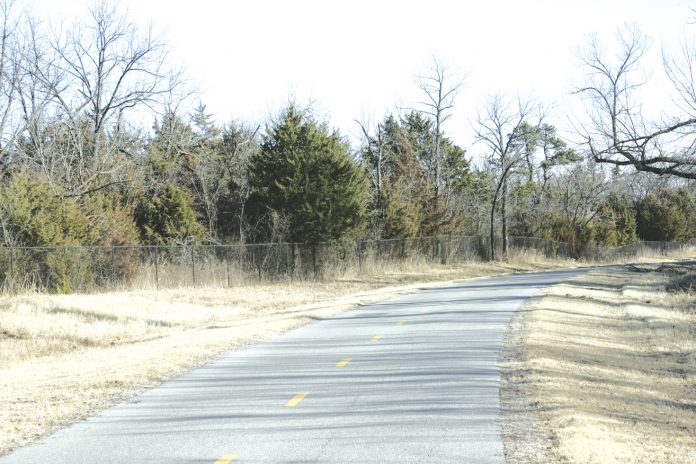
Although the multi-use, 9.4-mile loop trail around northwest Oklahoma City’s Lake Hefner claims the most popular trail system in the metro, another newer trail is catching up. Completed in 2015, the West River Trail (WRT) follows the North Canadian River’s north bank from N.W. 10th Street to Meridian Avenue. It is protected from Oklahoma’s strong south winds in spring and summer and winter’s cold north winds along the wooded riverside. (story continues below)

https://thecarlstone.com/

Its 7.5-miles run from N.W. 10th Street west of Council Road to S.W. 15th Street at Meridian Avenue. It picks up from the Overholser Trail to connect to the east to the Oklahoma River Trails, allowing hikers access to and from the Boathouse District and downtown Oklahoma City.
The WRT is one of the three new trails created by tax dollars from MAPS 3. The other two trails are the Will Rogers Trail and the hilly and woodsy Lake Draper Trail circling the lake.
The WRT is a close-in rural trek that takes users along the North Canadian River and around Crystal Lake, away from streets and traffic. The trailheads offer parking at N.W. 10th Street on the west end or Reno Avenue or Crystal Lake midway through the wooded, scenic trail.
It is a part of the more than 90 miles of Oklahoma City’s multi-use trails. The trails system offers recreation and exercise and a network of 10 interconnected trails that can take users to almost every point in the city.
The multi-skill level WRT offers several activity options and is accessible year-round. Dogs are welcome but are required to be kept on a leash. No motorized vehicles are allowed on the trail system. This child-friendly trail is ideal for family nature trips with newly installed water fountains along the way. Many residents walk and run the course while taking in the many river views.
It is a venue of unexpected ruggedness. It offers close-in, tree-lined boundaries in some sections. Parts of the trail fit the description of a nature trail. Most of the other city trails are open and windswept.
Again, the metro’s most popular place to walk is still Lake Hefner. The lake sits between Hefner Road on the north and North Grand Boulevard on the south and just to the west of the busy Hefner Parkway. The walkers, runners, bikers, and in-line skaters make for heavy traffic on nice days, particularly on the east side of the lake and around Stars and Stripes Park on the south shore.
“It’s crowded sometimes but still a great place to walk or ride a bike,” says city resident Rita Hejny, who lives in the Edgewater neighborhood south of Stars and Stripes Park. “It adds so much scenery and space to the area.”
In addition to the trail activities, Lake Hefner offers restaurants and a venue for many other outdoor activities, including sailing, golf, and windsurfing. These sports provide visual entertainment to those wending their way around the trail at Oklahoma City’s mecca for outdoor sports.
Other metro urban trails include Bluff Creek, just north of Lake Hefner; Dolese Park in west Oklahoma City near Putnam City High School; and Lake Overholser in far west Oklahoma City, just south of the old Route 66 bridge on N.W. 39th Street. All offer a quick fix for exercisers needing a workout.
The more adventurous can find challenging nature trails throughout the state, anywhere from 45 minutes to 6 hours from Oklahoma City by car. The Wichita Mountains Wildlife Refuge, some 100 miles to the southwest off I-44, welcomes hikers to a rugged landscape filled with cactus plants and bison. It is the largest bison refuge managed by the U.S. Fish and Wildlife Service. The pristine Charon’s Garden Wilderness Area offers stunning backcountry vistas, a sparkling waterfall, and a secluded lake to those who venture across the challenging granite boulder field.
Other hikes in the refuge include Dog Run Hollow and a short climb to the top of Elk Mountain, with both offering animal sightings and thick patches of blackjack oak. “I go down to the Wichitas at least once or twice a year for a hike or a bike ride,” says Oklahoma City resident Howard Lucero. “It’s really not far for such a great outdoor setting.”
True outdoor thrill seekers can make the six-hour trek via auto to the far end of Oklahoma’s Panhandle for the eight-mile roundtrip hike to the state’s highest point, 4,973-foot Black Mesa Summit. Once ascended, this peak provides a three-state panorama of buttes and mesas covered with cholla cacti, sagebrush, and other Western flora.
For those who need a guide to outdoor venues across the state, “Oklahoma Hiking Trails” is available. Written and illustrated with maps and photos by Oklahoma City residents Kent Frates and Larry Floyd, the book provides exact information on nearly 60 natural and urban trails. The book can be ordered online at: www.bestoklahomatrails.com.

Community spirit: Epworth nurses committed to patient care

0
Anita Bhandari and Reena Daniel are grateful for their nursing careers at Epworth Villa.

By James Coburn, staff writer

Anita Bhandari, RN, and Reena Daniel, LPN, say their lives have been enriched by their nursing careers at Epworth Villa, located in Oklahoma City.
“We always strive to give the best care possible,” Daniel said.
Both women are charge nurses at Epworth on the skilled nursing unit, and both are furthering their education to advance their careers. They thrive on learning.
Daniel is working toward her Bachelor of Science degree in nursing at Oklahoma State University, while Bhandari is working toward becoming a nurse practitioner with a focus in gerontology.
Bhandari had already worked for one year as a CNA at Epworth Villa before becoming an RN. Helping seniors at Epworth is her purpose in life.
“That’s why I’m furthering my education,” she said.
Seven years ago, Bhandari began working at Epworth after earning her Bachelor of Science in Nursing degree from Wichita State University.
Daniel never thought she wanted to be a nurse even though all her family is in the medical field. However, her aspirations changed when she worked as a CNA at Mercy Hospital. She went to nursing school at Platt College where she earned her credentials to become an LPN. She joined the team at Epworth more than 10 years ago. (story continues below)

https://www.belmontcove.com/

Today, Bhandari and Daniel arrive at work in the morning for their assignments. They make sure the certified medication aides and certified nurse aides are there. They know from their reports who among the residents needs some extra care.
The staff has a methodology of best practices to ensure that everybody is cared for according to each resident’s acuity level.
“I know I can go to anybody,” Bhandari said. “If I have any concerns — if I have anything I want to bring up to my administrator, she is very open to any of our ideas and she goes for it. It just feels like a big family. I’ve been here for so long. I had my bridal shower, my baby shower here and everything. We’re a community, we’re just bonded together, and we work well.”
This inviting sense of community transfers to all stages of residential care. Bhandari said it touches her heart to see people’s lives change from being independent to being more dependent on others.
“That change is very hard mentally and physically once you get into that age,” she said. “And for that change it just makes a big difference to have somebody there listening to you.”
The first encounters a nurse has with a patient is always important, Bhandari said. Getting to know a resident’s needs brings opportunities to learn how to motivate and encourage them during challenging times. Patients are assessed as individuals to tailor a personalized plan. Bhandari learns what sustains a person’s wellbeing. For some it’s being home with their pets. So, they will share photos and talk about what is dear to them.
In her own life Bhandari sets herself at ease by being with her 4-year-old daughter and family. Writing is relaxing for her, too. Her life is well balanced by being a nurse.
“I’ve just loved working here,” Bhandari said. “I know there are changes in leadership, rules, and protocols. Change is always difficult, but I’ve always loved working here. It’s a big part of my life. I’m very grateful for Epworth Villa.”
As with Bhandari, Daniel is mother as well. She is married with two children.
“So, pretty much right now, I’m pretty busy with working and taking care of the family and being in school,” Daniel said.
She loves to read and these days most of her reading comes from textbooks for learning.
“I love being a nurse, I wouldn’t want to do anything other than what I’m doing right now,” she continued.
Daniel is grateful for being a nurse in a skilled nursing unit, so she doesn’t visualize a nursing career in management. Her patients receiving skilled nursing care are generally there for a month, two weeks or possibly 100 days.
“I want to be on the floor where I can interact with patients and families. It’s what I enjoy doing,” she said. “I love when they get here, they are not able to do basic things and when they leave, they’re able to function on their own. When they leave, they always say thank you and they tell us how great we were. We have a lot of patients the come back because they love the care that we gave them. We love working here because it’s a great place to work and a great place for the residents. And, we really strive for these patients to be well taken care of, so when they leave here, they leave here happy.”
For more information visit: www.epworthvilla.org.

OK History Center Announces First 2022 Kilgen Organ Performance

0

The Oklahoma History Center is pleased to announce the first Kilgen theater organ performance of 2022, featuring widely recognized organist Clark Wilson. He will provide the accompanying music and sound effects to the Harold Lloyd silent movie “Girl Shy.” The performance will be Monday, January 24, from 7 to 8:30 p.m. Tickets are $10 for Oklahoma Historical Society members and $20 for nonmembers, and may be reserved by calling 405-522-0765. Doors will open at 6 p.m. and seating is on a first-come, first-served basis. The Oklahoma History Center is located at 800 Nazih Zuhdi Drive in Oklahoma City.
Silent movie icon Harold Lloyd, the star of “Girl Shy,” was recognized not only for his daredevil talents but also for his trademark horn-rimmed glasses. Of all the silent film comedians, Lloyd was the most profitable. His films out-grossed the movies of both Charlie Chaplin and Buster Keaton, and he made more films than both of them together.
In his previous performance at the Oklahoma History Center in October 2017, Wilson played two sold-out concerts accompanying the silent movie classic “Nosferatu.” A resident of Ohio, Wilson began his musical training at age nine and has received hundreds of accolades and awards in the course of his career.
The Oklahoma History Center is a division of the Oklahoma Historical Society and is an affiliate of the Smithsonian Institution, National Archives and is an accredited member of the American Alliance of Museums. The mission of the Oklahoma Historical Society is to collect, preserve and share the history and culture of the state of Oklahoma and its people. Founded in 1893 by members of the Territorial Press Association, the OHS maintains museums, historic sites and affiliates across the state. Through its research archives, exhibits, educational programs and publications the OHS chronicles the rich history of Oklahoma. For more information about the OHS, please visit www.okhistory.org.

Santa just laid off a bunch of elves via Zoom

0

by Greg Schwem

The elves gathered around their home monitors at 2:40 p.m., per Santa’s emailed instructions. Unable to congregate in the main workshop or communicate face to face with their boss since COVID-19 struck the North Pole in March 2020, they wearily clicked the Zoom link Santa provided.
Soon, Santa’s grainy image appeared. The elves were perplexed. Normally Santa chose a holiday-themed background; there were hundreds to choose from since Mrs. Claus had installed a green screen in the garage housing Santa’s sleigh. But this time Santa sat at his kitchen table, a blank wall behind him. The table contained a legal pad and a half-consumed glass of eggnog.
“I come to you with not great news,” Santa began.
Yes, COVID-19 had caused supply chain issues, but the elves had pivoted and were still on track to produce the Marvel action figures, the Harry Potter Lego sets and the Jurassic World Super Colossal Tyrannosaurus rex toys that dotted kids’ online wish lists in 2021. Maybe the news involved the T. rex. It was no secret that Santa had added some “COVID pounds.” So, lugging dinosaurs down chimneys would be a tall order this Christmas Eve.
“This has been a very challenging year,” Santa continued.
“Well duh,” an elf responded, careful to first ensure his microphone was muted.
“The market has changed, and we have to change with it,” Santa said. “Some kids, particularly older ones, are opting for ‘experiences’ rather than toys. Try as we might, we can’t manufacture whale watching excursions and hot air balloon rides from the workshop.”
“That’s what gift cards are for,” another elf mumbled.
“Excuse me?” Santa said.
“Nothing, sir. That was my dog,” the elf replied.
“We are laying off about 15% of the workforce,” Santa said, removing his bifocals for emphasis. Audible gasps were heard, and a few elves responded with elf profanities, the most popular being, “Holy Snickerdoodle!”
“If you are on this call, you are part of the unlucky group,” Santa said.
His words hit the elves like the weight of a falling Christmas tree. How could Santa be so cruel? Hadn’t he learned anything from Better.com CEO Vishal Garg? On Dec. 1, the mortgage lending company’s founder terminated more than 900 staffers via Zoom. In his address, Garg said it was the “second time he had to do this.” The elves could never remember Santa doing anything similar and many had been the jolly man’s faithful helpers for upward of 300 years.
Garg’s video quickly went viral, forcing him to take time off, “effective immediately,” and putting him on numerous naughty lists for life. It didn’t take long for Santa’s address to experience a similar fate. CNN obtained a copy and, that night, Anderson Cooper conducted an EXCLUSIVE interview with fired elf Tinsel.
“I had to inform my wife and 37 kids,” Tinsel told Cooper. “We trusted Santa. Most of my kids were looking forward to the day they could join the workforce. Not anymore.”
“What are you going to do now?” Cooper asked.
“Not sure,” Tinsel replied. “There aren’t a lot of opportunities at the North Pole outside of toy making. But I’m putting my resume on LinkedIn tomorrow.”
The next day, rumors of a “toxic culture” in Santa’s workshop began to surface. One elf promised to produce emails of Santa calling the elves “lazy” and “not worth their weight in candy canes.” Lawyers stood at the ready, forcing Santa to issue a carefully crafted apology, courtesy of his marketing team.
“I failed to show the appropriate amount of appreciation and respect for all you have done,” the apology stated. “I shall try to do better. Until then, Merry Christmas.”
Santa’s offer of two month’s severance pay was generous but most elves reached for comment said they were meeting with financial advisers to discuss their futures.
Kids be warned; the Great Elf Retirement may soon be upon us.
(Greg Schwem is a corporate stand-up comedian and author of two books: “Text Me If You’re Breathing: Observations, Frustrations and Life Lessons From a Low-Tech Dad” and the recently released “The Road To Success Goes Through the Salad Bar: A Pile of BS From a Corporate Comedian,” available at Amazon.com. Visit Greg on the web at www.gregschwem.com.
You’ve enjoyed reading, and laughing at, Greg Schwem’s monthly humor columns in Senior Living News. But did you know Greg is also a nationally touring stand-up comedian? And he loves to make audiences laugh about the joys, and frustrations, of growing older. Watch the clip and, if you’d like Greg to perform at your senior center or senior event, contact him through his website at www.gregschwem.com)

Home for Christmas

0
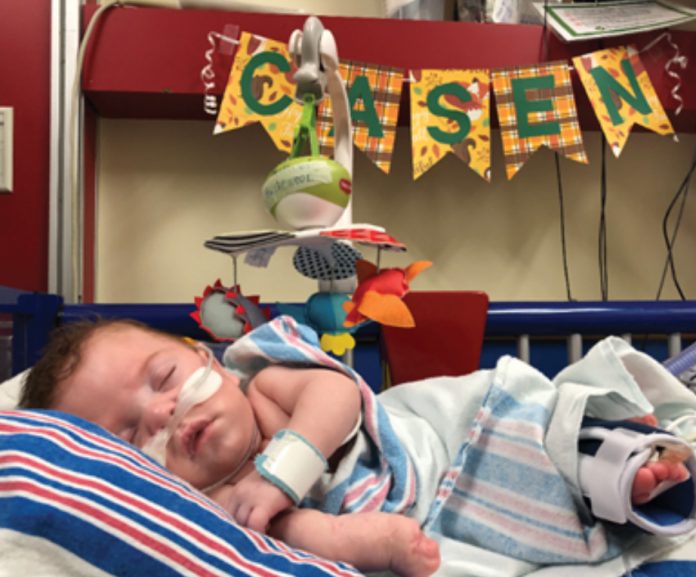
Casen Hazlewood of Ponca City has spent much of his young life in the hospital.


The Hazlewoods say their Christmas wish is to keep Casen healthy and at home.

Casen Hazlewood of Ponca City is only two years old, yet he has spent much of his young life in the hospital. Casen was born on May 6, 2019 at just 26 weeks gestation. His mother Kari Hazlewood recalls the difficult pregnancy. “Casen and his identical twin brother, Hudson, had issues from the very beginning. They were diagnosed early on with what’s called twin-to-twin transfusion syndrome, where one of the babies gets more blood and nutrients than the other. In our case, Hudson was the dominant twin leaving Casen malnourished.”
When the boys were born, each weighed barely over a pound. Hudson was seemingly healthy given his size, while Casen struggled to survive. “Casen is a A picture containing person Description automatically generatedfighter. He has been battling something since before he was even born,” says Kari. “He may be tiny but he’s as tough as they come.”
It was determined Casen had selective intrauterine growth restriction, a condition that occurs when there is unequal placental sharing which leads to suboptimal growth of one twin. Casen was noticeably smaller and more compromised than his brother.
Sadly and unexpectedly, Hudson developed an infection and passed away 12 days after birth. When Casen came down with the same infection his parents feared the worse, but Casen somehow pulled through – as he would time and time again.
Casen would spend the first 154 days of his life in the neonatal intensive care unit.
“He was born in May and we finally got to take him home in October 2019,” remembers his mom. “We were home for six days when he suddenly stopped breathing and we had to rush him back to the hospital. This would unfortunately become our routine.”
Kari says each time Casen gets a mild cold or runs even a low-grade fever, he undoubtedly ends up back in the hospital. “Since his lungs aren’t fully developed he has a lot of respiratory issues and goes downhill fast, so at the first sign of sickness we just start heading to INTEGRIS Children’s. They are like our second family. We have spent so much time there. They all treat Casen as if he is their own child.” Doctors are hopeful Casen will eventually outgrow his frequent hospital visits as his lungs continue to develop and mature.
The staff at the pediatric intensive care unit at INTEGRIS Baptist Medical Center held a bubble send-off for Casen at the end of his last hospitalization, signifying the 177 days he has spent in the PICU overtime. “We just love Kari and Donnie and the entire Hazlewood family and wanted to do something really special for them,” says Erica Liddell, a certified child life specialist at INTEGRIS Children’s. “In all, between the NICU and the PICU and the 14 surgeries he’s endured, Casen has spent almost an entire year in the hospital. That’s half of his little life. So, we wanted to celebrate him in a big way.”
The send-off, which also included big sis Brynlee, was just in time for the holidays. The Hazlewoods say their Christmas wish is to keep Casen healthy and at home. “As much as we love the folks at INTEGRIS Children’s and want them to continue to be a part of Casen’s life,” says Kari. “We are hoping to see them less often in the new year! We want to see them socially, not just when Casen is sick.”

Social

0FansLike
0FollowersFollow
0SubscribersSubscribe